Africa
Why President Tinibu Deserves a Second Term (III) -By Jabir T. Usman
As the nation continues this journey of renewed hope, Nigerians must rally behind the reforms that prioritize our collective interest. Let us support policies that put Nigeria first and leaders who have the courage to take difficult decisions for a better tomorrow. Indeed, President Bola Ahmed Tinibu’s vision and actions so far proved that he deserves a second term to consolidate these gains and complete the transformation agenda for a greater Nigeria.

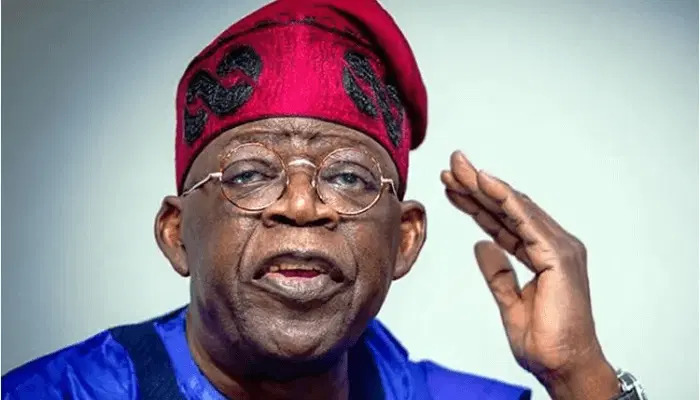
President Bola Ahmed Tinibu’s administration has continued to redefine Nigeria’s development landscape through strategic reforms and infrastructural transformation. One of the most remarkable of these initiatives is his commitment to revamping the transportation sector, particularly through the expansion of railway networks across the country.
In his bid to change the status quo in transportation, President Tinubu is vigorously working towards linking Nigeria with modern railway lines. Indeed, if fully realized, this project will be a monumental achievement, demonstrating his visionary leadership and determination to modernize the nation’s infrastructure.
The construction of a reliable railway system as an alternative to the overused road network will save Nigeria enormous resources currently wasted on frequent road repairs and maintenance. Many of our highways, despite huge investments, deteriorate quickly due to overuse by heavy-duty trucks. Railways, on the other hand, offer a more sustainable, cost-effective, and durable option.
Beyond saving money, the railway initiative will also help reduce the alarming rate of road accidents that claim thousands of Nigerian lives every year. According to a report by The Guardian Newspaper, an estimated 40,000 people die annually in road crashes across the country, many due to bad roads and reckless driving.
If rail transport becomes the major channel for inter-state movement, it will significantly reduce the pressure on our highways. The constant movement of heavy trucks carrying tons of goods contributes immensely to the wear and tear of our roads. By shifting bulk cargo to rail, Nigeria can extend the lifespan of its highways and save billions in road rehabilitation costs.
In today’s world, no serious nation depends solely on roads for movement of goods and people. The 21st-century global standard emphasizes multimodal transportation, where railways, roads, and air transport complement each other. Nigeria must therefore seize this opportunity to join the ranks of countries that have embraced rail as the backbone of national logistics and trade.
Security wise, the benefits of rail transportation are equally enormous. It is a well known fact that many travelers and transport companies face serious security threats along highways due to armed robbery, kidnapping, and other criminal acts. With the expansion of rail services, passengers and goods can move more safely and conveniently.
Rail transport also facilitates economic development by ensuring the smooth and timely movement of goods and raw materials. Farmers, traders, and manufacturers will find it easier and cheaper to transport their products to markets across Nigeria. This will strengthen local commerce, reduce post-harvest losses, and increase productivity.
Moreover, railway services have the capacity to carry large numbers of passengers at once, easing congestion on the roads. This will not only enhance mobility but also reduce fuel consumption and vehicle emissions, promoting a cleaner environment.
Another significant stride in President Tinibu’s administration lies in the economic sector, where recent monetary policy adjustments by the Central Bank of Nigeria (CBN) have begun to yield positive results. The CBN’s decision to reduce the interest rate to around 27% and stabilize the foreign exchange rate to approximately N1,486 to the dollar is a major breakthrough.
This development signals renewed confidence in Nigeria’s economy. Lower interest rates mean businesses can borrow at cheaper rates, encouraging expansion, job creation, and innovation. Stable foreign exchange rates also help investors plan better, reduce uncertainty, and boost trade activities.
As my friend, Alhaji Aliyu Adamu Chanji; a respected economic and public affairs analyst remarked during our discussion on this policy, the impact of these reforms will soon be felt by every Nigerian if properly sustained. He emphasized that when monetary policies favour production and trade, economic relief trickles down to the common man.
To illustrate this clearly: when a baker can access loans at a lower rate, the bread on your table becomes more affordable. When transport companies borrow at reduced rates, the cost of transportation will naturally decline. And when importers are no longer frightened by erratic exchange rate fluctuations, the prices of phones, spare parts, and medicines stabilize.
These examples show that good economic policies have real life effects on citizens’ living standards. President Tinibu’s economic reforms, though tough in the short-term, are setting a foundation for sustainable growth and long-term prosperity.
Indeed, President Bola Ahmed Tinibu deserves commendation for his courage in confronting Nigeria’s economic and infrastructural challenges head-on. His administration has demonstrated that reform is not about convenience but about commitment to national progress and generational transformation.
Better days are not achieved overnight, but they are built gradually through consistency, vision, and political will. With sustained focus on infrastructure, security, and economic reforms, Tinibu’s leadership is steering Nigeria toward a future where growth is not only visible on paper but also experienced by ordinary citizens in their daily lives.
As the nation continues this journey of renewed hope, Nigerians must rally behind the reforms that prioritize our collective interest. Let us support policies that put Nigeria first and leaders who have the courage to take difficult decisions for a better tomorrow. Indeed, President Bola Ahmed Tinibu’s vision and actions so far proved that he deserves a second term to consolidate these gains and complete the transformation agenda for a greater Nigeria.
Jabir T. Usman writes from Sabon Gari Tudun Wada, Kaduna jabson.usman@gmail.com