
Africa
Why Tinubu Must Prioritize Merit In Cabinet Reshuffle For Nigeria’s Economic Revival, by Isaac Asabor

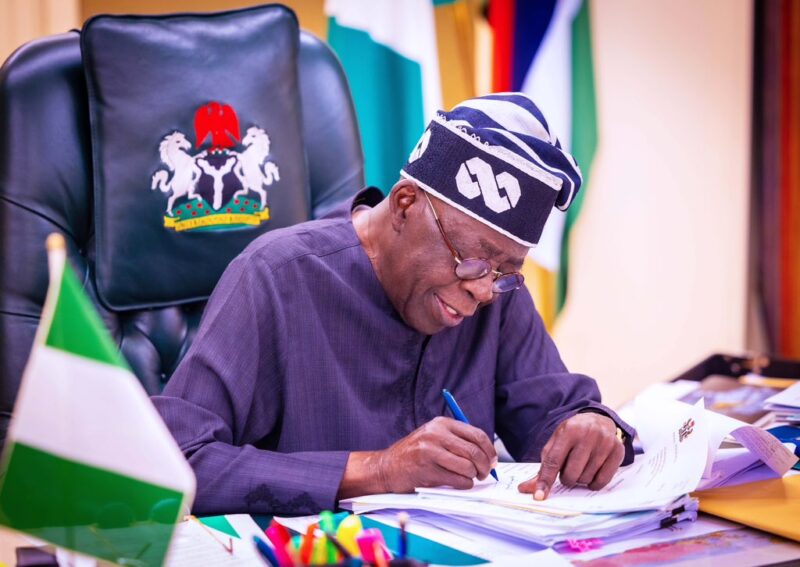
As Nigeria continues to grapple with the ripple effects of economic mismanagement, inflation, and rising poverty, all eyes are now on President Bola Tinubu’s expected cabinet reshuffle. Speculation is widespread that his administration is poised to make critical decisions, potentially rejigging his cabinet, unarguably for a more result-oriented performance. This move offers a unique opportunity for the president to demonstrate his commitment to Nigeria’s economic revival. However, if this reshuffle follows the same path of patronage-based appointments that prioritize political loyalty over merit, it will signal that this government has chosen to sideline competence in favor of vested interests. Tinubu’s legacy as a leader determined to restore Nigeria’s economic glory hinges on his ability to rise above the narrow confines of patronage politics.
In the face of deep economic challenges, the time has come for President Tinubu to make bold choices that prioritize expertise, knowledge, and proven leadership over political loyalties. These decisions should be aimed not just at improving Nigeria’s economic landscape but also at strengthening his political stature and legacy. If the president can successfully steer the country through these turbulent times by appointing individuals who are well-equipped to navigate Nigeria’s complex socio-economic realities, he will earn the respect of not just his political base but the wider Nigerian population and international observers alike.
The reason for the foregoing view cannot be farfetched as Nigeria has long been mired in a political culture where appointments are made based on loyalty rather than competence. This has led to the emergence of a bureaucratic elite, often out of touch with the struggles of ordinary Nigerians. While it is tempting for any leader to reward loyal supporters with positions of power, such appointments often come at the expense of national progress. Patronage-based appointments have been at the heart of Nigeria’s governance problem, contributing to a cycle of inefficiency, corruption, and economic stagnation. Political appointees focused on advancing personal or group interests often lack the foresight, skill, or will to tackle the country’s mounting problems head-on.
President Tinubu, a seasoned politician, must recognize that this cycle is not only unsustainable but also dangerous for Nigeria’s future. The country is in dire need of reforms, especially in key sectors like power, education, healthcare, and infrastructure. These reforms require skilled technocrats with the vision and expertise to implement long-term, sustainable policies, not political loyalists with little experience or knowledge of governance.
Nigeria is currently dealing with a myriad of economic challenges that cannot be addressed by mere political calculations. Inflation is eroding the purchasing power of the average Nigerian, food insecurity is on the rise, unemployment is at an all-time high, and foreign investment is dwindling. These are not problems that can be solved by political rhetoric; they demand innovative solutions grounded in sound economic policies and the ability to execute them effectively.
For Tinubu, who campaigned on promises of economic reform and transformation, the time to make good on those promises is now. If he reshuffles his cabinet based on competence and merit, the positive effects on the economy could be immediate. For instance, appointing a seasoned economist with a track record of success to the Ministry of Finance could help stabilize the economy, build investor confidence, and guide Nigeria through its debt restructuring. Similarly, bringing in professionals with vast experience in energy could help address Nigeria’s long-standing power generation problems, which continue to stifle industrial growth and development.
Appointing qualified and competent individuals is not just an economic necessity, it is a political strategy that could enhance Tinubu’s standing both within Nigeria and internationally. By doing so, Tinubu will demonstrate that his government is serious about fixing the economy and addressing the concerns of ordinary Nigerians, thereby gaining widespread support from across the political spectrum.
Beyond economic benefits, a cabinet reshuffle based on merit could help foster national unity in a country often divided along ethnic, regional, and religious lines. By moving away from appointments that cater to specific political factions or ethnic groups, Tinubu can send a powerful message that his administration is focused on governing for all Nigerians, not just a privileged few. This is crucial for nation-building, especially in a country as diverse and complex as Nigeria.
Tinubu’s government has a rare opportunity to bridge the nation’s divides by appointing individuals from across different backgrounds based on their competence and contribution to national development. This approach would not only build trust between the government and the governed but also lay the foundation for a more inclusive political culture.
In the long run, Tinubu’s political legacy will be shaped by the decisions he makes now. If his administration can deliver tangible results by surrounding itself with capable, knowledgeable, and experienced individuals, his name will be remembered as a leader who rose above the politics of patronage to deliver for the Nigerian people. On the other hand, if the reshuffle follows the same path of political patronage that has plagued past administrations, his government risks being remembered as one that squandered an opportunity for meaningful change.
The stakes are high, and Tinubu must choose wisely. He must understand that in the context of Nigeria’s current economic crisis, appointing the wrong individuals to key positions could result in further hardship for the Nigerian people, increased disillusionment with his administration, and political fallout that could jeopardize his broader reform agenda. However, by making appointments based on merit, he stands a better chance of not only revitalizing the economy but also positioning himself as a statesman who put the country first.
Tinubu’s political capital will not grow simply by rewarding loyalists. On the contrary, the only way to enrich his political stature is to show that his leadership transcends the narrow interests of his political allies. A leader who demonstrates a commitment to the collective welfare of the nation will always enjoy broader support, even from opposition quarters. If Tinubu can usher in a new era of merit-based appointments, his administration will earn the respect of Nigerians and the international community, thus boosting his credibility and giving him the political leverage needed to implement even more ambitious reforms.
By surrounding himself with technocrats and experts, Tinubu can also send a message that his government values competence, professionalism, and efficiency. This would go a long way in restoring the faith of the Nigerian people in their leadership and could even inspire future leaders to follow the same path of prioritizing merit over patronage.
As the Tinubu-led administration prepares for a cabinet reshuffle, the president faces a critical choice: continue the tradition of political patronage, or break from the past and embrace a merit-based approach to appointments. Nigeria’s economy, political stability, and future prosperity hinge on this decision. By appointing qualified, experienced, and capable individuals to key positions, Tinubu can revitalize the nation’s economy, foster national unity, and secure his political legacy as a leader who rose above the politics of patronage for the betterment of Nigeria.
For the sake of Nigeria’s future and his own political survival, President Tinubu must make the right choice. The country can no longer afford appointments driven by political loyalty over merit. The time has come for a new era of governance, one where competence, professionalism, and national interest take precedence over all else.
























You must be logged in to post a comment Login