
Africa
Wike, Nigerians Don’t Cook Or Spend Infrastructure, Let the People Speak! -By Isaac Asabor
In the end, leadership is not about silencing criticism with insults. It is about listening, responding, and improving. Wike should allow Nigerians to express themselves. After all, we do not cook infrastructure, we do not eat flyovers, and we certainly do not need lectures on what we can and cannot see. We are seeing clearly, and what we see is that Nigeria needs more than just ribbon-cutting ceremonies.

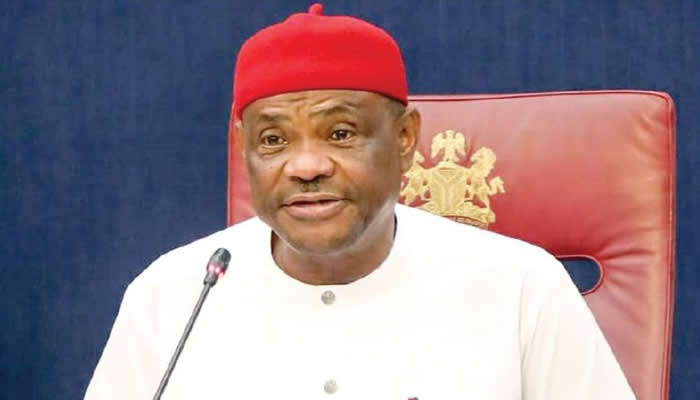
There is no denying the fact that Minister Nyesom Wike is a man of strong opinions and commanding presence. But his recent assertion that anyone who criticizes President Bola Ahmed Tinubu’s administration for non-performance is “blind” reeks of insensitivity, arrogance, and sheer political elitism. It is even more insulting when such a declaration is made from the comfort of his privileged position as Minister of the Federal Capital Territory (FCT), a role that has obviously placed him within the inner corridors of presidential largesse.
Let us be blunt: Wike is not in a position to dictate how over 200 million Nigerians should feel or speak about the hardship they are enduring. That he is benefitting handsomely from his ministerial appointment does not mean the average Nigerian is experiencing the same “first-class” comfort. It is easy for a man cruising in a bulletproof convoy, signing off multi-billion naira infrastructure contracts, and posing for cameras at commissioning ceremonies to sing praises of a government many see as failing them. But Wike must remember, Nigerians do not eat flyovers, cook streetlights, or spend interchanges in the market.
Given the minister’s vituperations in this context, it is not an exaggeration to opine that there is a disconnect between the elites and the masses. The foregoing view can be understood by dissecting Wike’s remark with brutal honesty. He said, “Mr President has given first-class infrastructure to Abuja. All of you can attest to the fact that indeed, Abuja has changed… I don’t see why anybody would say that Mr. President has not done well, except that you are just blind.”
This is not just a tone-deaf statement; it is deeply offensive. It dismisses the lived experiences of millions of Nigerians who have seen their lives spiral into deeper poverty since May 29, 2023. These are not blind people, they are battered people. Nigerians are seeing clearly, and what they see is not infrastructure, they see hunger, joblessness, inflation, insecurity, and hopelessness.
Wike’s gleeful emphasis on Abuja’s shiny new roads and interchanges is insulting when the average Nigerian cannot afford a bag of rice, cannot fuel their car, cannot pay their children’s school fees, and cannot even afford a simple medical bill. Wike is speaking from the rarefied air of political power, but he forgets that the air down here is choking many Nigerians with economic despair.
Let us be clear, no rational Nigerian will argue against infrastructural development. Roads, bridges, water supply, and public buildings are necessary components of national development. However, they are long-term assets that must complement immediate, people-centered policies aimed at alleviating hardship. Building a 10-lane expressway in Abuja while citizens are unable to afford garri in Gboko or onions in Onitsha is not democracy, it is misalignment of priorities.
Wike, like many of his peers, falls into the trap of measuring governance solely by physical infrastructure. But governance is more than concrete and asphalt, it is about the daily quality of life of the people. If infrastructure is booming but hunger is also booming, then something is terribly wrong.
What good is a new interchange in Gishiri to a family that has not had electricity for weeks in Kaduna? What impact does the International Conference Centre renovation have on a trader in Aba who is drowning in debt due to forex instability? And how do the residents of Osogbo benefit from Wike’s much-celebrated water projects in Abuja? These are the uncomfortable questions Wike and the ruling elite refuse to engage with.
One of the greatest red flags of any administration is when its officials begin to attack or gaslight citizens for expressing their pain. Wike calling critics “blind” because they do not see Abuja’s transformation is not just contemptuous, it is dangerous. In a democracy, people have the right to speak, to protest, and to disagree with those in power.
Is Wike suggesting that suffering Nigerians should keep quiet simply because some roads are being built in the capital? Is he telling market women, struggling artisans, underpaid civil servants, and jobless graduates that their voices do not matter? Is this what he thinks governance is, a one-way show of praise and silence?
By calling dissenters “blind,” Wike has taken a page out of the playbook of autocrats who suppress criticism rather than addressing it. But Nigeria is not a monarchy, and he is not the emperor of Abuja. Nigerians will speak, because they are hungry, angry, and disillusioned. And no amount of paint on Abuja’s curbsides will silence them.
Wike must understand that his privileged access to national wealth does not reflect the reality of ordinary Nigerians. He may wake up to a breakfast of imported croissants and government-sponsored convenience, but many Nigerians wake up not knowing where their next meal will come from.
He may commission projects with fanfare and brag about “dividends of democracy,” but in towns and villages across the country, people are asking why fuel is nearly ₦900 per liter. They are asking why the naira is losing value like a leaking basket. They are asking why the minimum wage still stands at ₦70,000 while a bag of rice is almost ₦80,000.
If this is what Wike calls good governance, then perhaps he needs a refresher course in public administration. The dividends of democracy are not meant to be limited to the capital city or to those who have political appointments, they are meant to be felt by the security guard in Warri, the teacher in Sokoto, the seamstress in Ilorin, and the farmer in Otukpo.
Wike’s arrogant reference to “blindness” must also be addressed. Nigerians are not blind. In fact, their eyes are wide open. They see the corruption. They see the misplaced priorities. They see the opulence of those in power. They see the hardship that deepens by the day. If anything, it is the government and its cronies that have chosen to be blind, to the pain of the people, to the hunger on the streets, and to the cries of the forgotten.
So let us turn the tables: who is truly blind here? The man who speaks truth to power from the trenches of poverty, or the man who lives in luxury and mocks the poor for not praising their tormentors?
Minister Wike must be reminded that his duty is to serve, not to scold. He is not a king, and Nigerians are not his subjects. The people have every right to criticize Tinubu’s government if they feel it is underperforming. And so far, the only “first-class” experience the average Nigerian has had in the last one year is first-class suffering.
Let Wike continue to unveil his interchanges and commission his roads, but let him do so with humility and a sense of perspective. Nigerians are not asking for too much. They want food, stable electricity, healthcare, jobs, and security. If the government cannot provide these, then no amount of painted curbsides in Abuja will make it right.
In the end, leadership is not about silencing criticism with insults. It is about listening, responding, and improving. Wike should allow Nigerians to express themselves. After all, we do not cook infrastructure, we do not eat flyovers, and we certainly do not need lectures on what we can and cannot see. We are seeing clearly, and what we see is that Nigeria needs more than just ribbon-cutting ceremonies.
And if Wike still insists on accusing the people of being blind, he should remember: the blind may not see, but they can feel, and right now, Nigerians are feeling nothing but pain.


















You must be logged in to post a comment Login