Africa
Wike, The Driver Of The ‘Bolekaja’ Called Media Chat And Some Journalists As His ‘Conductors’ -By Isaac Asabor
Media chats should bridge the gap between leaders and the led. They must be platforms for accountability, not arenas for self-promotion and manipulation. Anything less is a betrayal of democracy itself.

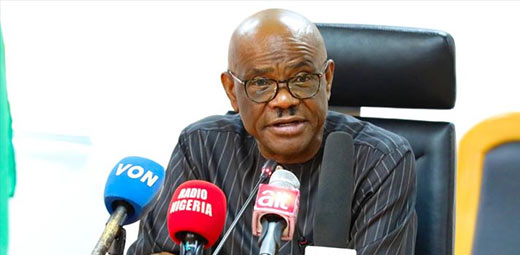
In a functioning democracy, leadership is as much about communication as it is about action. Policies can be drafted, budgets allocated, and projects announced, but without proper communication, governance risks being lost in translation. That is why media chats are crucial. They are supposed to be solemn, structured engagements allowing leaders to speak directly to citizens through journalists, who are meant to ask the hard questions on their behalf, unfortunately, it is has never being so. In fact, when conducted with decorum and seriousness, media chats strengthen democratic accountability, and consequentially, when they devolve into spectacle or optic, they betray both the public and the profession.
Unfortunately, what Nigeria has witnessed of late is the latter, especially under Nyesom Wike, the FCT Minister. His media engagements more closely resemble a chaotic “bolekaja” commuter bus ride, with Wike as the brash driver and some senior journalists as his complicit conductors.
Explicitly put, media chats exist to serve two essential purposes: For leaders, they serve as a platform to clarify policies, explain decisions, and demonstrate accountability. On the other hand, for citizens, they serve as a chance to hear those clarifications through journalists acting in the public interest. When either of these fails, especially when both do, the media chat collapses into theatre.
In fact, Wike’s style in media chats has become notorious. Instead of measured responses, he relies on chest-thumping rhetoric and sardonic one-liners. Take his retort to critics who equate democracy with chaos. Without being disrespectful in this context, it is germane to opine that not a few responses from the minister in any of the media chat he has so far had with seeming ly his Journalist-friends and apologists sound more like a line from a street performance than a reasoned response to pressing governance concerns.
In other sessions, instead of addressing questions about funding, demolitions, or housing rights, he deploys sarcasm and deflection. Even when asked about the impact of demolitions in Abuja, he reportedly brushed aside concerns by accusing critics of envy, a tactic that closes conversation rather than fostering clarity.
More recently, when confronted with calls to halt demolitions, his response was blunt: “No amount of blackmail will stop the demolition.” The foregoing combative statement bears the mark of a governor turned minister who views media engagement as a battlefield, not a forum for accountability.
But the blame does not rest solely with Wike. Some senior journalists have become willing enablers of this spectacle. Rather than pressing for clarity or follow-up, they often ask questions that hand him the stage. They appear on set, smile at sarcastic remarks, and create an atmosphere of agreement rather than scrutiny.
Several observers have described these interactions as “frivolous and irrelevant”, a far cry from the probing, public-interest questioning that media chats should represent.
When journalists laugh along or fail to challenge evasive statements, they sacrifice their role as watchdogs. Given the foregoing view, it is not out of place to opine in this context that the inability of Journalists to always hold Wike to account each time he grants them audience is a huge democratic cost. This is as the degeneration of media chats carries real consequences for Nigeria.
In fact, it is germane to opine that there are deeper accountability gaps each time Journalists bungle the opportunity to hold Wike to account, and by extension, other leaders to account. This is as Journalists create seeming patronage atmosphere for them to avoid difficult questions, and leaving citizens uninformed.
Bad enough, when media chats look like staged dramas, both leadership and press institutions lose credibility, and by that lowering trust in institutions. Worse still, leaders are emboldened to treat public engagement as performance if journalists are not pushing back. Again, journalistic integrity is by that put at risk as journalists’ complicity in the spectacle becomes manipulative tools by politicians like Wike since they are not truth-seekers.
As a call for a call for restoration in this context, it is expedient to opine that media chats must be reclaimed as spaces of sober dialogue, not ego-driven confrontation. For Wike, leadership communication should build trust, not stage a show. Nigerians are tuning in for explanation, not jeers or soundbites. For journalists, our duty is to the public, not to politics or personalities. Our role is to ask the uncomfortable questions, follow up relentlessly, and hold power to account, even if it feels uncomfortable.
In fact, if media chats continue down this path, with Wike as the rash bolekaja driver and journalists as his conductors, the entire exercise will tumble further into irrelevance. At a time when Nigeria faces economic strain, social upheaval, and governance challenges, citizens deserve clarity and respect, not a circus.
Media chats should bridge the gap between leaders and the led. They must be platforms for accountability, not arenas for self-promotion and manipulation. Anything less is a betrayal of democracy itself.
Let us bring back the dignity, before the spectacle becomes permanent.