Forgotten Dairies
With Osun Election, Who Says Votes Don’t Count? -By Isaac Asabor
And if Nigerians truly want better leadership in 2027 and beyond, the answer should not be to stay away from the polling booth. It should be to turn up, vote wisely, protect the ballot and demand that the mandate is respected.

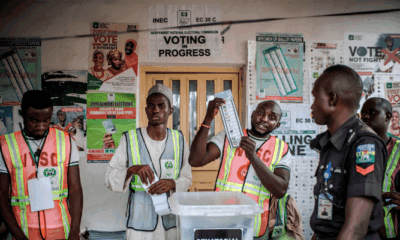
For years, one of the most damaging assumptions about Nigeria’s democracy has been the belief that votes do not count.
It is a sentiment that has grown from years of disputed elections, allegations of vote-buying, ballot snatching, manipulation of results, violence and, perhaps most importantly, the widespread perception that the outcome of an election is often determined long before voters arrive at the polling unit. But the Osun election has provided Nigerians with an important reason to reconsider that cynical assumption.
The lesson from Osun is not that Nigeria’s electoral system has suddenly become perfect. Far from it. No serious observer should pretend that the country has eliminated all the weaknesses that have historically undermined its elections. Rather, the significance of the Osun experience lies in what it demonstrates: “when citizens vote, when the process is sufficiently protected and when institutions perform their responsibilities, votes can indeed make a difference.” That is a message worth emphasizing as Nigeria gradually approaches another decisive political cycle.
The tendency to dismiss elections before they are conducted is dangerous. Once citizens become convinced that their votes cannot change anything, political participation inevitably suffers. Voters lose enthusiasm. Young people withdraw. Citizens become indifferent to who represents them. And political actors who understand that apathy is their greatest ally are encouraged to exploit it. Given the foregoing view, it is not misleading to urge fellow Nigerians to emulate the electoral behaviours exhibited by the people during the recently concluded Osun election in future elections, particularly in the much-expected 2027 general elections.
An election is ultimately a contest over numbers. Politicians may have money, structures, influence and powerful connections, but at the polling booth, the most fundamental political currency remains the ballot. One person may cast only one vote. But thousands or millions of such individual decisions can produce an outcome capable of upsetting political calculations. This is where the Osun election carries a broader message for Nigeria.
For too long, political conversations have often revolved around who controls the machinery of government, who has the backing of powerful individuals, who can mobilize the largest crowd or who has the financial muscle to dominate an election. Those factors undoubtedly matter. But they do not make the voter irrelevant.
Indeed, the most important power in any democracy is the ability of citizens to decide who governs them. That power becomes meaningful only when citizens use it.
There is also a lesson here for political parties. An election should not be treated merely as an opportunity to deploy propaganda, distribute inducements or mobilize party loyalists. Parties that genuinely want to win must convince voters that they deserve their mandate.
In fact, the Nigerian voter may be frustrated, angry or disappointed, but the voter is not necessarily powerless. The Osun experience should therefore encourage citizens to take greater interest in elections rather than retreat from them. This is particularly important as attention increasingly shifts towards the 2027 general elections. Already, political calculations, alignments and realignments are taking shape. Political parties are positioning themselves, aspirants are emerging and various groups are mobilizing support. But the most important political actor in all of this remains the Nigerian voter.
The electorate must understand that democracy does not end when the ballot is cast. Citizens must also demand accountability from those they elect. A vote should not be exchanged for temporary gratification while the broader consequences of political choices are ignored. At the same time, electoral institutions must understand the responsibility that comes with managing the people’s mandate.
The Independent National Electoral Commission (INEC), security agencies, political parties, election observers and other stakeholders must continue to strengthen the credibility of the electoral process. Where citizens believe that their votes will be protected and accurately counted, participation will naturally improve. Where they believe the opposite, apathy will flourish.
The judiciary also has an important role to play. Electoral disputes must be resolved fairly and expeditiously, because delayed justice can weaken confidence in the entire democratic process. But citizens, too, have responsibilities.
They must resist the temptation to sell their votes. They must reject violence. They must scrutinize candidates beyond ethnic, religious and party affiliations. They must ask difficult questions about competence, integrity, economic policy, security, education, healthcare, infrastructure and the quality of life they can expect under a particular administration.
If voters make their choices based on these considerations, the ballot becomes considerably more powerful. The real danger to democracy is not merely electoral malpractice. It is also voter’s resignation, the dangerous conclusion that nothing can change regardless of what citizens do. That mindset must be defeated.
Nigeria cannot build a strong democracy with citizens who have surrendered their political agency. Democracy requires participation. It requires citizens who believe their voices matter enough to be heard and their votes matter enough to be counted.
The Osun election, therefore, should not merely be viewed through the narrow prism of which candidate or party prevailed. Its larger significance is the reminder that elections still provide Nigerians with an avenue to express their preferences and influence the direction of governance.
In fact, there will always be imperfections. There will always be complaints. There will always be politicians who attempt to manipulate the system. But that is not a reason for citizens to abandon the system. Instead, it is a reason to demand that the system works better. So, with the Osun election, who says votes don’t count? They do.
And if Nigerians truly want better leadership in 2027 and beyond, the answer should not be to stay away from the polling booth. It should be to turn up, vote wisely, protect the ballot and demand that the mandate is respected.
After all, democracy is not the government of those who have the deepest pockets or the loudest voices. It is supposed to be the government of the people. And the ballot remains the people’s most powerful instrument.