
Africa
Yakubu Gowon’s Revisionism and the Unlearned Lessons of the Nigerian Civil War -By Jeff Okoroafor
Nigeria must confront its past honestly. The civil war was not an unavoidable tragedy—it was the result of bad faith negotiations, ethnic bias, and ruthless military strategy. Until leaders like Gowon take responsibility for these failures, Nigeria’s unity will remain a fragile illusion built on suppressed grievances.

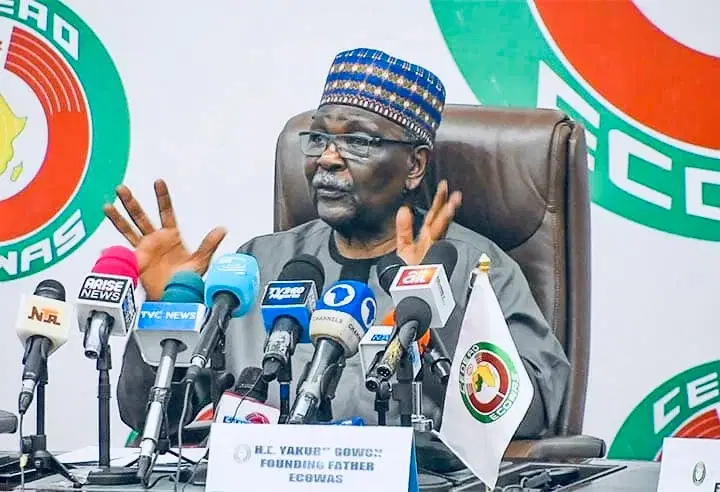
Former Head of State, General Yakubu Gowon (retd.), recently claimed at the 5th Convention of the Christian Men’s Fellowship that the Nigerian Civil War (1967–1970) was not fueled by his hatred for the Igbo people. While he is entitled to his personal reflections, history—documented in official records, eyewitness accounts, and declassified documents—paints a far more damning picture of his role in the conflict. His assertion conveniently sidesteps the fact that he reneged on the Aburi Accord, the last peaceful resolution that could have averted the war, and presided over policies that disproportionately targeted Igbo civilians.
The Aburi Accord: A Betrayal That Triggered War
The Aburi Accord, reached in Ghana in January 1967 between Gowon and then-Eastern Region leader Lt. Col. Odumegwu Ojukwu, was a negotiated agreement to restructure Nigeria along confederal lines, decentralizing power to prevent the imminent secession of the East. The accord was a product of mutual concessions, with key resolutions including:
-
Adoption of a loose confederation – Regions would control their own finances, security, and governance.
-
Non-interference in regional affairs – The federal government could not unilaterally impose policies on regions.
-
Reorganization of the military – Soldiers would return to their regions of origin to ease tensions.
However, upon returning to Nigeria, Gowon unilaterally violated the agreement by:
-
Issuing Decree No. 8, which watered down the confederal provisions and recentralized power under the federal government.
-
Refusing to implement the agreed-upon regional control of finances and security, effectively rendering the accord meaningless.
-
Proceeding with the division of Nigeria into 12 states (May 1967), a move that deliberately weakened the Eastern Region’s economic viability by carving out its oil-rich areas.
British diplomat Sir David Hunt, who was present at Aburi, later wrote: “Gowon had no intention of keeping to the agreement… he was persuaded by his advisers to go back on it.” (Hunt, On the Spot: An Ambassador Remembers, 1975).
Gowon’s Policies Before and During the War: A Pattern of Anti-Igbo Sentiment
While Gowon claims he harbored no hatred for Igbos, his government’s actions before and during the war suggest otherwise:
-
The Pogroms and Federal Inaction (1966–1967)
-
Following the counter-coup of July 1966, over 30,000 Igbos were massacred in Northern Nigeria.
-
Gowon, then the new Head of State, failed to prosecute the perpetrators or provide security for Easterners, forcing mass exodus to the East.
-
Ojukwu repeatedly pleaded for federal intervention, but Gowon’s inaction reinforced the perception that the killings were state-sanctioned.
-
-
Economic Blockade and Starvation Policy
-
Gowon’s government imposed a total blockade on the East, restricting food and medical supplies.
-
The policy of starvation as a weapon of war led to the deaths of over 1 million Igbo civilians, mostly children, from kwashiorkor and famine.
-
This was a deliberate strategy, as confirmed by international observers like Kurt Vonnegut, who reported: “The Nigerians are trying to starve the Biafrans into submission.” (The New York Times, 1968).
-
-
Refusal to Accept Biafran Surrender Terms
-
Even when Biafra sought ceasefire negotiations in 1969, Gowon insisted on “unconditional surrender”, prolonging the war.
-
Contrast this with South Africa’s post-apartheid truth and reconciliation—Gowon’s “No victor, no vanquished” rhetoric was never matched by genuine reintegration policies.
-
Gowon’s recent remarks are ahistorical. The Nigerian Civil War was not just a “political disagreement”; it was the culmination of systemic marginalization, a broken peace deal, and state-sanctioned violence against a people who had lost faith in Nigeria. If Gowon truly harbored no hatred for Igbos, why did he break the Aburi Accord? Why did he allow pogroms to go unpunished? Why did he enforce a blockade that killed millions?
Nigeria must confront its past honestly. The civil war was not an unavoidable tragedy—it was the result of bad faith negotiations, ethnic bias, and ruthless military strategy. Until leaders like Gowon take responsibility for these failures, Nigeria’s unity will remain a fragile illusion built on suppressed grievances.
The truth may be painful, but denial is far more dangerous.

Jeff Okoroafor
Jeff Okoroafor is a social accountability advocate and a political commentator focused on governance, accountability, and social justice in West Africa.

























You must be logged in to post a comment Login