Breaking News
₦100bn Losses as Apapa Traffic Worsens, Stakeholders Disagree on Cause
Fresh congestion hits Apapa port corridor despite electronic call-up system introduced by NPA.

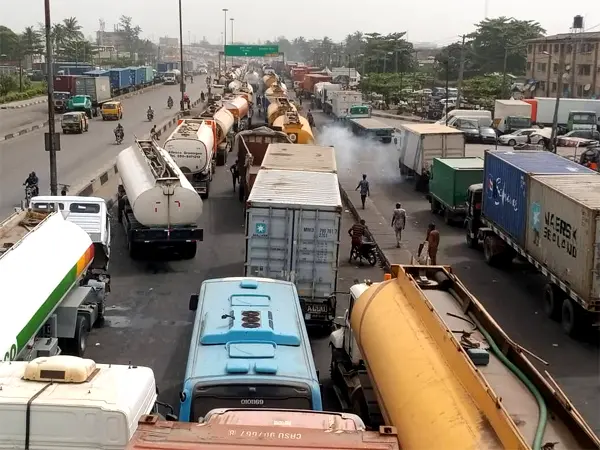
Concerns are mounting over renewed congestion in Apapa, with truckers and port operators offering conflicting explanations for the gridlock affecting access to Nigeria’s busiest seaports.
The National Compliance Joint Task Force of Licensed Clearing Agents (NCJTFLCA) estimates that the traffic situation has cost operators about ₦100 billion, blaming inefficiencies in the electronic call-up system and its operators.
However, the Association of Maritime Truck Owners (AMATO) pointed to external factors, citing disruptions in the Strait of Hormuz as a key contributor to the backlog.
Meanwhile, the Traffic Transit Point (TTP), which manages truck movement in the corridor, maintained that the situation is under control.
The Apapa traffic management system was introduced by the Nigerian Ports Authority (NPA) in 2021 through a five-year contract with TTP, alongside the “Eto” electronic call-up system, which expired in February 2026.
A recent visit to the port corridor revealed noticeable congestion.
NCJTFLCA President Basil Nwolisa criticised the system, saying: “The problem here is the ETO policy and the operations of TTP… a system designed to create loopholes for settlements.”
He alleged that operators are being forced to make unofficial payments, adding: “The current congestion is costing practitioners hundreds of billions of naira weekly in unofficial payments and bribes.”
According to him, better implementation and stakeholder involvement could resolve the issue quickly.
In contrast, AMATO’s General Secretary, Sani Mohammed, linked the congestion to global shipping challenges.
“The blockade of the Strait of Hormuz has disrupted maritime shipping logistics… affecting the availability of vessels for the evacuation of imports and exports,” he said, noting that the gridlock would ease once shipping activities normalise.
TTP spokesperson Nancie Nandi dismissed claims of a full-blown gridlock, stating: “We wouldn’t describe the current situation as a return to gridlock… the Ètò system is still active.”
She explained that any traffic build-up is temporary and usually tied to operational delays at terminals.
The Nigerian Ports Authority did not respond to requests for comment as of the time of filing this report.
Africans Angle News