Global Issues
When Justice Crosses Borders: Duterte, the ICC, and the Myth of Sovereign Immunity -By Fransiscus Nanga Roka
A system that enables leaders to invoke sovereignty as a license of wreaking murder, does not preserve order; it legitimizes violence. And one that takes those always justified premises world does not only fail on us to delivering justice.

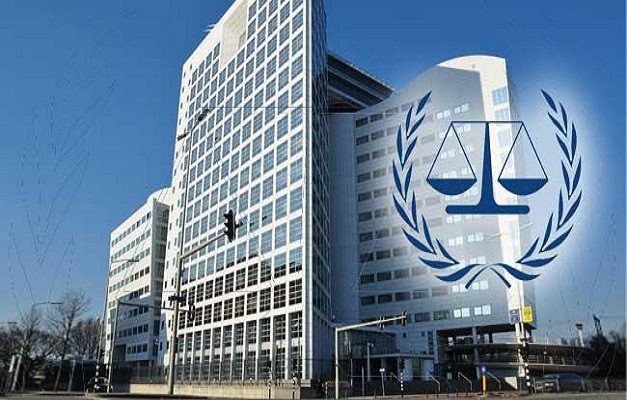
The idea of sovereignty as an obstacle to holding leaders accountable has always been more a political expediency than legal principle. The illusion that is so carefully constructed and prepared for an audience dates back to the case of Rodrigo Duterte before the International Criminal Court. Building above all else, as if to suggest that justice is not an infringement on sovereignty so much understandable retaliation for abuse done in its name.
Duterte’s “war on drugs”has long been considered to be domestic policy, as sovereign reaction to national crisis. However, the scale and pattern of killings, thousands dead many extra judicially above all else, raises a more difficult question: when does policy become crime? In whole it is not in rhetoric, but law. As focused citizens, international criminal law does not render governance a crime; it renders systematic violence against civilians as such. If the machinery of state is mobilised not in order to preserve life, but rather destroy it, then sovereignty does no longer exist as a defence and becomes merely proof.
Duterte’s defenders invoke jurisdictional technicalities. They cite the Philippines’ departure from the Rome Statute and claim that, therefore, it has no ICC mandate. This is a very helpful legal argument but an untidy and unflattering moral one. Political exit does not wipe the ICC’s jurisdiction out of existence. It also means that crimes claimed to have been committed during the time as a state was still being party can undergo scrutiny. Withdrawal may cut-off future liabilities, but does not wash previous behavior.
At a more fundamental level, the sovereignty argument breaks under its own contradictions. Sovereignty is premised on responsibility. This gives states the power to govern, but it is also obligates them to protect. And when that duty becomes inverted, and governance is little more than organized violence, then its international legal order isn’t encroaching on the sovereign purview; it is performing its first role in a way consistent with permanent sovereignty. The role of the ICC is really to fill those gaps when domestic systems are unable or unwilling to do so.
Now, this is the less pleasant truth: The Duterte case does not concern itself only with how things happen in the Philippines. It is something to do with the international acceptance of impunity. International law has for decades alternated between the poles of principle and power, universal norms and selectivity. Much has been written (with some justification) about the apparent inconsistency of ICC prosecutions, the political asymmetry and geography of international accountability. But just because the need is imperfect does not mean that it can be divested. It is better to have a flawed justice-seeking system than an infallible impunity-promoting one.
They’re not dangerous because they’ll start an international persecution, but rather a lack thereof. A world where leaders can carry on violence in the name of sovereignty without any costs is not a stable order, it is an escalation waiting to be unleashed. Impunity is contagious. If one leader is allowed to get away with things then their example will be followed by others. Violence does not stop at borders where justice stops.
The case against Duterte will challenge whether, in the field of international law: it is powerful enough to take on power rather merely document its outsized acts. It checks the promise of “never again” to see if it has any practical meaning beyond speeches at memorials. And it tests whether the world is prepared to acknowledge that no sovereignty is absolute, but rather conditional, conditioned on the minimum duty not to kill innocent lives.
The ICC is accused of undermining national sovereignty, they will say. However, this critique mistakes the field for its enemies. Accountability does not undermine sovereignty, abuse hollowed it out. A state that normalises extrajudicial killing is not an exercising sovereignty; it wilfully undermines it. The ICC does not challenge sovereignty per se but rather abuses of it.
Of course, there’s a deeper tension there. International justice exists in an international powerscape that is predominantly unequal. Caution can be the best medicine: Not all leaders are equally vulnerable All crime is not prosecuted equally. This asymmetry breeds distrust, indeed, outright disobedience at times. Selective justice is not no justice. There is consistency, more ubiquitous enforcement. To abandon the project because it is unfinished means to lose against impunity.
The Duterte legacy will be fought over in political terms security, populism, governance. But the potential legal question is much more sharp and limited: can a head of state sanction or allow mass murder without consequences? If yes, then international law is not norms but a language of excuses.
The ICC is not intruding on Duterte, the ICC is correcting for. It argues that no matter how sovereign the state, a line cannot be crossed in what states can do to their own citizens. Popularity or domestically-conferred legitimacy does not exempt power from the imperative of law. And it is a sign for all its own imperfections, that the architecture of impunity can be altered.
Because the real question is not of jurisdiction. It is about justice.
A system that enables leaders to invoke sovereignty as a license of wreaking murder, does not preserve order; it legitimizes violence. And one that takes those always justified premises world does not only fail on us to delivering justice.
It chooses to abandon it.
Fransiscus Nanga Roka
Faculty of Law University 17 August 1945 Surabaya Indonesia