Forgotten Dairies
2027: Nigerians Must Choose ’Talk-Na-Do’ Leaders Over ‘Carry-Go’ Leaders -By Isaac Asabor
In the end, governance is not about slogans or sentiments. It is about results. And as 2027 approaches, Nigerians must make a deliberate, informed, and uncompromising choice: “talk-na-do* leaders over “carry-go” leaders, because the future of the nation depends on it.

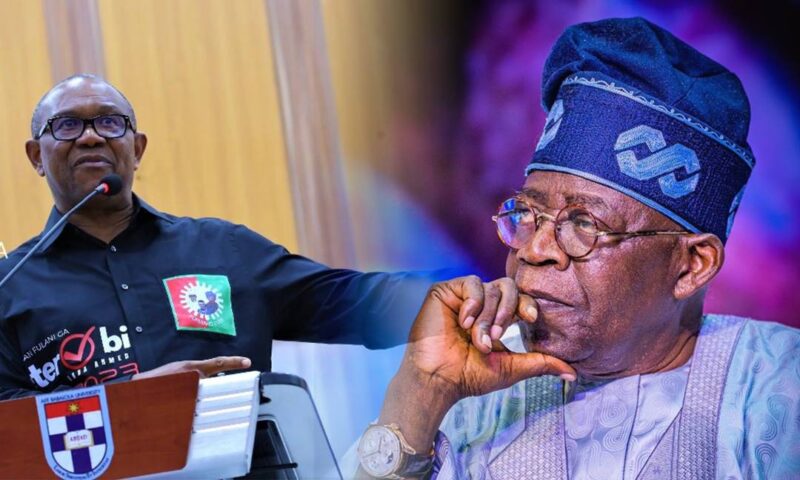
As Nigeria gradually approaches the defining political moment of 2027, the choices before the electorate are becoming clearer, sharper, and far more consequential. Elections in the country have often been framed around personalities, party affiliations, regional sentiments, and, at times, sheer political theatrics. However, beneath all of that noise lies a more fundamental and urgent decision Nigerians must make whether to continue endorsing the culture of “carry-go” or to decisively embrace the principle of “talk-na-.
This is not just a matter of political preference; it is a matter of national survival and progress. The concept of “carry-go” has, for years, operated as an unspoken doctrine in Nigeria’s political space. It is the idea that an incumbent, regardless of performance, deserves continuity. The justification is often vague rooted in loyalty, party structure, ethnic alignment, or the fear of the unknown. In many cases, it is driven by carefully crafted narratives that distract from the real question: has this leader delivered on their promises?
Too often, the answer is no. Yet, the machinery of “carry-go” politics pushes forward, urging citizens to overlook failures and “move on” with the same leadership. It is a culture that rewards mediocrity and punishes accountability. It creates an environment where leaders feel little pressure to perform because they can rely on political structures, not results, to secure their future. This is precisely the cycle Nigerians must break in 2027.
In stark contrast stands the philosophy of “talk-na-do”. It is simple, direct, and rooted in common sense: leaders should do what they say they will do. Campaign promises should not be empty slogans but binding commitments. Governance should not be about optics or rhetoric but about measurable impact on people’s lives.
A “talk-na-do” leader understands that public office is a responsibility, not an entitlement. Such a leader recognizes that legitimacy is not conferred merely by winning an election but is sustained through performance. Roads must be built and maintained, not just flagged off. Schools must function effectively, not just appear in budget speeches. Healthcare systems must work for the average citizen, not just exist on paper. Jobs must be created in real terms, not in statistical illusions.
These are not unrealistic expectations. They are the basic duties of governance. The tragedy of “carry-go” politics is that it lowers the bar so significantly that even minimal or cosmetic achievements are celebrated as major successes. It shifts the focus from outcomes to narratives. Leaders spend more time explaining why things are not working than fixing them. Excuses become the currency of governance. Nigeria cannot afford this anymore.
The country faces mounting challenges, economic instability, rising unemployment, infrastructure deficits, security concerns, and a growing population with increasing needs. These are not problems that can be solved through political continuity for its own sake. They require competence, vision, and, above all, execution. This is where “talk-na-do” becomes not just desirable but indispensable.
In 2027, Nigerians must begin to interrogate leadership with a new level of seriousness. The questions should be straightforward: What did this leader promise? What has he or she delivered? What evidence exists of progress? These are not complicated metrics, but they are often ignored in favor of emotional or identity-based considerations. That must change.
Voting should not be an act of loyalty; it should be an act of judgment. It should be based on records, not rhetoric. Nigerians must resist the temptation to be swayed by political slogans that sound appealing but lack substance. The era of “give them another chance” without accountability must come to an end.
It is important to acknowledge that governance is complex. No leader can solve every problem within a single term. However, this reality should not be used as a shield for non-performance. A “talk-na-do” leader may not achieve perfection, but they will demonstrate clear effort, transparency, and tangible progress. They will communicate honestly with the public, take responsibility for shortcomings, and show a consistent commitment to improvement. That is the standard Nigerians should demand.
The role of the electorate in this process cannot be overstated. Democracy functions effectively only when citizens are informed, engaged, and willing to hold leaders accountable. In 2027, Nigerians must go beyond passive participation. They must actively scrutinize candidates, question their track records, and insist on clarity in their plans.
Civil society organizations and the media also have a critical role to play. They must continue to shine a light on governance, separating facts from propaganda and ensuring that the public has access to accurate information. Political discourse must shift from personality clashes to policy debates. This is the only way to elevate the quality of leadership.
Political parties, too, must take responsibility. The practice of selecting candidates based on internal loyalty or political convenience rather than competence has contributed significantly to the persistence of “carry-go” politics. If parties are serious about national development, they must prioritize merit, integrity, and proven ability in their candidate selection processes.
There is also a powerful generational force that could shape the 2027 elections: young Nigerians. This demographic is increasingly aware, connected, and unwilling to accept the status quo. They demand better governance, greater transparency, and real opportunities. For them, “talk-na-do” is not just a leadership style, it is an expectation. Their voices could be decisive.
The digital age has further strengthened the case for “talk-na-do”, information is more accessible than ever. Citizens can track government projects, analyze budgets, and compare performance across regions. Social media platforms have become tools for accountability, exposing failures and amplifying successes. In this environment, it is becoming harder for “carry-go” politics to thrive unchecked.
Yet, the persistence of that culture shows that access to information alone is not enough. There must also be a willingness to act on that information. Nigerians must translate awareness into action at the ballot box.
The 2027 elections, therefore, represent more than a routine democratic exercise. They are an opportunity to redefine the standards of leadership in Nigeria. They are a chance to send a clear message that performance matters, that promises must be kept, and that public office is a trust that must be honored.
Choosing “talk-na-do” leaders is not just about rewarding those who perform; it is about creating a system that incentivizes good governance. When leaders know that their political future depends on their ability to deliver results, they are more likely to prioritize the needs of the people.
On the other hand, continuing with “carry-go” politics will only deepen existing challenges. It will perpetuate a cycle where leaders are insulated from accountability and citizens are left to bear the consequences of poor governance. The choice is stark, but it is also simple.
Nigeria must move away from the comfort of familiarity that “carry-go” offers and embrace the discipline and responsibility that “talk-na-do” demands. It requires courage from the electorate, integrity from political actors, and vigilance from all stakeholders.
If Nigerians get it right in 2027, the impact will extend far beyond a single election cycle. It will set a precedent for future leadership, reshape political expectations, and lay the foundation for sustainable development.
But if the opportunity is missed, the cost will be significant, not just in terms of lost time, but in diminished prospects for growth and stability.
In the end, governance is not about slogans or sentiments. It is about results. And as 2027 approaches, Nigerians must make a deliberate, informed, and uncompromising choice: “talk-na-do* leaders over “carry-go” leaders, because the future of the nation depends on it.