
Africa
A Grim Reflection On The Rising Wave Of Brutality Across The Country -By Isaac Asabor
To ask whether some Nigerians have become animalistic is not an insult; it is an indictment of a society that is fast losing its soul. The wave of brutality sweeping through the nation is a wake-up call that we can no longer afford to ignore. We must reject the culture of death and restore the value of life. If we fail to act now, we may soon reach a point where even the beasts will be afraid to live among us.

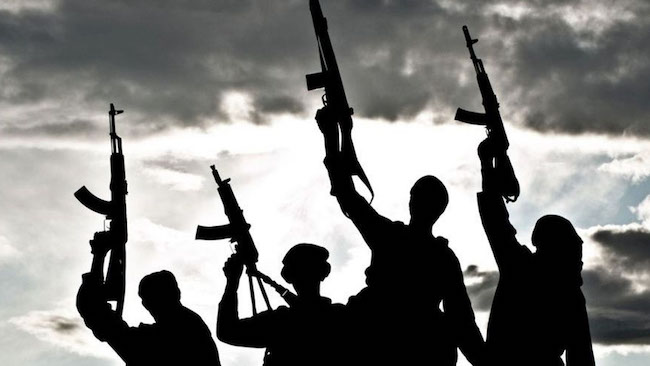
In a society where human life is fast losing its sanctity, one cannot help but ask: have some Nigerians truly become animalistic? The question is neither rhetorical nor sensationalist; it is a solemn reflection triggered by the relentless bloodshed that now defines our daily headlines. From North to South, East to West, the rising tide of crime, gruesome killings, and senseless violence in Nigeria is now reaching a terrifying crescendo.
From community clashes to cultist mayhem, banditry to ritual killings, and political assassinations to family-related homicides, the Nigerian landscape is becoming a theatre of horror. The blood-curdling stories of humans butchering fellow humans in a manner that makes even beasts appear civilized demand an urgent national introspection.
Just recently, the nation was shaken by chilling revelations from Enugu State. In one incident, a native doctor was arrested after it was discovered that he had been murdering people and dumping their bodies in a soak away pit inside his house. Before the dust could settle, another horrifying discovery was made, human skull was found inside a church in the same state. These gruesome incidents reflect a deep moral decay and a descent into darkness that defies both logic and humanity.
Casting our minds back, it will be recalled that an incident in Sokoto State, where a female student of Shehu Shagari College of Education, Deborah Samuel, was stoned and burnt alive by her fellow students over alleged blasphemy is still fresh in our collective memory. The video footage of that act, circulated with callous pride on social media, portrayed a level of depravity that even animals do not exhibit.
Go to the Southeast, and the narrative is equally gory. Unknown gunmen, a euphemism for criminal gangs and militants, have turned the region into a war zone. Police stations are attacked, officers are killed, and residents live in perpetual fear.
In fact, it will also be recalled that in November 2023, the Imo State Police Command confirmed the gruesome murder of the traditional ruler of Otulu Amumara Autonomous Community in the Ezinihitte-Mbaise Local Government Area of Imo State, Joe Ochulor, by gunmen.
In a similar gruesome vein, the story is even more apocalyptic In the Northwest. Bandits, who are nothing short of terrorists, overrun communities, kidnap schoolchildren, and demand millions in ransom. Entire villages are burnt down, and scores are slaughtered like chickens. Zamfara, Kaduna, Katsina, Benue and Niger States have been worst hit. These are no longer mere criminal activities; they are full-blown acts of war against the people.
Even within urban centres like Lagos, the savagery is not less disturbing. The rise in ritual killings, especially by so-called “Yahoo boys” who now believe that human parts are the new gateway to wealth, is appalling. The story of the four teenage boys in Abeokuta, Ogun State, who killed a girlfriend and burned her head in a pot for money rituals, still lingers like a scar on the national conscience.
At this juncture, it is expedient to ask, “What has gone wrong with our humanity? It begs the question: what has gone wrong with the Nigerian psyche? How did we get here, where human life has become so cheap and dispensable? While poverty, illiteracy, and poor governance can explain some of the malaise, they do not excuse it. The level of barbarism witnessed today in Nigeria cannot be justified by hardship alone. There is a spiritual and moral bankruptcy that is spreading like a disease.
In traditional African society, even animals were hunted with respect and rituals. Elders spoke of omens and taboos. Life was sacred. Today, we slit throats over phone arguments. We dismember our lovers for cash. We kill to make TikTok content. This is no longer a case of moral decline; it is moral collapse.
Religious institutions, which once shaped ethical conduct, now serve more as theatres of commerce and manipulation. Political leaders, rather than serve as role models, are often complicit in violence themselves. When people see that killers in high places are never punished, what stops a jobless youth from picking up a knife? Little wonder the scripture in Ecclesiastes 8:11, states, “Because the sentence against a crime is not carried out quickly, people are encouraged to commit crimes.”
Another worrying trend is the normalization of violence in media and everyday conversations. People now circulate videos of lynching, shootings, and mutilations with the same nonchalance with which they share music or memes. The effect? A desensitized population that now sees murder as mere spectacle. We have stopped being shocked. That is the real tragedy.
Even law enforcement appears helpless. The Nigerian Police, underfunded and overstretched, is often reactive rather than proactive. In many cases, the killers are never caught, and even when they are, the judicial system allows them to walk free. Justice is delayed, or worse, denied.
At this juncture, it is not out of place to ask, “Is There Hope?” Yes, but only if we recognize the magnitude of the problem and treat it like the existential crisis that it is. This is a call for total societal reorientation. It is not just a government problem; it is everyone’s problem. Parents must train their children not just in academics but in morals. Religious leaders must return to preaching love, empathy, and the sanctity of life. Political leaders must lead by example and stop enabling thuggery and violence.
There must also be institutional reforms. The police must be equipped and restructured to carry out effective community policing. The judiciary must be firm and swift in dispensing justice. The National Orientation Agency (NOA) must wake up from its long slumber and begin real re-education of the masses.
Above all, Nigerians must look inward and ask themselves whether they still see their neighbors as fellow humans. The day we begin to see each other through the lens of humanity and not tribe, religion, class, or political affiliation, is the day we begin our journey out of this abyss.
To ask whether some Nigerians have become animalistic is not an insult; it is an indictment of a society that is fast losing its soul. The wave of brutality sweeping through the nation is a wake-up call that we can no longer afford to ignore. We must reject the culture of death and restore the value of life. If we fail to act now, we may soon reach a point where even the beasts will be afraid to live among us.
The time for action is now. Before we all drown in the blood that keeps flowing from our streets.























You must be logged in to post a comment Login