Africa
A Psychologist Highlights Otti’s ‘Playing God’ Warning on 2027 as Falana, Yahaya, and Audu Raise Spiritual, Political, and Moral Concerns over Tinubu-Era Leadership -By John Egbeazien Oshodi
Governance is not a mere spectacle of billboard slogans or microphone moments; it is a profound burden, a selfless sacrifice for the survival of the people. And today, the people are not surviving; they are merely enduring, barely. Governor Otti’s wisdom resonates deeply: to live as if the future is guaranteed, while the present bleeds, is not leadership; it is a dangerous arrogance. And arrogance, no matter how insulated by power, cannot outrun its consequences. This republic is gasping for breath. There remains a fleeting moment to infuse life back into it—but only if there is a willingness to stop, to truly listen, and to repent.

Nigeria is no longer merely misgoverned—it is mentally unraveling. What we face is not just political drift, but a national psychological fracture. The ruling elite, obsessed with the mirage of 2027, are drunk on delusion while the country bleeds in real time. This is no longer governance. It is a dangerous detachment from reality, a grand hallucination playing out in power corridors while ordinary Nigerians suffocate in silence.
The people hunger. Hospitals collapse. Farmers are butchered by bandits. Mothers die with IVs but no electricity. But what do the powerful see? Not the agony. Not the blood. Not the broken system. They see only 2027—seats, titles, schemes. They move with the arrogance of immortals, speaking as if breath and time answer to them. As if they will not die like every other man.
But here is the madness in full view: the 2027 election is still over two years away. At least 715 days remain. How do they even know they will live to see the end of 2025? Or make it through 2026? On what foundation do they build such confidence, while insecurity stalks the highways, and sickness, hunger, and despair shorten lifespans daily? What form of arrogance—what spiritual blindness—lets men preoccupy themselves with 2027, when even tomorrow is not guaranteed?
This is not ambition—it is spiritual arrogance. Psychological madness. Political psychopathy dressed in agbada.
And then came a rupture in the chorus of delusion—Governor Alex Otti. His voice did not just speak; it intervened. Like thunder against a darkening sky, he declared: “Today is certain; tomorrow is a promise. Next tomorrow is gambling.” It was not mere rhetoric. It was a moment of reckoning—a mirror placed before a political class blinded by the illusion of permanence.
Otti did not threaten. He did not rage. He simply reminded them of what they dare not contemplate: that no man owns the next breath. In a land where even senators fall to kidnappers and governors fly abroad for healthcare, what gives anyone the audacity to plan 2027 as if fate is a party they control?
His words landed not as political critique, but as psychological diagnosis. He named the sickness: the obsessive fantasy of tomorrow at the expense of today’s wounds. In doing so, he shattered the silent pact among the ruling class—the pact of pretense. The pact of denial.
But Otti did not stand alone. His moral thunder echoed. Femi Falana, legal conscience of the nation, warned against legalizing impunity through elite consensus. Archbishop Timothy Yahaya reminded leaders that no government can outlive the judgment of divine justice. Aliyu Audu exposed how even insiders now recoil at the scale of ethical collapse. Together, they formed a firewall of moral resistance—cutting across law, spirit, and reason.
Their message is simple but piercing: this is not leadership—it is negligence baptized in power. And it is not just unethical—it is psychologically unsound.
In Tinubu’s Nigeria, silence has become the people’s shield. To protest is to invite punishment. The police protect power, not pain. The people, cowed and crushed, mourn quietly. They adapt. They endure. They whisper grief in corners while their rulers rehearse the rituals of 2027. But the silence is not peace—it is trauma. A society learning to survive by disappearing from its own scream.
And yet—truth, like grief, always finds a way.
Otti’s warning is not merely about election timing. It is about sacred disorder. The desecration of national pain. The godlike hubris of men who plan endlessly for 2027 while they kill today with indifference.
To “play God” in a dying nation is not just arrogant. It is wicked.
And if these rulers will not hear the people, may they hear their own mortality. May they remember that power cannot resurrect. That titles don’t negotiate with death. That no one—not even the powerful—owns tomorrow.
Femi Falana’s Economic Reality Check: Prosperity for the Rich, Brutality for the Poor
Adding to this dire assessment, human rights lawyer and Senior Advocate of Nigeria, Femi Falana, provided a stark economic and legal reality check, stripping away the celebratory facade often presented by those in power. Speaking incisively on Channels Television, Falana declared that while the wealthy, particularly those affiliated with the government, might be prospering, the vast majority of Nigerians are drowning in an “excruciating economic crisis.” This was more than an economic observation; it was a public accusation that the current administration’s loyalty to IMF and World Bank prescriptions has systematically erected a framework of widespread suffering. Policies such as the unification of forex rates and the removal of subsidies, hailed as necessary reforms, have, in reality, only inflated the cost of living to unbearable levels. Parents are forced to withdraw their children from schools, and for many, three meals a day has become a distant luxury, often reduced to one—if they are lucky. Falana’s piercing warning is clear: any government that prioritizes the approval of Bretton Woods institutions over the lived realities of its own citizens is not practicing democracy; it is, rather, performing a cruel austerity theater, where economic progress is merely elite protectionism cloaked in global jargon.
Bishop Yahaya’s Pulpit Cry: The Rise of “Stomach Politics”
From the pulpit, Archbishop Timothy Yahaya of the Anglican Communion in Kaduna delivered perhaps the most scathing spiritual and moral critique of Nigeria’s contemporary political establishment. At the 24th Synod, Bishop Yahaya lamented the virtual non-existence of genuine opposition, asserting that Nigerian politics has devolved into “stomach politics.” He pointed out that a staggering seventy percent of ruling party members were previously in the opposition, cynically shifting allegiances as “opportunists” chasing after the national cake, utterly devoid of ideological conviction. Yahaya’s anguish was palpable, weeping not just for the absence of effective governance but for the profound desecration of public morality. His despair stems from witnessing aggressive politicking and the omnipresent billboards for 2027, even before the current administration has completed two years in office, and long before the Nigerian populace has felt any tangible fruits of governance. For the Bishop, this premature electoral obsession is not just a political insult but a cultural, spiritual, and generational affront. “Other civilized climes will think we are jokers,” he remarked, encapsulating the global bewilderment at a nation that idolizes electioneering while neglecting fundamental issues like electricity, security, education, and the alarming rise of youth drug addiction and cultism.
Aliyu Audu’s Resignation: An Inside Alarm Against a One-Party State
Perhaps the most unsettling alarm, however, came from within the presidential walls itself. On June 8, 2025, Aliyu Audu, the Senior Special Assistant to the President on Public Affairs, quietly resigned. This was no ordinary departure, but one heavy with symbolic weight. As a figure close to the strategic heart of presidential communication, Audu observed firsthand how the administration’s inner workings were framed, and, critically, where those frames were being distorted. His parting words, devoid of outrage but rich with reflection, emphasized that his decision was not partisan but a matter of conscience. He expressed deep unease with the administration’s discernible political drift—the daily defections, the increasing talk of a one-party state, and the deepening, what he termed, an “unholy alliance” between President Tinubu and FCT Minister Nyesom Wike. Audu subtly but significantly declared that he would not serve as an instrument in a process that threatened to “reduce Nigeria to a one-party state,” a powerful statement from someone tasked with shaping public engagement. His resignation, particularly coming from the North, quietly suggests broader regional anxieties about the administration’s shifting center of gravity. When someone so intimately involved in conveying a government’s message steps away, it compels deeper scrutiny—not just of policy, but of the very atmosphere within the corridors of power. It prompts questions about how many others in the inner circle might harbor similar quiet reservations, or whether they are simply caught in the momentum, celebrating what they perceive as strategic victories without fully weighing the long-term consequences for democracy.
A Nation Losing Its Soul: The Collective Alarm
These four distinct voices—Otti, Falana, Yahaya, and now Audu—transcend political factions. They are not launching partisan attacks but are collectively sounding a profound alarm: Nigeria is losing its democratic equilibrium, its moral integrity, and its spiritual core. Governor Otti serves as a stark reminder that no one is guaranteed to see 2027, yet political allies are already campaigning. Femi Falana exposes how current reforms mercilessly brutalize the poor while enriching the privileged. Bishop Yahaya decries a political landscape devoid of ideology, built on recycled opportunism. And now, the resignation of a trusted aide signals a deepening concern about the administration’s trajectory. If divine providence is to be believed, the author argues, the President was entrusted with power not to forge alliances that crush opposition, silence conscience, and trade patriotism for control, but to govern with fairness, humility, and vision. Today, that sacred trust is bleeding away.
Final Appeal: Halt the Drift, Mr. President
The core of this urgent appeal is not about legacy, but about the fragile remnant of Nigeria’s democracy. This is a young and bruised nation-state, still struggling to find its footing after decades of betrayal. Under the current leadership, it appears to be regressing into shadows, where the rule of law is supplanted by the arbitrary rule of men, and institutions bend to the will of temporary power-holders rather than justice. The Nigerian people are currently relegated to the role of observers, tolerated but seldom heard, exhorted to be patient amidst profound suffering while others strategize, feast, and gather for 2027. Any dissent is met with the full force of the state, not as protectors, but as enforcers. This begs the question: what kind of republic emerges when its citizens are forced to whisper their pain for fear of punishment?
Mr. President, the truth is stark: power is not permanence, and human will does not always dictate the future. To assume that 2027 belongs to any individual or group is not foresight; it is a dangerous delusion. Tomorrow answers not to strategy, but to a higher power, to the inexorable march of time, and to the unfolding of history. While you may control today’s headlines, you cannot control the ultimate unfolding of fate. Nigeria is not seeking who will govern next; it is desperately crying out for someone to rescue it now. The nation is plagued by empty hospitals, dilapidated classrooms, unpaid wages, and disillusioned youth spiraling into addiction and despair. Even those once fiercely loyal, those who crafted your speeches and defended your actions, are now quietly stepping away, not out of ambition, but out of a profound sense of mourning for what Nigeria is becoming.
Governance is not a mere spectacle of billboard slogans or microphone moments; it is a profound burden, a selfless sacrifice for the survival of the people. And today, the people are not surviving; they are merely enduring, barely. Governor Otti’s wisdom resonates deeply: to live as if the future is guaranteed, while the present bleeds, is not leadership; it is a dangerous arrogance. And arrogance, no matter how insulated by power, cannot outrun its consequences. This republic is gasping for breath. There remains a fleeting moment to infuse life back into it—but only if there is a willingness to stop, to truly listen, and to repent. The call is clear: restore what remains, honor the solemn oath once sworn, and lead as if tomorrow is not yours—because, truly, no human owns tomorrow. Before this fragile democracy gives up on you, Mr. President, you must not give up on it.
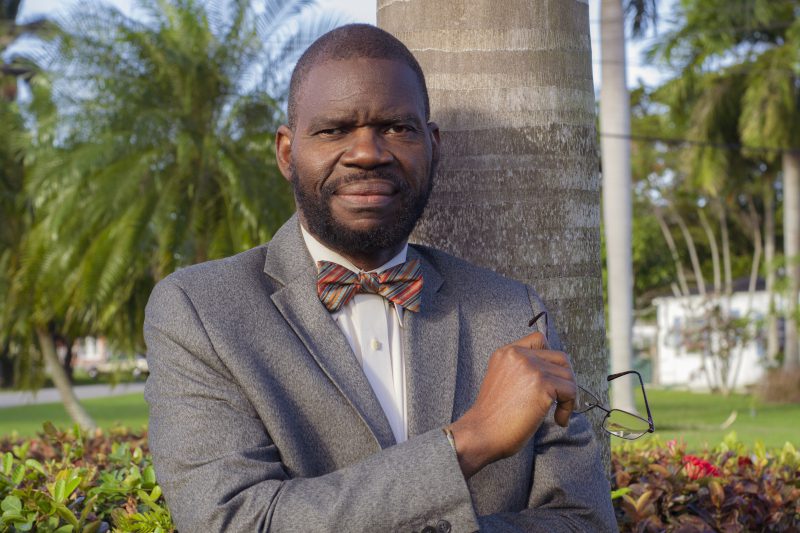
Professor John Egbeazien Oshodi is an American psychologist, educator, and author specializing in forensic, legal, and clinical psychology, cross-cultural psychology, police and prison sciences, and community justice. Born in Uromi, Edo State, Nigeria, he is the son of a 37-year veteran of the Nigeria Police Force—an experience that shaped his enduring commitment to justice, security, and psychological reform.
A pioneer in the field, he introduced state-of-the-art forensic psychology to Nigeria in 2011 through the National Universities Commission and Nasarawa State University, where he served as Associate Professor in the Department of Psychology. His contributions extend beyond academia through the Oshodi Foundation and the Center for Psychological and Forensic Services, advancing mental health, behavioral reform, and institutional transformation.
Professor Oshodi has held faculty positions at Florida Memorial University, Florida International University, Broward College, where he also served as Assistant Professor and Interim Associate Dean, Nova Southeastern University, and Lynn University. He is currently a contributing faculty member at Walden University and a virtual professor with Weldios University and ISCOM University.
In the United States, he serves as a government consultant in forensic-clinical psychology, offering expertise in mental health, behavioral analysis, and institutional evaluation. He is also the founder of Psychoafricalysis, a theoretical framework that integrates African sociocultural dynamics into modern psychology.
A proud Black Republican, Professor Oshodi advocates for individual empowerment, ethical leadership, and institutional integrity. His work focuses on promoting functional governance and sustainable development across Africa.