
Africa
A Psychologist Reflects on Salami, Uwaifo, Eko, Dattijo, and Ozekhome: Five Voices of Fire in a Judiciary Losing Its Soul -By John Egbeazien Oshodi
In 2025, he stood alone before the legal establishment and called out the Supreme Court for executing a man—Sunday Jackson—who had acted in self-defense. He invoked Section 222(4) of the Penal Code. He invoked morality. He invoked conscience. And in doing so, he invoked fear in the hearts of those who still pretend the system is intact.

In a country where justice kneels before politics, where courtrooms increasingly echo with fear, compromise, and calculation, five men have dared to break the silence. They are not just judges or lawyers—they are moral outliers, men who stood at the edge of institutional rot and chose to speak instead of retreat. Their voices—across different moments and different altars of the law—form a single chain: a chain of fire against a judicial system bleeding at its center.
This is no longer about legal doctrine. It is about legacy. It is about what happens when the last refuge of the people—the courts—becomes the last refuge of the powerful. And it is about those rare few who looked that betrayal in the face… and refused to blink.
Justice Isa Ayo Salami: The Whistleblower Before the Collapse
He was the first to ring the alarm while others whispered behind closed doors. In 2015, Justice Isa Ayo Salami—former President of the Court of Appeal—stood before the nation and spoke the unspeakable: that the judiciary was not merely flawed, but infiltrated. It was not simply under pressure—it was under siege, both from the outside and, more dangerously, from within.
Salami’s honesty cost him. He was suspended for refusing to bless political interference, punished for insisting that the NJC—the very body meant to guard judicial integrity—had become a tool of vengeance. His words were not coated in diplomacy. He warned: When bribe-takers rise and the incorruptible fall, the judiciary begins to rot from its roots.
Justice Samson Uwaifo: The Moral Sword in a Sea of Silence
In 2016, another voice cut through the haze. From Benin City, retired Supreme Court Justice Samson Uwaifo issued a moral indictment: A corrupt judge is more dangerous than a madman with a dagger in a crowded street. It wasn’t metaphor—it was diagnosis.
To Uwaifo, judicial corruption was not just unethical—it was lethal. Judges who sold justice were not civil servants—they were public enemies. He condemned the NJC for quietly retiring compromised judges with soft landings instead of criminal prosecutions. His call was radical in its simplicity: if a judge betrays the law, he must face it like any other offender.
Justice Ejembi Eko: The Insider Who Confirmed Our Worst Fears
In 2022, Justice Ejembi Eko retired not with pleasantries, but with fire. He confirmed what the people already whispered: that justice in Nigeria had become transactional. That judicial appointments and rulings were no longer born of merit or constitutional fidelity, but of connections, fixers, and political debts.
He did not theorize—he testified. From the bench of the Supreme Court, he watched how the temple of justice was auctioned, its altars defiled. His parting words were not a farewell. They were an autopsy.
Justice Musa Dattijo Muhammad: The Eulogy for a Judiciary That Once Was
Then, in 2023, came Justice Musa Dattijo—a voice once part of the highest sanctum—now mourning its collapse. His valedictory speech did not seek applause. It delivered indictment. He described a system where the Chief Justice had become emperor, where promotions were rewards for loyalty, and where dissent was punished by exclusion.
Dattijo’s words were a lament for a judiciary that had lost its way. We are not guided by the Constitution anymore, he implied—we are guided by power. His voice was the sound of an institution grieving itself.
Mike Ozekhome, SAN: The Last Flame Still Burning
Then came the one who is still standing. Not a retired judge, but a man still fighting in the trenches—Professor Mike Ozekhome, SAN.
In 2025, he stood alone before the legal establishment and called out the Supreme Court for executing a man—Sunday Jackson—who had acted in self-defense. He invoked Section 222(4) of the Penal Code. He invoked morality. He invoked conscience. And in doing so, he invoked fear in the hearts of those who still pretend the system is intact.
But Ozekhome didn’t stop at one case.
He peeled back the curtain on a trail of judicial betrayals:
The Imo governorship ruling: where the fourth-place candidate became governor, not by vote, but by legal fiction.
The Osun election case: where electoral fraud was overlooked by robe and gavel.
The Machina APC primaries case: where the judiciary disguised party manipulation as law.
The Rivers State crisis: where judicial silence became the accomplice of legislative fraud.
The Akpabio Senate reinstatement: a ruling that bent time, law, and reality to fit political design.
He called these rulings what they are: a dirty trail. He named the sickness. He pointed to the rot. And in doing so, he became the living echo of all who spoke before him.
The Chain That Refused to Break
Salami.
Uwaifo.
Eko.
Dattijo.
Ozekhome.
Different robes. Different stages. One fire.
They are not perfect. But they are principled. They are not saints. But they are seers. They said what others feared to say. And they stood while others bent.
In the language of psychology, what binds them is not just dissent—it is moral courage. The willingness to suffer for truth. The readiness to speak when silence feels safer. The resolve to bear witness even when justice no longer recognizes its own reflection.
To Those Plotting Against the Truth
To those preparing to muzzle Ozekhome…
To the men in robes, in parties, in security chambers, who plot not justice but revenge:
May justice rise against you.
May the spirits of our buried freedom fighters rise against you.
May your conspiracies choke on the silence you tried to force on others.
May your legacies decay before your breath does.
You are not silencing a man.
You are challenging truth.
And truth is not afraid of your court orders.
To the People: Your Silence is Their Shield
And to the people, watching all of this unfold:
Your fear is their comfort.
Your silence is their strategy.
Your inaction is their weapon.
Enough.
Let the youth stand up.
Let the elders speak again.
Let women carry the drumbeats of justice.
Let the streets become classrooms, and classrooms become battlegrounds of truth.
Because justice does not die in court alone.
It dies when you stop believing in it.
And it lives—when you rise.
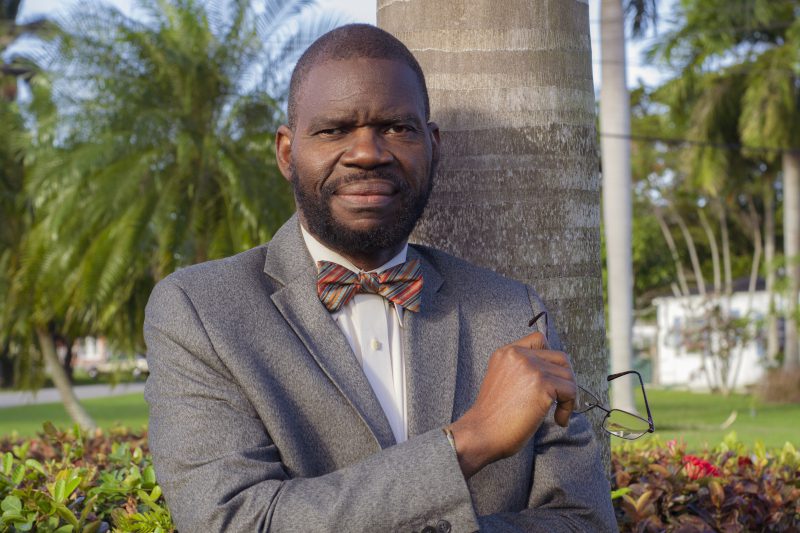
Professor John Egbeazien Oshodi is an American psychologist, educator, and author specializing in forensic, legal, and clinical psychology, cross-cultural psychology, police and prison sciences, and community justice. Born in Uromi, Edo State, Nigeria, he is the son of a 37-year veteran of the Nigeria Police Force—an experience that shaped his enduring commitment to justice, security, and psychological reform.
A pioneer in the field, he introduced state-of-the-art forensic psychology to Nigeria in 2011 through the National Universities Commission and Nasarawa State University, where he served as Associate Professor in the Department of Psychology. His contributions extend beyond academia through the Oshodi Foundation and the Center for Psychological and Forensic Services, advancing mental health, behavioral reform, and institutional transformation.
Professor Oshodi has held faculty positions at Florida Memorial University, Florida International University, Broward College, where he also served as Assistant Professor and Interim Associate Dean, Nova Southeastern University, and Lynn University. He is currently a contributing faculty member at Walden University and a virtual professor with Weldios University and ISCOM University.
In the United States, he serves as a government consultant in forensic-clinical psychology, offering expertise in mental health, behavioral analysis, and institutional evaluation. He is also the founder of Psychoafricalysis, a theoretical framework that integrates African sociocultural dynamics into modern psychology.
A proud Black Republican, Professor Oshodi advocates for individual empowerment, ethical leadership, and institutional integrity. His work focuses on promoting functional governance and sustainable development across Africa.























You must be logged in to post a comment Login