Africa
Africa’s Military Alliances Struggling with Multitude of Security Challenges -By Kestér Kenn Klomegâh
The African Union is headquartered in Addis Ababa, Ethiopia. Its vision is focused on an integrated, prosperous and peaceful Africa, driven by its own citizens and representing a dynamic force in the global arena. It has designed a continental development programme, referred to as the AU Agenda 2063, which is Africa’s development blueprint to achieve inclusive and sustainable socio-economic development over a 50-year period.

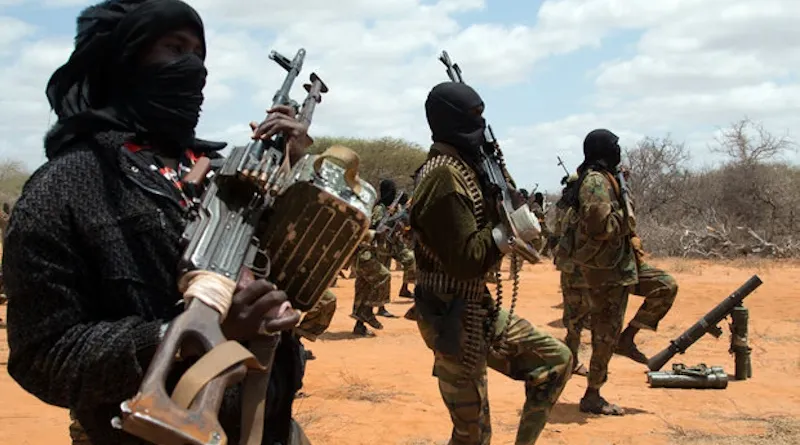
Given the persistent complex nature of conflicts in Africa and within the context of local conditions, African leaders are feverishly in search for sustainable solutions. Ethiopian Prime Minister, Abiy Ahmed, has suggested that dealing with existing conflicts and disputes on the continent, it is necessary to mobilize collective efforts to resolve them and “must be confined to this continent and quarantined from the contamination of non-African interference.”
But the key obstacle is related to gross weakness in the political governance system combined with underdevelopment, driving the unemployed to rise against the economic disparity. Ethnic clashes have become rampant due to claims of ownership and access to untapped natural resources. The worst approach by allowing foreign military forces, who barter their military service in exchange for exploiting natural resources. Atrocities are committed due to lack of knowledge of local conditions.
Prime Minister Abiy Ahmed has consistently highlighted opinions and perspectives which are related to Francophone African countries. Developments in these conflict-infested countries have negatively been affected, with millions of people displaced and ultimately pushed into abject poverty. Until today, external involvement in Africa’s peace processes have remarkably been complicated by external forces, largely imposing their aspirations to exploit natural resources and influencing internal policies which shape the future directions in those countries. In the long-run, Africa’s illusive dream of unity makes the future uncertain.
The Second Lomé Peace and Security Forum (LPSF II), held in October 2025, in Togo’s capital, African heads of state, diplomats, and peacebuilding experts discussed thoroughly strategies for sustainable peace and stability across the continent.
The two-day forum (October 11–12), held under the theme “Africa Facing Complex Security Challenges: How to Strengthen and Sustain Peace and Stability in a Changing World,” was organized by the Togolese Ministry of Foreign Affairs, Cooperation, African Integration, and Togolese Abroad in collaboration with the United Nations Development Programme (UNDP).
“Africa must take charge of its own destiny by defining and implementing its own security policies. Peace cannot rely solely on external interventions,” asserted Togolese President Gnassingbé, and further emphasized that lasting stability must go beyond military efforts and highlighted the role of justice, inclusion, good governance, education, health, and employment. He also called for reforms in global financial systems to recognize peace and security investments as global public goods rather than sources of debt for African nations.
Liberian President Joseph Boakai, delivering the keynote address, stressed that lasting peace must be African-led and rooted in strong institutions. “External support is valuable, but resilience must come from within,” he said. Boakai praised Togo for providing a platform for dialogue and urged leaders to strengthen governance systems and regional cooperation. The peace we seek must be homegrown, created by Africans, owned by Africans, and sustained by Africans,” he said.
The forum has attracted leaders including Gnassingbé, Boakai, former Nigerian President Olusegun Obasanjo, representatives from the African Union (AU), UN agencies (UNDP, UNOWAS), and regional blocs such as ECOWAS, ECCAS, and COMESA, along with peacebuilding experts, scholars, and youth representatives.
Sessions focus on enhancing Africa’s strategic autonomy, combating terrorism and violent extremism in the Sahel and Great Lakes regions, and leveraging youth, women, and technology—including AI—in conflict prevention. By hosting LPSF for the second consecutive time, Togo reinforces its role as a hub for peace diplomacy and inclusive dialogue. Participants produced actionable recommendations and roadmaps to strengthen peace, resilience, and cooperation across Africa.
Citing the 2022 Global Terrorism Index, Filipe Nyusi reported that some 48 per cent of terrorism-related deaths occurred in Africa, while the Sahel is the “new epicentre” of terrorist attacks. Filipe Nyusi, very outspoken, shared valuable experiences about the use of well-constituted regional military force for enforcing peace and security in Mozambique. Creating regional military forces to fight threats of terrorism will absolutely not require bartering the entire gold or diamond mines (natural resources) for the purchase of military equipment from external countries. Filipe Nyusi sentiments were about Russia’s security partnership with Africa, especially French-speaking African countries.
The South African Institute of International Affairs (SAIIA), a policy think tank, has published a special report on Russia-Africa. The report titled – Russia’s Private Military Diplomacy in Africa: High Risk, Low Reward, Limited Impact – says that Russia’s renewed interest in Africa is driven by its quest for global power status. Few expect Russia’s security engagement to bring peace and development to countries with which it has security partnerships.
While Moscow’s opportunistic use of private military diplomacy has allowed it to gain a strategic foothold in partner countries successfully, the lack of transparency in interactions, the limited scope of impact and the high financial and diplomatic costs exposes the limitations of the partnership in addressing the peace and development challenges of African host countries, the report says.
Overcoming the multidimensional problems, especially extremism and terrorism, facing Libya, Sudan, Somali, Mali, and the Central African Republic (CAR) will require comprehensive peace and development strategies that include conflict resolution and peacebuilding, state-building, security sector reform, and profound political reforms to improve governance and the rule of law – not to mention sound economic planning critical for attracting foreign direct investment needed to spur economic growth.
Within the context of growing complexities of world’s geopolitical changes, Prime Minister Abiy Ahmed offered objective suggestions including the fact that addressing existing conflicts and disputes with commitment and in practical terms on the continent, it is absolutely necessary to mobilize collective efforts to resolve them and, most importantly, it “must be confined to the continent and quarantined from the contamination of non-African interference.”
The African Union is headquartered in Addis Ababa, Ethiopia. Its vision is focused on an integrated, prosperous and peaceful Africa, driven by its own citizens and representing a dynamic force in the global arena. It has designed a continental development programme, referred to as the AU Agenda 2063, which is Africa’s development blueprint to achieve inclusive and sustainable socio-economic development over a 50-year period.
—