
Africa
Aisha Babangida and the African Rural Woman -By Edwin Uhara
Therefore, the challenges facing the African Rural Woman necessitated the celebration of the efforts of Aisha Babangida in giving rural women voice and access through many of her NGO’s but because this piece is about the International Day of Rural Women, I limited the scope of this article to the Better Life Program for the African Rural Woman for what they are doing silently.

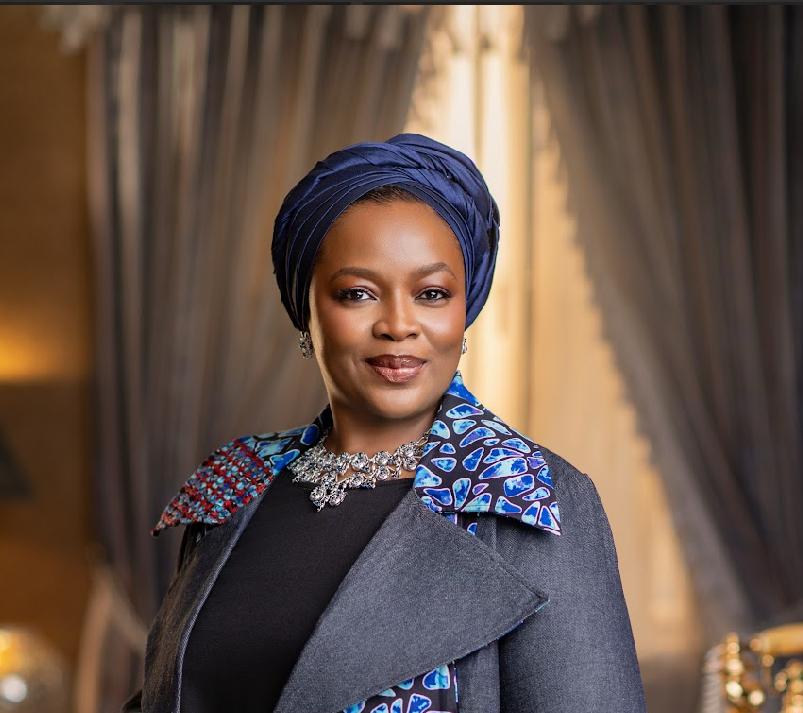
There is no better time to appreciate the humanitarian gestures of Aisha Babangida, a woman who has been silently transforming the lives of people around her than using the occasion of this year’s International Day for the Rural Women; a day set aside by the United Nations to raise awareness on the status of women and to shed more lights on the inequalities women still face as well as advocate for their recognition and participation in decision-making and demanding stronger social protection systems that reduces the digital divide they face in this century.
Accordingly, the works of Aisha Babangida has become even more pronounced as we mark the 30th anniversary of the famous Beijing Women Conference of 1995 this year.
And in line with this year’s theme: “Rural Women Sustaining Nature for our Collective Future,” Aisha Babangida through the Better Life Program for the African Rural Woman has been shaping the lives of the rural women with relevant skills through trainings and empowerments.
However, the empowerment of the Better Life Program is not like other empowerment programmes out there where there is a general template for their empowerment programmes irrespective of the need of each state or zone but the Better Life empowerment program is anchored on state to states and region to regions top priorities based on SWOT analysis.
Hence, before deciding on the type of training and empowerment to be offered to a particular region, the Better Life Program will first of all get the baseline data and analyze it to ascertain the strength, weaknesses, opportunities and threats of the zone before coming forth with an empowerment Program that suits the zone while consolidating on the comparative advantage the region already have.
In other words, their focus is building on the strength and opportunities of each state or region. For example, a state good in groundnut production like Kano would be leveraged on by training their women and girls on modern groundnut production techniques and empowering them on that basis so as to add value to themselves and create value chains.
The reason been that the template that works in Kano State will definitely not work in Enugu State because apart from the comparative advantage and the availability of market, topographical differences is a also a factor.
So all these things are factors that the Better Life Program considers before rolling out their programmes and it has helped in ensuring that empowerments gets to the real people that needed it most.
Similarly, empowering women is not only a right but also a potent force for alleviating poverty, hunger, diseases and reducing effects of global warming.
According to UN report, “Women are responsible for half of the world’s food production while working as environmental and biodiversity stewards.”
Even at that, there are still challenges facing the rural women globally. The UN report further stated that, “Women and girls in rural areas suffer disproportionately from multi-dimensional poverty.”
“They may be as productive and enterprising as their male counterparts but are less able to access land, credit, agricultural inputs, markets, and high-value agrifood chains and obtain lower prices for their crops.”
The report added that “Women and girls in rural areas lack equal access to productive resources and assets, public services, such as education and health care, and infrastructure, including water and sanitation, while much of their labour remains invisible and unpaid.”
In the same vein, the report added that ‘If women had the same access to productive resources as men, farm yields could increase by 20–30 per cent, feeding an additional 100 to 150 million people.”
Based on the foregoing, empowering our women is no longer a choice but a necessity.
Therefore, the challenges facing the African Rural Woman necessitated the celebration of the efforts of Aisha Babangida in giving rural women voice and access through many of her NGO’s but because this piece is about the International Day of Rural Women, I limited the scope of this article to the Better Life Program for the African Rural Woman for what they are doing silently.
While I encourage Aisha Babangida to continue with her good works for humanity, I’m also appealing to public spirited individuals to support the good cause for the sake of the common humanity we share.
Happy International Day for the Rural Women!
Comrade Edwin Uhara is a UN-trained Negotiator.
He writes from Abuja.




















You must be logged in to post a comment Login