
Africa
Amaye’s Blood Weeps -By Ariwoola Samuel Akinwale
The blood of these victims cries out from the grave. Their assailants are not saints; their accusers are not without fault. Moreover, the accused were never given an opportunity to be heard. They cry for justice from the living, for they may have been grievously and wrongly accused. When we refuse to speak, we make martyrs of them. Our memories do not fade; every now and then, their pictures reappear online. Indeed, human blood speaks with a loud, blunt voice.

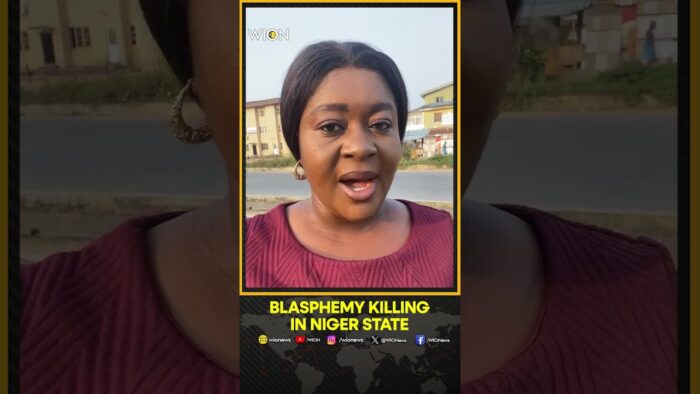
On August 30, 2025, around 2:00 PM, a report emerged that a woman named Amaye, from Kasuwan Garba in Mariga LGA, had allegedly made comments against the Islamic prophet. In response, a mob attacked her and set her ablaze before security reinforcements could arrive. This happened in Niger State. Her alleged offense? She rejected a marriage proposal from her nephew, a practice he claimed was in line with Sunnah. Her assailants considered her rejection an inflammatory act.
Characteristically, this murder received far less attention and condemnation than it deserved. It is one thing for perpetrators to go unpunished; it is another for condemnation from relevant authorities to be so muted.
Except for a few newspapers, the incident received little media attention, certainly not on the scale of the Deborah Samuel case. Why? Perhaps the public is becoming desensitized to such horrors, just as we have with the endless killings by bandits and Boko Haram in the Sahel. There is also a palpable sense of fear that prevents many Nigerians, especially the traditional media, from speaking out.
This is not the first time. Deborah Samuel Yakubu, a student at Shehu Shagari College of Education, was lynched on May 12, 2022. Usman Buda, a butcher, was killed in Gwandu Market, Sokoto State, on June 25, 2023. In 2016, Bridget Agbahime was killed at Kofar Wambai Market in Kano. Yunusa was killed in Nasaru Village, Bauchi State, on June 20, 2024. These are just a few of the recorded incidents in northern Nigeria over the last decade.
The blood of these victims cries out from the grave. Their assailants are not saints; their accusers are not without fault. Moreover, the accused were never given an opportunity to be heard. They cry for justice from the living, for they may have been grievously and wrongly accused. When we refuse to speak, we make martyrs of them. Our memories do not fade; every now and then, their pictures reappear online. Indeed, human blood speaks with a loud, blunt voice.
These incidents reveal unsettling truths about who we are as a nation. In this piece, I will reflect on Nigeria’s tolerance for impunity, where “jungle justice” is cloaked in religious and political colours.
First, one might argue that the North has the right to define its acceptable social norms and condemn practices that violate its collective values. Sociologists distinguish between the sacred and the profane in religion. The profane can be treated casually, but the sacred cannot. For most northerners, the Sunnah and the Prophet Muhammad are held as absolutely sacred. When non-adherents are perceived as treating these sacred tenets casually, they are often met with violent resistance. A people, it is argued, must be able to define these aspects of their existence.
The problem, however, arises when private individuals take it upon themselves to mete out punishment to alleged blasphemers. In a democracy, the law reserves that responsibility for the state alone. Yet today in the North, an accusation of blasphemy is often a prelude to jungle justice and barbarity.
Before the law, these perpetrators are simply criminals. Too often, law enforcement agencies are overpowered by irate mobs who take the execution of victims into their own hands.
The French sociologist Émile Durkheim described the “collective effervescence” of mob violence, where individuals lose themselves in a collective rage to defend a shared religious symbol they feel has been desecrated. In such moments, reason is abandoned. The crowd becomes a vessel of sacred outrage, individual restraint dissolves, and violence is sanctified as a defense of the Prophet.
However, as Max Weber reminds us, the modern state is defined by its monopoly on the legitimate use of force. Each time a mob usurps that role, the state’s authority erodes, and religious sentiment overwhelms legal order. The Nigerian state cannot abdicate its duty, but to succeed, it needs the support of the northern elite, who must navigate the delicate nature of our polity.
On this point, the northern ruling class must find consensus. That a few figures like Bishop Matthew Hassan Kukah and the Sultan of Sokoto are often the lone voices of condemnation is antithetical to our nation’s progress. We all remember when former Vice President Atiku Abubakar retracted his condemnation of Deborah Samuel’s murder after a fierce backlash from many of his northern Muslim supporters.
Painfully, this silence from the state and the elite is interpreted by Nigerians and the international community as a tacit consensus to condone crime when religion is involved. The faces of the killers are often displayed brazenly in videos on social media, yet the failure to prosecute them is a glaring and painful omission.
Second, we cannot ignore the socio-political dimension. A sick society will always show its symptoms. This sickness manifests in the social character of a people, where a frenzied crowd is energized at the thought of shedding human blood. A community that finds psychic relief in killing its own is profoundly ill. Jungle justice is a social malady that signals the weakness of a state collapsing under the weight of religious sentiment.
Third, this will not be the last. The way we handle these matters only ensures their continuation. Where we ought to speak, we prioritize silence. The political elite is especially guilty, fearing the loss of popularity from a constituency that rewards such violence. And so, in this most recent incident, our leaders simply looked away.
I am left to imagine a day when the northern Emirs will stand against it; when our religious leaders will denounce it; when the media will find the courage to speak out against making martyrs of our fellow citizens; and when our political leaders will finally take decisive action to end this menace.
Ariwoola Samuel Akinwale wrote this piece from Lagos.
ariwoolaakinwale@gmail.com















You must be logged in to post a comment Login