
National Issues
Anambra’s N50 Million Campaign Permit Fee Raises Constitutional Questions Ahead of Nigeria’s 2027 Presidential Election: Does Soludo Have the Power? -By Daniel Nduka Okonkwo
The Anambra permit announcement has moved well beyond the realm of local advertising administration it now sits at the centre of a broader national conversation about where legitimate state regulation ends and the constitutionally protected space of democratic participation begins.

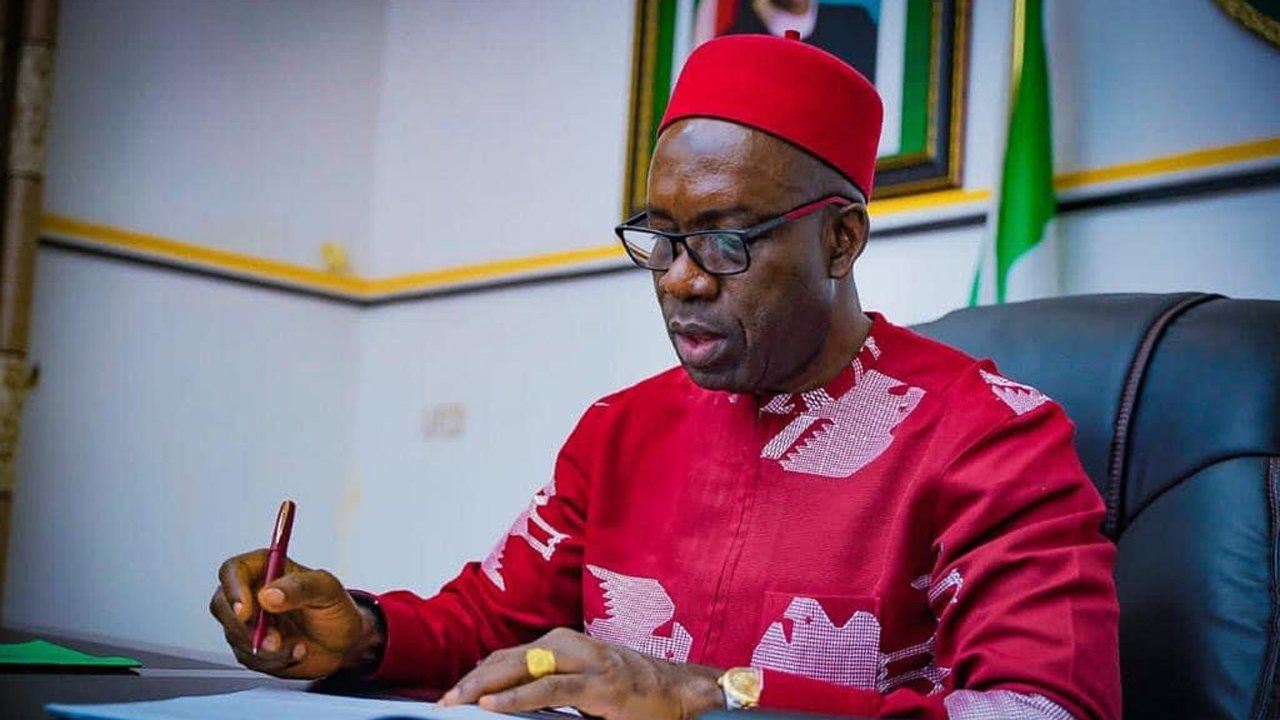
When a state government agency sets the price of political visibility at fifty million naira, it is no longer regulating outdoor advertising it is rationing democracy. The Anambra State Signage and Advertisement Agency’s permit fee structure, unveiled ahead of the 2027 general elections, deserves scrutiny not merely as a revenue policy but as a constitutional event: one that tests whether a sub-national bureaucracy can, under the cover of environmental aesthetics and orderly signage, erect a financial wall around the most fundamental right a citizen possesses in a republic the right to seek, and be sought for, public office. At its most generous interpretation, the policy is regulatory overreach dressed in administrative language. At its most troubling, it is the quiet architecture of exclusion, built not with open hostility to democratic participation but with the cold precision of a fee schedule.
Nigeria’s electoral climate ahead of the 2027 general election has entered a fresh constitutional and political debate after the Anambra State Signage and Advertisement Agency (ANSAA) announced that presidential candidates seeking to deploy outdoor campaign materials in the state will be required to pay N50 million in permit fees.
The directive was announced on Friday by the Assistant General Manager of ANSAA, Chika Ngobili, during a press briefing at the agency’s headquarters in Awka. The announcement immediately generated controversy, with constitutional lawyers, civil society groups, and political observers questioning both its legality and its wider implications for Nigeria’s democratic process.
According to Ngobili, ANSAA is empowered to issue permits and licences for signage and advertisement deployment, ensure environmental aesthetics, protect public infrastructure, and collect revenue for the state government. The agency stated that the permits are intended to prevent visual pollution, protect public infrastructure, maintain environmental aesthetics, and ensure fairness in access to advertising spaces.
ANSAA is the statutory body established by the Anambra State Government in 2010 to regulate outdoor advertising structures, signage, and visual promotional activities across the state.
Under the announced framework, presidential candidates would pay N50 million to obtain approval for outdoor campaign materials in Anambra State, while senatorial candidates would pay N20 million. Candidates for the House of Representatives would pay N5 million, local government chairmanship aspirants N2.5 million, state assembly candidates N1.5 million, and councillorship candidates N100,000.
A further requirement has also drawn attention: all outdoor campaign materials by political parties, candidates, support groups, advertising agencies, and practitioners must first be vetted and approved by the Advertising Regulatory Council of Nigeria before deployment. Only licensed advertising practitioners recognised by ARCON would be permitted to erect billboards and related campaign structures.
The scale of the fees has immediately raised constitutional concerns.
Legal analysts argue that while states may regulate signage and public advertising, fees of such magnitude risk becoming more than administrative regulation. Instead, they may amount to financial barriers capable of excluding candidates from meaningful participation in the electoral process.
At the centre of the debate is whether a state agency can lawfully impose charges so substantial that they effectively determine who can access public campaign visibility in the lead-up to a national election.
Nigeria’s 1999 Constitution guarantees broad protections relating to political participation, freedom of association, and freedom of expression.
Section 39 guarantees freedom of expression, including the right of individuals and political actors to communicate political ideas and campaign messages.
Section 40 protects the right to associate freely, including through political parties and political participation.
Section 42 prohibits discrimination and guarantees equality before the law.
Constitutional lawyers note that, taken together, these provisions are intended to protect electoral competition from artificial barriers capable of distorting democratic access.
A N50 million permit fee for presidential campaign advertising in a single state, critics argue, raises a difficult constitutional question: whether the state is regulating campaign materials or pricing participation beyond the reach of candidates without extraordinary financial backing.
That concern becomes sharper when viewed alongside Section 14(2)(c) of the Constitution, which provides that sovereignty belongs to the people and that citizens must be able to participate in their government.
Democracy, legal scholars argue, becomes weaker when access to voters is tied disproportionately to wealth.
The legal argument extends beyond constitutional rights.
Under Nigeria’s Electoral Act 2022, the conduct and regulation of elections fall primarily under the authority of the Independent National Electoral Commission.
INEC regulates electoral timelines, campaign conduct, and campaign finance nationwide.
While states retain authority over local advertising infrastructure and physical signage regulation, legal analysts note that they may not lawfully impose administrative conditions that substantially interfere with federally protected electoral participation.
Political lawyers argue that opponents could contend that ANSAA’s policy exceeds its statutory authority and is therefore ultra vires, a legal doctrine applied when a government agency acts beyond powers granted to it by law.
A state signage authority may regulate billboard placement, permit locations, and environmental compliance. Whether it can impose charges large enough to materially alter campaign access in a presidential race may become a major constitutional test.
Several constitutional and democratic concerns have already emerged.
Excessive financial burden: A N50 million fee for outdoor campaign materials is widely viewed as extraordinary and potentially exclusionary.
Disproportionate political impact: Major political parties may absorb the cost. Smaller parties, reform movements, and grassroots candidates may not.
Potential conflict with federal electoral law: Campaign regulation and access to the ballot are already governed nationally.
Risk of discriminatory effect: Although the fee applies generally, critics argue that it favours wealthier candidates and entrenched political structures.
Potential chilling effect on expression: Campaign messaging is part of democratic speech. Excessive financial restrictions could discourage participation.
Profiles International Human Rights Advocate a civil society group also warn that the implications extend beyond Anambra, if replicated nationally and state-level permit systems of this scale could create uneven campaign access across Nigeria’s thirty-six states, placing constitutional rights in direct tension with administrative regulation.
Nigeria’s courts have repeatedly drawn constitutional boundaries between federal authority and state authority.
Previous constitutional disputes in which the courts held that states cannot legislate beyond powers reserved to federal institutions. That principle may again become relevant if opposition parties, advocacy groups, or affected candidates seek judicial review.
A legal challenge could take several forms: fundamental rights enforcement proceedings under Chapter IV of the Constitution; judicial review against ANSAA on grounds of ultra vires; public-interest litigation by democracy and governance groups; and electoral clarification involving INEC’s regulatory authority.
Beyond the courtroom, the political consequences may prove equally significant.
Critics warn that any policy perceived as financially restrictive could deepen distrust in electoral fairness ahead of 2027.
Supporters of the measure argue that the state has a legitimate responsibility to regulate outdoor advertising and protect public infrastructure.
Opponents insist that regulation must remain proportionate, lawful, and constitutional.
The core democratic question remains unresolved: can a state government regulate campaign visibility without undermining the constitutional right of citizens and political actors to participate freely in an election?
That question may ultimately be answered not by political statements, but by the courts.
The controversy comes at a politically sensitive moment.
Nigeria is already navigating economic pressure, inflation, continuing public debate over governance, and growing scrutiny of democratic institutions ahead of the next presidential election.
Any measure perceived as restricting access to political campaigning is likely to attract intense national attention.
The Anambra permit announcement has moved well beyond the realm of local advertising administration it now sits at the centre of a broader national conversation about where legitimate state regulation ends and the constitutionally protected space of democratic participation begins.
Whether it survives judicial scrutiny it may help define not only campaign access in Anambra State, but also the broader meaning of electoral fairness in Nigeria’s 2027 democratic cycle.
Daniel Nduka Okonkwo is an investigative journalist, human rights advocate, and policy analyst based in Abuja, Nigeria. He is the publisher of Profiles International Human Rights Advocate, a platform focused on accountability journalism, governance reporting, and the documentation of human rights issues across Africa. His work examines the intersection of political power, institutional accountability, systemic failure, and the human impact of corruption, with particular focus on Nigeria and the wider African continent.
Okonkwo’s reporting and analysis have been published in Sahara Reporters, African Defence Forum, Daily Trust, Vanguard, Daily Intel, Opinion Nigeria, African Angle, Local Newsbreak, and other international media outlets. His work is driven by a commitment to transparency, democratic governance, and justice. He also collaborates with Daniels Entertainment on human rights initiatives, extending his advocacy beyond traditional journalism into broader public engagement.
He is based in Abuja, Nigeria, and can be reached at dan.okonkwo.73@gmail.com.

















You must be logged in to post a comment Login