
National Issues
Reimagining Nigerian Media in an Age of Distrust -By Muhammad Auwal Ibrahim
Therefore, the innovation is not to soften criticism, but to expand it by exposing the problem, highlighting the way out, and showing the audience how to take part in fixing their challenges. This kind of responsible journalism treats trust as a product, not as a byproduct of truth.


It is no longer news that public institutions in Nigeria do not work for the common man. Rather, they work for the elites. This is evident in nearly every public sector. As a nation, Nigeria has failed its citizens. From one corruption scandal to the next, from embezzlement to outright neglect, citizens have lost hope in these institutions.
For time immemorial, media reports are based on failure which makes the audience often tired of the narratives. Crucial as that is, uncovering institutional failures in a problematic manner is not enough. Media practitioners must embrace innovative content strategies that move beyond just bad news reporting.
In the 21st century, media practitioners must prioritise solutions reporting style over the usual rewriting of press releases. Corruption is a lived reality for all Nigerians. But people need to know what is working. What can be done to make the system work again: what has been tried, how social issues are being solved, what lessons can be replicated, and what are the limitations. This impacts real lives of people. The public will only trust the media when they see it as a tool for change, not merely an arm of the state apparatus.
That is where solutions-oriented journalism comes in. The public will only trust the media when they see it as a tool for change, not merely an arm of the state apparatus.
Current realities in Nigeria make this transition urgent. Banditry, a dwindling economy, climate change, poverty, and unemployment demand more sophisticated reporting that moves beyond merely highlighting problems. Coverage of these crises should include responses, gaps, and insights giving audiences direction, not just anger.
I have witnessed this firsthand at my organisation, Halal Reporters, where innovative storytelling is changing the narrative around development issues. Based in a region plagued by multiple challenges, the outlet reports both what is not working and what can be done to address it, often prompting institutions to act. This approach has earned our title several awards at both national and international scenes.
Content formats must evolve beyond long-form articles meant for the elites. Short Tiktok explainers, satire, AI-simulations, and even social commentary make the audience more engaged, particularly the Gen-Zs. When media practitioners make their contents local, break down complex issues, and make governance easier to comprehend, audiences are more likely to rebuild trust because they see their lives and realities accurately captured.
Rebuilding trust requires media practitioners to be transparent about their work, explaining methodologies, making corrections, crediting AI where necessary, and protecting anonymous sources.
It is crucial to note that no matter how the media wants to fix Nigeria, it can’t do it alone. This is a collaborative work that demands all hands on deck. But the media can mend the bridge between citizens and institutions. That happens through strategic content that not only exposes problems but also shows how to address them. Media practitioners should document not just where systems fail, but also where change is possible.
Trust is not a headline. It is an inheritance. You cannot inherit it by screaming into the void of failure. You inherit it by showing a man that his anger can be translated into action, and his action into repair. A society without trust is a house without a roof. But journalism, at its highest, is not the rain that exposes the leak. It is the hand that points to the hammer, the nail, and the place where the roof can be mended. To rebuild trust is to remind people that they are not spectators in their own story. They are co-authors. And the pen, once returned to their hands, writes hope into the margin of despair.
The role of media workers is not just to cover reality, but to show how it can be made better. In a time when public trust in state institutions has eroded, the best approach is not only to hold power to account but also to highlight where solutions exist. This affirms that there is light at the end of the tunnel.
Therefore, the innovation is not to soften criticism, but to expand it by exposing the problem, highlighting the way out, and showing the audience how to take part in fixing their challenges. This kind of responsible journalism treats trust as a product, not as a byproduct of truth.
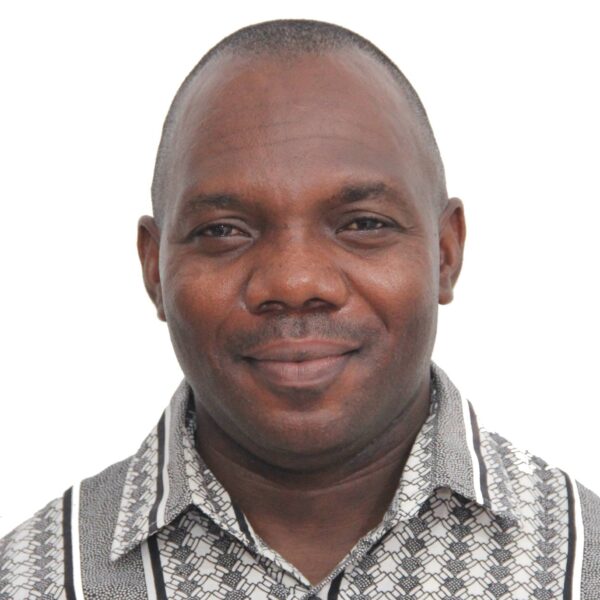
Muhammad Auwal Ibrahim is a decorated investigative journalist and a 2026 MTN Media Innovation Programme Fellow at Pan-Atlantic University, Lagos. He can be reached via awwalbinibrahim@gmail.com.






















You must be logged in to post a comment Login