
National Issues
Food Insecurity: Governance, Incompetence And Compromise -By Akpoturu Best
The current food crisis is a loud wake-up call, exposing the heavy cost of political negligence and systemic corruption. If the ruling class continues to prioritize short-term political advantages over structural agricultural reforms, they will soon discover that the hunger they failed to address will become the very force that dismantles their architectures of power. True national security begins on the farm, and true governance is measured by the abundance on the citizen’s plate.

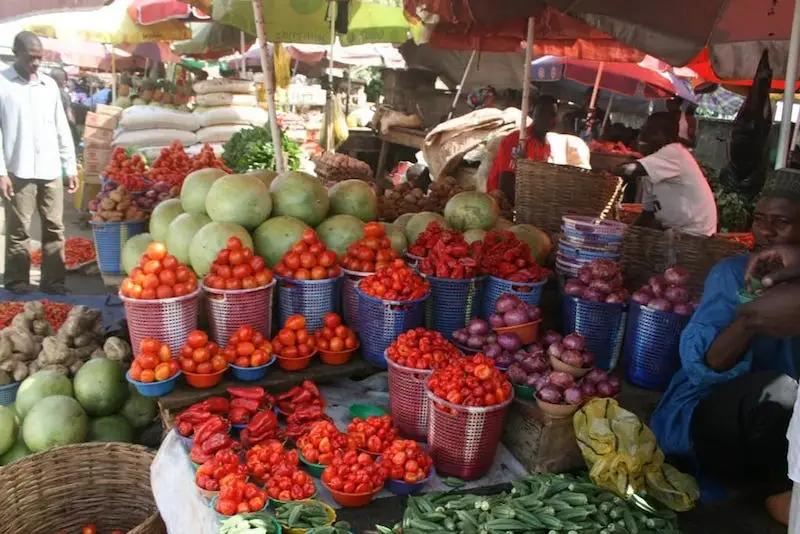
Of all the vulnerabilities that can compromise a sovereign state, the inability to feed its own populace is perhaps the most dangerous and destabilizing. Food is not merely a commodity; it is the fundamental infrastructure of human existence. When a nation faces chronic hunger, it is not simply experiencing an agricultural deficit; it is witnessing a profound breakdown of its social fabric. In contemporary governance, particularly across developing nations like Nigeria, the narrative surrounding food shortages is often conveniently blamed on external factors: climate change, global supply chain disruptions, or unpredictable weather patterns. While these ecological and global factors are real, they frequently serve as a convenient smokescreen. The stark reality is that modern food insecurity is rarely just an act of nature. More often, it is the predictable, systemic consequence of governance incompetence and deep institutional compromise.
To understand how food insecurity transforms from an agricultural challenge into a national crisis, one must first examine the anatomy of governance incompetence. True governance requires anticipation, strategic planning, and the building of institutional resilience. Incompetence, however, manifests as an inability to move past reactive emergency management. For decades, agricultural policies in developing states have been defined by short-sighted political cycles rather than long-term sustainability. Comprehensive programs aimed at rural development, mechanized farming, and storage technology are frequently abandoned halfway whenever power changes hands. The basic infrastructure required to sustain an agrarian economy, such as reliable rural feeder roads, accessible post-harvest storage facilities, and functional irrigation networks, remains broken or largely non-existent. When a state fails to build the infrastructure needed to transport food from rural agrarian belts to urban markets efficiently, it actively creates artificial scarcity, allowing tonnes of produce to rot in the fields while city centers starve.
This mechanical failure of governance is further worsened by systemic compromise. Policy compromise occurs when the public institutions tasked with ensuring food security are hijacked by private, rent-seeking interests. In many instances, government interventions, fertilizer subsidies, and agricultural loan schemes designed to empower smallholder farmers are systematically intercepted by political middlemen and ‘paper farmers.’ These well-connected individuals exploit state resources for personal profit while the actual producers are left without capital or inputs. The distribution of high-yield seeds and modern machinery often follows patterns of political patronage rather than agricultural potential. When access to critical farming inputs depends on political loyalty rather than agronomic need, the productivity of the entire agricultural sector is deeply undermined, leaving the national food supply structurally weak.
Beyond the misappropriation of resources, institutional compromise directly shapes the trade policies that govern food markets. In an attempt to protect domestic markets or benefit favored business monopolies, governments often implement abrupt import bans or complex tariff structures without first building the domestic capacity to meet the resulting demand. These policy choices, frequently driven by backdoor lobbying rather than sound economic data, create massive distortions in the marketplace. Smuggling cartels step into the gaps, inflating prices and forcing everyday citizens to spend a disproportionate percentage of their household income on basic food. When regulatory agencies compromise enforcement standards in exchange for bribes, the market becomes flooded with counterfeit inputs, such as fake fertilizers and sub-standard pesticides, which destroy crop yields and ruin the soil, effectively sabotaging future harvests for short-term illicit gains.
Furthermore, the crisis of food insecurity is deeply connected to the state’s broader failure to maintain basic national security. Agriculture cannot thrive in an environment of fear and displacement. When armed bandits, insurgent groups, and criminal syndicates can freely terrorize rural agrarian communities, chase farmers from their lands, and demand illegal taxes before harvest, the agricultural ecosystem collapses. The state’s inability or refusal to secure rural farmlands represents the ultimate compromise of its primary duty. When rural communities realize that the state cannot protect their lives or livelihoods, they abandon their fields for the relative safety of urban slums or internally displaced persons (IDP) camps. This massive displacement turns productive producers into dependent consumers, putting an unsustainable burden on an already fragile food distribution network.
The economic consequences of this combined incompetence and compromise are devastatingly clear. Food inflation acts as a hidden tax that hits the most vulnerable populations hardest. As the cost of staples rises out of reach, dietary diversity drops, leading to widespread malnutrition and stunting among children. A malnourished population is a structurally weakened workforce, which reduces long-term economic productivity and locks families into multi-generational cycles of poverty. When the basic act of buying a loaf of bread or a bag of grain becomes a source of daily financial trauma, the political legitimacy of the state erodes. History shows that when people are pushed to the brink of starvation, the fear of state authority disappears, opening the door to civil unrest, protests, and systemic political instability.
Reversing this dangerous trend requires moving past superficial interventions like temporary food palliatives and emergency handouts, which only treat the symptoms while ignoring the disease. True food security demands a zero-tolerance approach to institutional compromise. Agricultural intervention programs must be completely insulated from political patronage, utilizing transparent, digitally verifiable distribution channels that deliver resources directly to verified, active farmers. Additionally, the state must treat the protection of rural agrarian spaces as a critical national security priority, deploying specialized security units to restore safety to farming communities and rebuild broken trade corridors.
Ultimately, food security is the truest metric of functional governance. A nation that cannot feed its people has compromised its sovereignty, leaving itself vulnerable to internal chaos and external manipulation. The current food crisis is a loud wake-up call, exposing the heavy cost of political negligence and systemic corruption. If the ruling class continues to prioritize short-term political advantages over structural agricultural reforms, they will soon discover that the hunger they failed to address will become the very force that dismantles their architectures of power. True national security begins on the farm, and true governance is measured by the abundance on the citizen’s plate.























You must be logged in to post a comment Login