Global Issues
Artificial Intelligence or Automated Plunder? The Global Collapse of Copyright Protection -By Fransiscus Nanga Roka
So the question is not whether societies must choose innovation or copyright. It is whether they will hold the line against centralized technological power and continue to protect both the legal infrastructure around creative life, but also its moral underpinnings. If the answer is no, copyright protection would not be the only thing that was collapsing. It is the notion that human creativity means more than just being a cog in an automated machine. And that would not be an innovation victory. It was a shortfall in the political will.

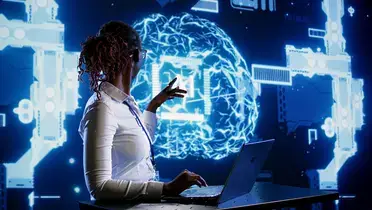
The artificial intelligence industry sells itself as the builder of the future. But a good part of its success is built on this more troublesome underlying reality: the mass harvesting of yesterday’s human creativity. Now there is a question lurking beneath this facade of innovation that the policymakers cannot continue to avoid: when immense troves of copyrighted books, articles, music, images and research are trained on with little more than an implied OK from their owners (if not in fact without consent at all), should we call it technological advancement or appropriation by scale unimaginable?
The digital economy has run on the premise that data is free for many years. Generative AI beat that assumption to its most extreme end. No state-of-the-art models today can be produced in a vacuum, they are created by consuming intellectual labor compiled over decades, the work of hundreds if not thousands of writers, journalists, artists musicians and academics. It might be original sounding output, but the commercial realities of the industry are inseparable from its own assimilations morally by neglect without permission/without pay and without transparency.
This is not simply a disagreement over technology. It explores whether copyright has any purpose in a world of algorithmic dominance. Copyright was never only about economics. Fundamentally, it is simply an expression of a social compact, which states that those who create must have some limited ability to control the exploitation and use even the commercial value extracted from their creations. That compact is now coming under tremendous pressure. AI firms have claimed that ingesting vast quantities of works protected by copyright is essential to their innovation, and in some jurisdictions they are busily seeking cover beneath the sprawl of fair use or text-and-data-mining exceptions. Yet the scale matters. Indexing isolated fragments is one thing, building multibillion dollar systems on top of whole creative ecosystems quite another.
The distinction is not semantic. It is structural. The problem moves beyond the abstract when a model learns from copyrighted works and then can produce outputs that replace real work, replicate recognizable styles of expression or saturate markets already under both economic pressure. It is a matter of market distortion, economic coercion and legal asymmetry. Adaptation becomes a solo project for individual creators, but the returns are captured by an elite cadre of firms with bottomless computational and political resources.
The particularly disturbing aspect of this is the increasingly visible willingness of governments to consider it a by product that cannot be avoided on the road to progress. In any other context, engaging in systematic unauthorized commercial use of protected material should raise immediate legal concerns. In AI, by contrast, policymakers often retreat to the vocabulary of balance and warn that rules could “choke off innovation.” But innovation doesn’t mean you get to the water down rights any time enforcement becomes convenient. When copyright can be relegated the same way as sex or marriage in a small town only if you are an adult who has obtained permission from enough fellow citizens, then it just means that our principle is totally tied to how powerful your industry happens to be.
The implications are global. Creators already struggling with thin revenue streams in advanced economies now have to go up against these technologies, which are built at least partially on their work. Among developing countries, however, the trend is even more troubling. Cultural production from the Global South is absorbed by AI pipelines owned largely by companies headquartered elsewhere, governed not only with legal forms they did no shape but operated in markets that will seldom provide proper recompense. The outcome is: a novel asymmetry of extraction that is borderless, digitised and hidden behind the prestige of technological inevitability.
None of this needs to be done antagonistic towards AI. These technologies are real game changers in science, medicine, education and civil service. But legitimacy depends on rules. No sustainable AI economy can be built on the back of creators being told that they should give first and negotiate later. At the very least, we should be urging governments to mandate transparency over training datasets, enable reasonably robust licensing mechanisms where they can work in practice and give creators ways of collectively benefiting from their creations/lucrative IP classes (where it make sense) with enforceable rights that allow them to object when some raw creative output is used as part of a larger dataset without authorization. Accountability should not be an idea we bake in after markets land, but instead the price of access.
So the question is not whether societies must choose innovation or copyright. It is whether they will hold the line against centralized technological power and continue to protect both the legal infrastructure around creative life, but also its moral underpinnings. If the answer is no, copyright protection would not be the only thing that was collapsing. It is the notion that human creativity means more than just being a cog in an automated machine. And that would not be an innovation victory. It was a shortfall in the political will.
Fransiscus Nanga Roka
Faculty of Law University 17 August 1945 Surabaya Indonesia