Politics
Cubana Chief Priest’s Primary Defeat Exposes The Emptiness Of Celebrity Politics -By Isaac Asabor
The wiser path would be to step back from the illusion of instant political relevance, build quietly at the grassroots, earn trust organically, understand the mechanics of constituency politics, and return when the foundation is stronger. Because Nigerian politics eventually humbles everybody.

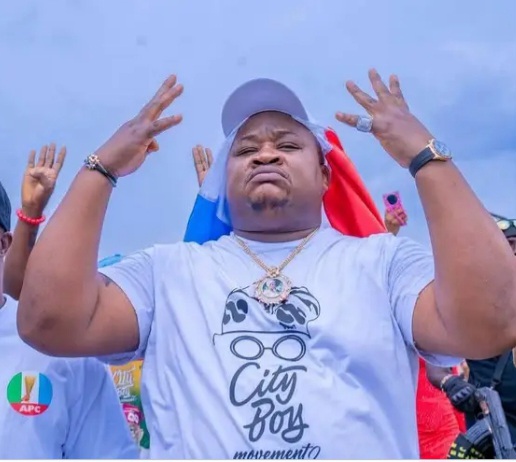
There is a particular kind of audacity that only Nigerian politics can manufacture, the kind that allows a chieftain of the City Boy Movement to lose a primary election on Tuesday and still expect the party City Boy Movement is affiliated to to accept him as a formidable political mobiliser by Friday.
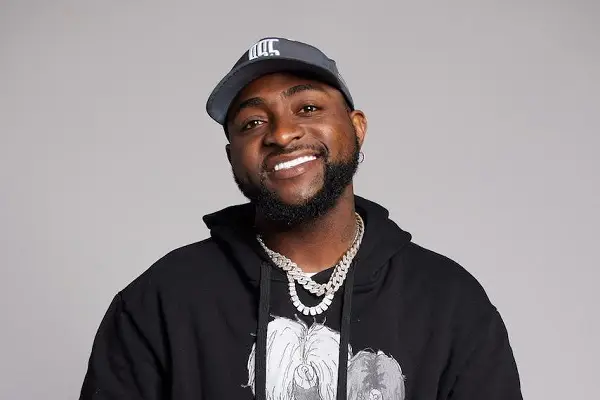
That contradiction now sits squarely at the feet of Mr. Paschal Ugochukwu, popularly known as Cubana Chief Priest, nightlife entrepreneur, influencer, socialite, philanthropist-for-the-cameras, and until recently, one of the loudest celebrity faces attached to the pro-Tinubu political machinery in the South-East.
The APC primary for the Orsu/Orlu/Oru East Federal Constituency seat has spoken. And it did not speak in his favour.
Ordinarily, losing a primary is not a scandal. Politics is brutal terrain. Established politicians lose primaries every election cycle. Nobody should be mocked simply for aspiring to public office. Democracy permits ambition.
However, what deserves scrutiny, is the political logic that elevated Cubana Chief Priest into a supposed electoral mobiliser for President Bola Ahmed Tinubu ahead of 2027, despite the glaring absence of evidence that he commands actual grassroots political influence.
Because let us strip away the celebrity fog and ask the uncomfortable question plainly: if a man cannot persuade delegates within his own constituency to hand him a party ticket, on what basis is he being projected as someone capable of delivering millions of votes for a presidential candidate?
To answer the foregoing question correctly, one needs to be cognizant of the facts that politics is not Instagram. Live. Elections are not nightclub appearances. And voter mobilization is not the same thing as social media visibility.
For too long, Nigerian politics, especially within ruling party circles, has confused celebrity recognition with political structure. The assumption appears to be that popularity automatically translates into electoral value. It does not.
A crowd gathering around a celebrity for photographs is not the same thing as citizens lining up under the sun to vote. A million followers online is not the same thing as ward-level organization. Trending hashtags do not replace polling unit agents. And expensive designer wear does not equal political credibility.
The South-East, in particular, is not a region that can be won through optics alone. It is a region shaped by deep political distrust, infrastructural deprivation, perceived exclusion from federal power, insecurity, and longstanding grievances about representation and infrastructure. The electorate is politically conscious, emotionally alert, and increasingly skeptical of symbolic gestures.
Given the backdrop of the backdrop of the foregoing view, it is not an exaggeration to opine that the people want tangible outcomes. They want roads that work. They want businesses that can survive. They want security, that is real. They want inclusion that is visible beyond campaign slogans. So, no amount of celebrity glamour can substitute for that.
This is why Cubana Chief Priest’s primary defeat matters beyond his personal political ambitions. It exposes a larger problem inside the APC and, indeed, across the broader Nigerian political establishment: the dangerous overestimation of performative political actors who possess noise but not structure.
And Cubana is hardly alone.Across Nigeria today, there are countless individuals parading themselves as political mobilisers for Tinubu ahead of 2027, men who promise to “deliver” entire states, regions, ethnic blocs, youth demographics, or voting populations despite possessing little or no verifiable electoral machinery.
Everywhere you look, there are self-appointed coordinators, movement founders, political influencers, praise singers, and coalition conveners making grand promises to the presidency. Many of them cannot win councillorship elections in their own wards. Some cannot command loyalty beyond rented crowds and social media engagement. Yet they continue to market themselves as indispensable electoral assets, and by that collecting “Gbalamu” to that effect.
It has become a thriving political marketplace of exaggerated influence. The presidency hears claims of “millions of supporters.” Governors hear promises of “structures on ground”. Party leaders hear assurances of “mass mobilization.”
But when real electoral tests arrive, primaries, local elections, delegate contests, the illusion collapses. That is precisely what this APC primary has revealed.
Cubana Chief Priest’s appeal was always atmospheric rather than structural. He could create buzz. He could dominate conversations online. He could make political association appear fashionable among segments of young Nigerians. He could organize events, attract cameras, and project excitement. But excitement is not electoral architecture.
Politics is ultimately about relationships patiently built over time, ward by ward, community by community, delegate by delegate. It is about trust networks, local credibility, organisational discipline, and political investment that survives beyond social media trends.
That kind of structure cannot be improvised through celebrity branding. If anything, the APC should interpret this moment as a warning sign ahead of 2027. Serious political work in the South-East requires serious political engagement. It requires credible local actors, call them “Village Boys” if you like. It requires local actors with deep roots in their communities, not merely famous faces with online traction.
The region has watched successive administrations carefully. It understands what federal neglect feels like. It knows the difference between symbolic outreach and substantive inclusion. And it is unlikely to be swayed by celebrity surrogates who themselves cannot command legitimacy within their own constituencies.
To be fair to Cubana Chief Priest, there is still a future for him in politics if he genuinely desires one. He possesses visibility, financial capacity, energy, and a philanthropic footprint that many politicians lack. Those things matter. But politics rewards patience more than performance.
The wiser path would be to step back from the illusion of instant political relevance, build quietly at the grassroots, earn trust organically, understand the mechanics of constituency politics, and return when the foundation is stronger. Because Nigerian politics eventually humbles everybody.
And perhaps the biggest lesson here is this: you cannot credibly promise to deliver voters for a presidential candidate when you have not first demonstrated the ability to deliver victory for yourself.