Global Issues
Different Skin, Denied Rights: The Global Crisis of Social Exclusion for Persons with Albinism -By Fransiscus Nanga Roka
As long as governments, institutions and communities do not make a serious commitment to this kind of inclusion, then the story of human equality is still inadequate. The world cannot claim to place protection of human rights on an recognized level if millions of persons with albinism are still there living under discrimination, neglect, and their own shadows.

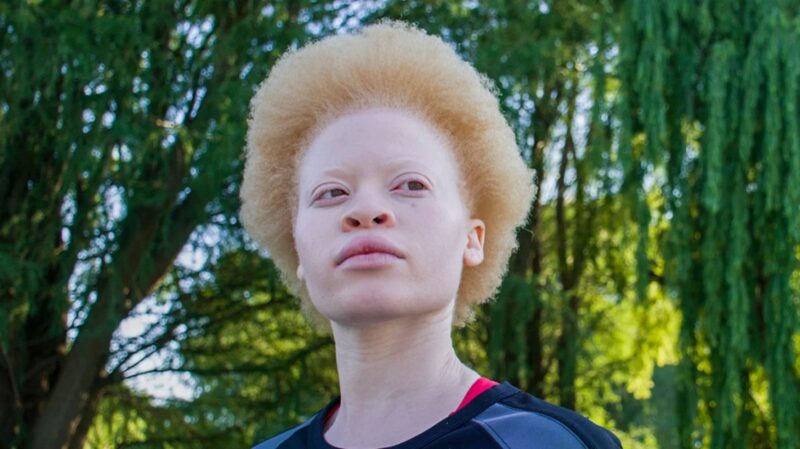
We live in a world that celebrates diversity in theory, and yet outing themselves as an individual born into this life is something millions of people with albinism cannot do. Albinism is not a contagious disease. People who suffer from it did not choose to be so. Their genetic peculiarity gives a gentlemen unique complexion, a lady’s beauty; or may even change the color of the skin, hair and eyes. Nonetheless, many individuals living with albinism, especially in emerging regions lacking sound social policies to protect them, find that this biological dissimilarity will become their lifetime ordeal of discrimination, jeopardy and exclusion.
For people with albinism, the biggest injustice they face is not their condition itself but all those systems out there in society that fail to protect them. From parts of Africa to parts of Asia and even throughout Latin America people living with Albinism come into contact with prejudice at a very young age. These feelings often go on right up to the end of their lives. In some communities, ancient myths deeply steeped in culture depict them as damned or give them settings all their blood and gore. These beliefs have led to some appallingly violent behavior which includes kidnapping and murder driven by the trade in body parts for witchcraft ceremonies.
But the violence is merely one part of a deeper systemic problem: social exclusion.
For many children with albinism, presenting the first barrier is the classroom. Their low vision, a condition sometimes seen for people with albinism and caused by underdeveloped eye structures requires accommodations such as large print materials or siting near the front of class; yet these are unavailable in many educational systems. Instead, children with albinism must endure bullying, teachers who do not understand them, and little institutional support. Consequently, school dropout rates among this population continue to be high.
Health care is another critical challenge. Without protective melanin in their skin, people with albinism are at extremely high risk of skin cancer. In places with intensive sunshine, as simple small measures taken can distinguish between life and death. Just applying sunscreen, covering up with wide brimmed hats and special protective clothes, and doing regular check ups with the dermatologist are all preventive measures. Yet these bright thoughts are too far away for most people, the cost is not something they can afford. Additionally, dermatologic and ophthalmological services can be hard to come by in ever so many regions. Public health systems in general are not designed to meet the special needs of individuals with unusual pigmentations like that of albinos.
Employ employment barriers lead to still deeper impoverishment. Even people with education and professional qualifications may have a hard time finding work, thanks to discrimination and mistaken ideas about how well they can do things. For example, employers might think people who are visually impaired cannot work effectively and earth that physical appearance put a lot of pressure on an enterprise. In such cases, marginalization automatically brings more poverty and other ills.
This crisis brings to light a larger failure of global social development. All human rights law worldwide recognizes that every human being possesses inherent dignity and is to be treated equally under the law. However, for albinos, the gap between legal recognition of their humanity and actual practice remains huge indeed. Policy statements often exist on paper only, with implementation always some way off in future years.
Dealing with this crisis demands more than just noble speeches. Governments must introduce specific, practical measures and resources recognizing the unique vulnerabilities experienced by albinos.
First, states should mount statewide public educational efforts in order to remove misconceptions about albinism and harmful stereotypes. Misinformation breeds social stigma. Through community mobilization, the media, and in schools, new education can lead to change in outlook and action.
Also, for health systems it is essential to provide dermatological and ophthalmological care. Not only should sunscreen and protective clothing be used as health protection measures, they should be treated rather as necessities not privileges received by those able to afford the best products. In some countries already this way of thinking about and distributing suncream, as part of public health programs, has made a big difference to skin cancer incidence rates among people with albinism.
And third, education systems need to ensure that students with visual impairments due to albinism can study in a manner where they feel comfortable. Inclusive classrooms, teachers who are properly trained, and supportive technologies for those at-risk, these are all necessary duties of government instead of privileges granted by God only to the lucky few.
In respect of employment policies, it is necessary not merely to refrain from discrimination but also actively foster an inclusive workplace. Owners of businesses should be encouraged through law to install facilities which allow people with albinism both the chance to make good their talents and enable them earn a proper livelihood. Otherwise, instead of living as full members in social life society will always keep them marginal with few genuine openings for development.
Finally, the international community needs to appreciate that the problems faced by people with albinism are not purely local social issues; they represent a global human rights question. International coordination cooperation on such questions, data collection and policy exchange between countries can not only accelerate progress but also ensure it spreads evenly across national boundaries.
The most crucial test of any society is not how it treats those who fit in with conventional ways, but rather how it protects those who do not Persons with albinism ought not fight to have their basic rights acknowledged simply because their skin reflects light differently. For them there is too much riding on this issue and the outcome will make such a difference over whether all people truly equal in society or again painted with different colors of invisibility
Different skin should never mean missed trunk. After the long history of development in human rights and freedom, there is no suggestion that an individual should be allowed to afford the same opportunities as others merely because he has one thing, albinism.
As long as governments, institutions and communities do not make a serious commitment to this kind of inclusion, then the story of human equality is still inadequate. The world cannot claim to place protection of human rights on an recognized level if millions of persons with albinism are still there living under discrimination, neglect, and their own shadows.
Fransiscus Nanga Roka
Faculty of Law University 17 August 1945 Surabaya Indonesia