Africa
Digital Agriculture and Evaluation: A Pathway to economic empowerment and National Security -By Asemokhai Oluwatosin .A
This conversation also ties to national security. In regions where food insecurity and unemployment are highest, we often see increased susceptibility to insurgent activity. The collapse of agriculture leaves youth without work, families without stability, and communities vulnerable to conflict. Rebuilding agriculture through cooperatives, digital tools, and inclusive programming gives people something to believe in and something to build. Agricultural development in northern Nigeria, for instance, is not only an economic strategy; it is a peacebuilding tool. Engaging youth through modern farming, data-driven extension, and innovation-based credit access can help stabilize areas where the threat of violence is tied to the absence of opportunity.

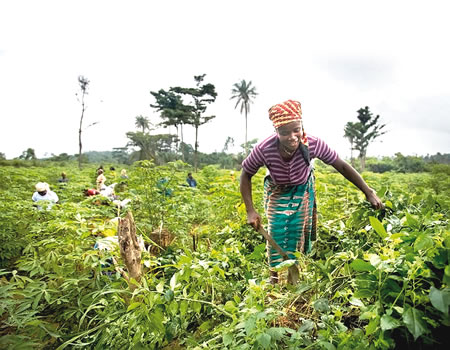
Nigeria is at a pivotal moment. With youth unemployment soaring above 40 percent, food insecurity threatening households, and chronic disease rates increasing, our most pressing challenges are interconnected. Yet, so are the solutions. Agriculture, long the economic backbone of Nigeria, is once again emerging as a cornerstone for development. But this time, its potential lies in how we combine traditional strengths with digital innovation, cooperative action, and inclusive program evaluation.
Recent government reforms have taken bold steps to reposition the sector. These include a one billion dollar mechanization partnership with Brazil to supply 10,000 tractors and establish training centers across Nigeria. The recapitalization of the Bank of Agriculture with ₦968 billion aims to strengthen agricultural credit for smallholders and agripreneurs. Wheat production programs and fertilizer subsidies are being scaled up, while the draft National Digital Agriculture Strategy seeks to guide ICT adoption in agriculture. These are commendable efforts, but their impact depends not just on scale but on structure, adaptation, and measurement.
One of Nigeria’s greatest untapped opportunities lies in digital agriculture, supported by inclusive program evaluation. When combined, these tools can create jobs, revitalize rural economies, and counter the root causes of insurgency. To succeed, Nigeria must act strategically by establishing digital agriculture hubs that serve not only as training centers but also as monitoring and evaluation centers. These hubs should track skill development, gender inclusion, technology adoption, and youth engagement. Their performance should not be assumed; it should be measured and improved through real-time data.
At the same time, agritech funding must be tied to measurable impact. We cannot afford to support startups solely on the basis of innovation without accountability. Whether through grants, loans, or competitions, incentives should be linked to clear outcomes such as the number of jobs created, the reach in rural communities, and the extent of women and youth participation. Supporting innovation must be matched with structured and inclusive evaluation to ensure that public investment leads to public good.
Most people still think of farming as hoe-in-hand, backbreaking labor. But across the world, and increasingly in parts of Nigeria, agriculture is evolving. Young farmers are beginning to use mobile platforms, radio-based alerts, SMS weather updates, and basic digital record-keeping tools to improve yields and connect to markets. While advanced technologies like drones, GPS mapping, and AI-driven diagnostics are still largely limited to pilot projects and commercial farms, there is growing potential to scale digital solutions that meet the needs of smallholders. For this to succeed, our extension system must evolve as well. Digital tools should be integrated into N-Power Agro and NYSC community development projects. Extension agents must be trained not only in ICT use but also in data collection, evaluation techniques, and participatory methods so we can learn from every intervention. Extension was designed to be a dynamic feedback system is one that builds trust, adapts to local realities, and connects innovation to real-world impact. Strengthening this original purpose through digital tools and inclusive evaluation is essential for modern agricultural development.
My research on farmer participation in agricultural cooperative societies in Kogi State revealed that cooperatives are not only viable but vital to engaging rural farmers, especially youth, in productive livelihoods. Through shared access to training, credit, and advisory services, cooperatives strengthen trust and resilience within communities. When these structures are digitally equipped, they become far more powerful. This is evident in my co-authored work on ICT in agricultural extension in Cross River State, where mobile platforms and digital messaging tools helped improve farmers’ access to market data, weather forecasts, and crop management tips.
Combining ICT with cooperatives creates a scalable solution. Cooperatives provide structure and technology delivers reach. But for both to work, we must also invest in evaluation. Without it, we cannot know if policies are working, where improvements are needed, or whether resources are reaching the intended people. Inclusive program evaluation turns agricultural reform into a learning system. It ensures that our strategies are people centered, accountable, and responsive to local realities.
Agriculture also connects directly to public health. Chronic diseases such as hypertension and diabetes are rising in Nigeria, driven in part by poor diets and limited access to nutritious foods. By promoting nutrition through agriculture, supporting diverse crop production, local food systems, and education around healthy eating, we can address chronic disease at its root. This connection between food and health is powerful, and agricultural programs that prioritize nutrition must be designed and evaluated with public health outcomes in mind.
This conversation also ties to national security. In regions where food insecurity and unemployment are highest, we often see increased susceptibility to insurgent activity. The collapse of agriculture leaves youth without work, families without stability, and communities vulnerable to conflict. Rebuilding agriculture through cooperatives, digital tools, and inclusive programming gives people something to believe in and something to build. Agricultural development in northern Nigeria, for instance, is not only an economic strategy; it is a peacebuilding tool. Engaging youth through modern farming, data-driven extension, and innovation-based credit access can help stabilize areas where the threat of violence is tied to the absence of opportunity.
Nigeria does not lack ideas or ambition. What we need now is intentional execution backed by evidence. Digital agriculture can employ our youth, feed our families, prevent chronic disease, and reduce instability. But only if we align innovation with evaluation and reform with responsiveness. This is not only a national development opportunity; it is a national security imperative.
Asemokhai Oluwatosin is a PhD student at the University of Florida. She is the author of “Assessment of Farmers’ Participation in Agricultural Cooperative Societies in Kogi State, Nigeria” and co-author of “Assessing the Use of ICT in Agricultural Extension Service Delivery in Cross River State.” Her work focuses on advancing food security, promoting digital innovation, and improving public health, particularly in the prevention and management of chronic diseases using nutrition. She applies inclusive program evaluation frameworks to support development that is equitable, effective, and responsive, especially in contexts where food security, health equity, and digital access are most needed to strengthen economic empowerment and national security.