
Africa
Don’t Only Fight Insurgency, Invest In Citizens -By Ismail Misbahu
Not only the insurgency in the Northwest, but even Boko Haram that’s currently hatching new eggs, cannot be defeated unless both the war of bullets, and of pens, are employed side-by-side. Investment in citizens’ education, far above the programmed, often short-lived de-radicalization campaigns, is needed to identify, refute and counter BH ideology at all education levels in Nigeria.

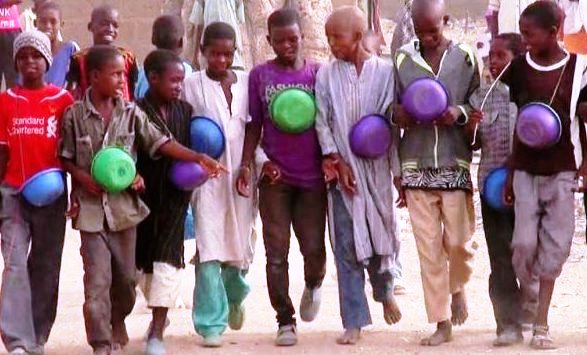
The impact of climate change on insecurity and the plight of agro-pastural system in Northern Nigeria is a glaring reality. Yet, this reality has been overlooked.
A profound thought is missing in our country’s deliberation of policies amidst implementation. This missing thought lies in the idea that a policy is succeeded the moment it is implemented. The perception is that implementation is itself a successful achievement. Thus politicians buy the idea to program cover and broadcast what they have implemented as part of their (administration) successes. Whereas policy implementation in Nigeria has virtually remained a day-dream, not all policies are designed to be ‘achieved.’ If and when a policy is luckily implemented, it does not however suggest achievement has been made. There is the all-important need to undertake robust timely review of policies because they need to be continued on and on.
Demographic and climate change realities are areas demanding a recycling review of agro-pastural policies, implementation and amendment time on time. The challenge posed by these realities have shortened the availability of floral and faunal lands and amidst seasonal scarcity of pasture, encroachment into both agricultural and grazing lands becomes intolerable. This leads to growing tensions and resource-based conflict between farmers and herders across the Northern part of Nigeria.
Demographic explosion has caused an unbearable increase in the demand for farmlands leaving herders with a little land to graze from grass to grave.
Grazing routes have been destroyed by road and rail constructions as well as by the gradual expansion of settlements and other projects.
Fulani lifeline has been tormented leaving their grief-stricken herding band to wander across forests and join the notorious bandit groups. This latter category of the forest population, has already criminalised forest stock routes and has turned the forest reserves—already unbeckoned and destroyed—into their hideouts.
The failure of the governments to address the Fulani question greatly helped in nurturing the Fulani savage behaviour in the forest communities. The Nigerian government has been unwilling to keep with it, the responsibility of researching and reviewing existing policies with a view to advance the prospects of its agro-pastural population. Responding to this need only in times of emergencies is the worst thing a nation can do often with no potential impact at all.
On top of this, human cruelty in the face of official impunity—as opposed to climate change—has greatly helped in de-securitizing the peasant farmer—increasingly becoming victim of land grabbing—plundering and stealing of communal lands, commercialization of arable pasture for grazing, in addition to bureaucratization of land transfer and occupancy as well as the duplication of authorities dealing with all these. Investing in citizens in respect to incentivising rural illiteracy with orientation on new farming methods and grazing modalities as well as on getting access to credit and mechanical equipment has never been the concern of variously previous administrations in Nigeria.
It becomes a crystal clear when Idi Maina, the Minister of Livestock Development, reiterated in February this year, that there was the need for digitising stock routes for easy tracking, boosting livestock markets and strengthening international networks for trade in cattle. He was only making the reader to assume all these were sufficiently available when they are not. He was submitting to the public that what the brutally tormented herding and farming population needs is the digitization of their stock routes and boosting of trade in cattle and agricultural produce. Yet there was no concrete ground to belief that this pronouncement was everything more than just a pipe dream. Surprisingly, the Minister did not even mention critical issues of demography and climate change realities nor did he hint at addressing them.
The impact of population on floral and faunal lands and its attending realities in respect to ‘jungle struggle for survival’ and the resilience ‘to die than to lose’ are one of the most fundamental security concerns many don’t seem to care and interrogate.
Former president Muhammadu Buhari who demonstrated a fairly good understanding of this did not also see investing in citizens as a necessity. What he kept advocating was the need for more involvement of citizens in farming occupation “let us grow our own food. We have shown that we can do it.”
What was left of the farmers to grow after years of collection of ransom, land grabbing, stealing of communal lands and ransacking of farming villages? Far from ‘farmer this’ or ‘Fulani that’, ‘a Christian farmer’ or a ‘Muslim herder’, the concern of both the previous and present administrations is on what their citizens could offer dead or alive to a nation drained with power hubris, politics of advantage, exploitative corruptions and killings.
Irresponsibility in the face of de-prioritisation of, and blatant disrespect to, Nigerian citizens, was the orientation of various previous administration. In 2003, the federal government through the National Economic and Empowerment Strategy (NEED) sought Foreign Direct Investment (FDI) in agricultural sector as part of its attempts to remove barriers in the non-oil sector with focus on manufacturing and agro-allied industries. Because this policy was not a citizen-cantered, it only ended in bringing to the nation, wide nexus of interaction between foreign land acquisition, commercialization of agricultural lands and food insecurity. It de-securitized rural land tenure by concentrating huge tracks of arable land to FDI at the expense of local investors and by so doing widened the bureaucratic bottlenecks within the informal procedure of rural land acquisition.
The 1978 Land Use Act did not capture the prevailing realities around customary laws and informal markets nor did it give a cattle raiser any special recognition in land allocation procedures.
The Grazing Reserve Law of 1965 was only confined to Northern Nigeria therefore making other Southern states like Ogun and Oyo to look down on allocating grazing lands to cattle raisers.
The position of cattle herder, the peculiarity of his occupation and the protection of his right and interest are fairly recognized only within the framework of international (diplomatic) legislations. The Third Preliminary Session of the 1989 Nigeria-Niger Trans-Border Co-operation Workshop and the ECOWAS guidelines of 31st October, 1998 have clearly demonstrated this.
Yet much of these proposals though might have been domesticated but still not implemented in Nigeria. Recently, viable policies like the 2017 Economic Recovery and Growth Plan, FGN National Livestock Transformation Plan (2019) and National Security Strategy (2019) have been drafted, reviewed and amended but have suffered from disinclined and reticent attitude of our leaders towards implementation.
Our leaders should stop playing politics with the security situation of the nation. Fixing insecurity is not a win-win game. It needs responsible, sincere and dedicated leadership to initiate, implement and sustain it for the rest of our life.
Not only the insurgency in the Northwest, but even Boko Haram that’s currently hatching new eggs, cannot be defeated unless both the war of bullets, and of pens, are employed side-by-side. Investment in citizens’ education, far above the programmed, often short-lived de-radicalization campaigns, is needed to identify, refute and counter BH ideology at all education levels in Nigeria.
Investing in citizens not only fighting the insurgencies, is the only flicker at the end of the tunnel, use it for the future lighting or risk getting in dark.

























You must be logged in to post a comment Login