
Africa
Ekiti: A Path To Economic Emancipation -By Damilola Adeniran
In Ekiti State, agriculture serves as the backbone of the economy, playing a multifaceted role in the state’s economic development. Its significance is evident in several key areas, including providing an adequate food supply, generating employment opportunities, supplying raw materials to a growing industrial sector, and creating an expanding market for industrial and other sectoral products.

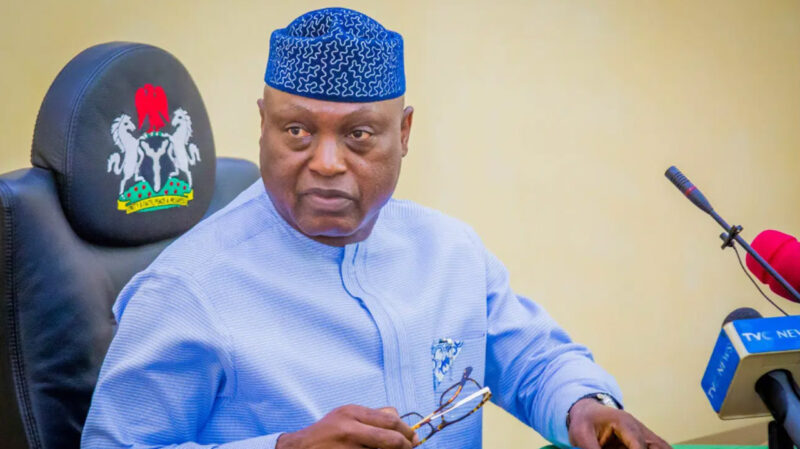
Since the creation of Ekiti State on October 1, 1996, various administrations have been focused on achieving rapid socio-economic development. The quest for development was undoubtedly a fundamental factor driving the calls for the state’s creation. This is understandable, given the historical context: the old Ondo State was dominated by the Ondo clan, while Ekitis were marginalized from governance.
Governor Biodun Oyebanji assumed office at a time when order and efficiency in governance were crucial for Ekiti State. The state is often characterized as an “agrarian state,” reflecting its rural agricultural lifestyle, subsistence farming system, and historical political decentralization. In this context, agriculture and trade have long been intertwined, with men typically cultivating crops like yams, cassava and cocoa, while women played a vital role in trading these crops on designated market days.
Ekitis are renowned for their academic excellence and upright decision-making, traits that align with the state’s reputation as one of the most literate communities in Nigeria. However, the state’s economy faced an uncertain future, with concerns about its meager resources and corporate existence from the outset. To address this, Oyebanji prioritized revamping the battered economy, recognizing that enhancing the living standards of the people requires a multifaceted approach. A key aspect of his strategy involves building relationships with critical stakeholders, which some perceive as “political diplomacy.” His approach stresses the significance of stakeholder engagement and diplomacy in governance.
This approach is guided by the philosophy of ‘Consolidate old friendships, Win new ones, and Repair damaged relations,’ underpinned by the logic that collective effort can foster a brighter future for Ekiti and its people. By fostering relationships with various groups, the administration can better address the state’s challenges and promote inclusive development.
Oyebanji is laying a solid foundation for an ideal state that embodies equal opportunities for all citizens, irrespective of their social status, economic well-being, religious beliefs or ethnic affiliations. This vision acknowledges that conflicts may arise if individuals are not afforded diverse incentives and opportunities that cater for their unique skills and abilities. However, this approach diverges from the conservative stance of the opposition, thereby highlighting a distinct philosophical underpinning of governance.
As enshrined in the 1999 Constitution (as amended), the welfare of the people is a major priority for state policies, programmes and decisions. Oyebanji adheres to this principle, making it a guiding doctrine by ensuring that his actions and decisions are geared towards improving the living standards of the Ekitis.
BAO, as Oyebanji is fondly called, can not only be classified as the author of modern Ekiti state, governing with civility and humanity, but also as a champion of a classless and egalitarian structure in governance. He embodies values and traits like intellectual capacity, honesty, and integrity, making him stand tall among his contemporaries.
The governor identified two critical issues that could inform the assessment of his administration’s policies and programmes: poverty eradication and improved food security. Given Ekiti State’s agrarian economy, where rural poverty often precipitates urban misery, his focus should be on the agricultural sector. Specifically, employment generation in agriculture should be the cornerstone of the administration’s poverty alleviation efforts.
Poverty breeds criminality, impoverishes the masses, and perpetuates underdevelopment, even among the privileged class, while also leading to land alienation. In a poor society, even the wealthy live in fear, often barricading themselves indoors, vulnerable to armed robbery. Moreover, a poor state fosters an unhealthy business environment and it’s often a breeding ground for corruption. Poverty is a pervasive issue in Africa, with deep historical roots in sub-Saharan Africa, where it appears to defy conventional solutions.
When access to economic opportunities is monopolized by a few, honest means of making a living become closely tied to escaping poverty. Often viewed as a vicious cycle, escaping poverty requires extraordinary efforts. Its persistence is attributed to unequal wealth distribution and the multiplicity of human needs. Thankfully, Ekiti State’s approach to poverty alleviation and eradication is exemplary and unparalleled. For this, BAO deserves the highest accolades.
In his work “Politics”, Aristotle, an ancient philosopher, posited that the state’s purpose is to foster “the good life, equity, and the common good.” While alleviating poverty is crucial, ensuring its permanent alleviation is a distinct challenge. This underscores the importance of sustainability in poverty alleviation measures, beyond just their implementation. For instance, providing small and medium-sized credits to unemployed youths to launch entrepreneurial ventures requires careful consideration of the scheme’s long-term viability.
The adage, “give a man a fish, and he’ll eat for a day; teach him to fish, and he’ll eat for a lifetime”, illustrates this point. By equipping individuals with skills and resources, they can break the cycle of poverty. Moreover, the aversion to poverty stems not only from its inherent hardships but also from the exploitative nature of capitalist systems and the disproportionate power dynamics between the ruling elite and the vulnerable populations.
In Ekiti State, agriculture serves as the backbone of the economy, playing a multifaceted role in the state’s economic development. Its significance is evident in several key areas, including providing an adequate food supply, generating employment opportunities, supplying raw materials to a growing industrial sector, and creating an expanding market for industrial and other sectoral products.
Regardless of one’s perspective on BAO’s administration, it is evident that he envisioned his role as a transformative leader for Ekiti State. It goes beyond infrastructure development to encompass poverty eradication, economic empowerment of the poor, and liberation of the oppressed. loathed the exploitation of the vulnerable and the accumulation of wealth at the expense of the larger population, particularly the most disadvantaged segments of society.
On Oyebanji’s watch, the allocation and distribution of state resources are guided by the principles of fairness and justice, while personal enrichment and the accumulation of private property are discouraged. This approach is evident in the execution of budgetary allocations to various sectors of the state. Furthermore, the governor emphasizes the importance of fairness, justice and transparency in the discharge of duties by commissioners, underscoring his commitment to accountability.
His primary concerns appear to be increasing prosperity for all, reducing the cost of governance, and improving living standards. To achieve these goals, he has prioritized the fair and just allocation of state resources across the state’s local government areas, while also facilitating pay increases for workers through enhanced productivity. In the years to come, political analysts, human rights activists, and concerned citizens will surely have reason to discuss the developmental strides made by Oyebanji in charting a path towards economic emancipation for Ekiti State.
*Adeniran wrote from Osogbo, Osun State, Nigeria.

























You must be logged in to post a comment Login