Africa
Elected Representatives: Servants Or Masters?, by Abiodun Komolafe

“Not to know what happened before you were born is to remain forever a child.”
- Cicero, 46 B.C.
Marcus Tullius Cicero (106 BC-43 BC), renowned statesman, lawyer, philosopher, poet and ‘the greatest forensic orator Rome ever produced’, was right! We have to go into the past to understand today!
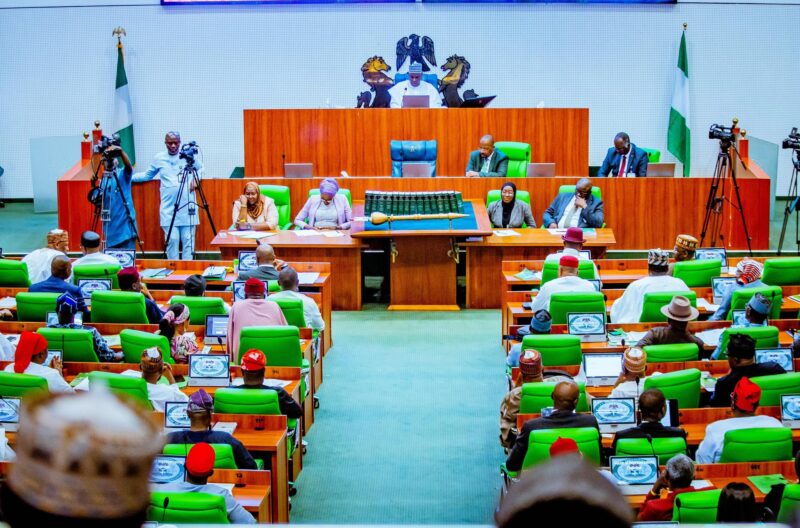
The present conundrum in the National Assembly highlights just how far we have departed from many rational definitions of public service. It wasn’t always like this! From the early 1950s, with the commencement of self-rule in the regions and at the centre, parliamentarians were on allowances. This is because there was an element of public service entailed. There were no ludicrous, self-serving perks such as constituency allowance and the absurdity of constituency projects had not yet come into place. This system functioned effectively, and the parliamentarians of that era etched their inputs into the public consciousness. The same thing prevailed at the centre. Since the parliamentarians were part-time, on allowances, most of them did second jobs in order to augment their incomes. Sadly, we’ve since abandoned this approach, succumbing to a culture of underperformance and increasing irrelevance.
An instructive historical illustration comes from France, after the collapse of the 4th Republic on October 5, 1958. When Charles de Gaulle came in as president of the 5th New Republic in January 1959, one of his executive orders was to proclaim a Decree linking every post held by political appointees to a particular post in the civil service. In this way, the Senate President, for example, has the same remuneration as the Permanent Secretary. Today, over 6,000 French civil servants earn more than the president, yet this hasn’t hindered the country’s effectiveness. Instead, de Gaulle’s reforms have fostered a highly regarded public service, attracting top talent and demonstrating that equitable compensation can coexist with strong governance.
Characteristically, Nigeria’s political establishment has headed into the opposite direction, with predictably disastrous results. The consequences are stark: 133 million people (a conservative estimate) mired in multidimensional poverty, soaring inflation and a public service system that rewards self-serving politicians. The humongous perks obtained by subterfuge is clearly not attracting the best and the brightest into public service since the very concept of public service has been distorted and placed on its head, into not-public, but self-service.
The furore over Nigerian Senators’ emoluments has ignited a fierce debate, exposing the yawning chasm between the political elite and the masses. It’s a tragic reminder that, in our context, public service has become a euphemism for self-enrichment. The fact that these ‘servants of the people’ have perfected the art of siphoning off public funds while their bank accounts overflow with ill-gotten gains reveals a sinister plot. It’s a twisted game of ‘trickle-down economics’ where the only thing trickling down is the Senators’ tokenistic largesse. One can’t help but ask: what’s the price tag for selling one’s soul?
Unlike the relatively corruption-free First and Second Republics, today’s political system is ravaged by entrenched and widespread corruption. Emoluments have become a tool for buying loyalty and silence, rather than a means of compensating public servants. While previous systems had their flaws, the current excesses have reached catastrophic levels, igniting public outrage and demands for radical reforms. As Nigeria’s democracy teeters on the brink and its economy stagnates, one wonders: what concrete actions are elected representatives taking to alleviate the suffering of the masses?
Mahatma Gandhi’s philosophy of simple living and selflessness has inspired generations. Gandhi believed that leaders should prioritize the people’s welfare, living modestly and selflessly. Similarly, Lee Kuan Yew advocated for modest political salaries, prioritizing public service over personal gain. Nelson Mandela embodied this spirit, living modestly and donating a third of his presidential salary to charity. Former New Zealand Prime Minister Jacinda Ardern demonstrated her dedication to public service by taking a pay cut and prioritizing citizens’ welfare, especially during crises.
Former Uruguayan President Jose Mujica exemplified extreme simplicity by donating most of his salary to charity. Known as the ‘world’s poorest president’, Mujica lived in a modest farmhouse, and drove an old Volkswagen Beetle. In India, former Tripura Chief Minister Manik Sarkar earned the nickname ‘Poorest CM’ for his humble lifestyle, living in a simple apartment and using public transport. Without doubt, these iconic leaders demonstrated that true leadership entails selflessness, humility, and a commitment to the greater good.
In Nigeria, the late Obafemi Awolowo championed modest salaries and allowances for lawmakers to keep them grounded and connected to the people. His philosophy prioritized the masses’ welfare, as reflected in one of his famous quotes: ‘The test of our progress is not whether we add more to the abundance of those who have much; it is whether we provide enough for those who have too little.‘ Similarly, Ahmadu Bello believed true leadership entailed serving with humility and dedication, not personal gain or aggrandizement. Both leaders emphasized the need for public servants to prioritize the people’s interests above their own.
Obviously, the revelation of N21m-a-month salaries for senators barely raised an eyebrow, as many Nigerians suspected the figure was even higher. In a clime so blessed as ours, it’s no surprise that the senator who exposed this travesty will likely face suspension! The process has devolved into a farcical ‘boarding house’ dynamic, where the ‘housemaster’ cracks down on dissenting voices at the slightest hint of insubordination. This is not what a modern, democratic parliament looks like! Sadly, the charade will continue, unchecked by any strong moral counterforce, perpetuating the ‘development of underdevelopment’ that has held Nigeria back for so long.
‘Parliament’, as it is currently depicted in Nigeria, lacks the technical expertise to effectively monitor and direct affairs in a modern state. The absence of critical institutions like a Congressional Budget Office or Office of Budget Responsibility perpetuates ill-conceived and poorly monitored budget processes, resulting in unimplemented budgets and abandoned projects. This self-serving approach ensures parliamentarians lack access to vital technical inputs, relegating them to irrelevance in a highly competitive, interconnected global economy. Our downward spiral from tragedy to farce continues unabated.
The controversy surrounding senators’ salaries serves as an unambiguous reminder of the urgent need for a paradigm shift in Nigeria’s public service ethos. Perhaps it’s time for the government to pause, reevaluate, and consider bringing in fresh perspectives from independent analysts and operators currently outside the mainstream. Contrarians can offer valuable insights during a stalemate, as the saying goes, ‘out of the mouth of babes…’ At a time like this, it behooves the government to revisit its manifesto commitments to a social market economy, embrace transparency and accountability, and strike a balance between state intervention and market forces.
Finally, as we reflect on the examples of selfless leaders like Gandhi, Mandela and Mujica, it is clear that true progress can only be achieved when those in power prioritize the welfare of the people over personal gain. Therefore, the Bola Tinubu-led government must continually work hard to justify the mandate freely given by Nigerians and deliver on its promises. This is crucial, as the country cannot afford to stagnate.
May the Lamb of God, who takes away the sin of the world, grant us peace in Nigeria!
*KOMOLAFE wrote in from Ijebu-Jesa, Osun State, Nigeria (ijebujesa@yahoo.co.uk).