
Africa
Only God Knows: The Unseen Hands Behind Nigeria’s Palliative Distribution, by Isaac Asabor

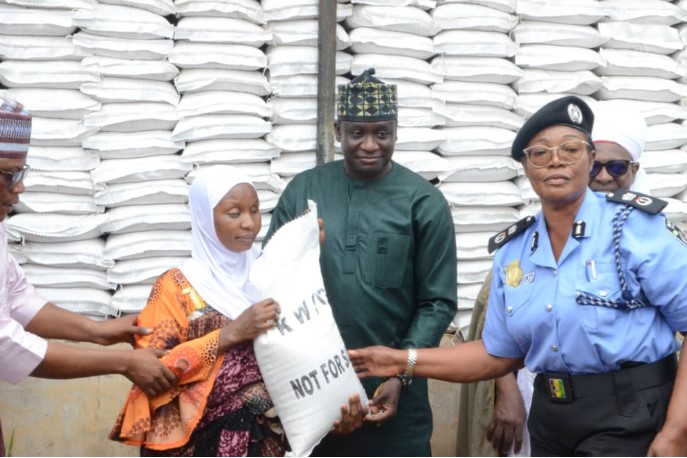
In the heart of African wisdom lies a saying: “Only God knows the man who shares meat to others with his teeth.” This proverb, rich in its imagery, speaks volumes about the lack of transparency and accountability in the distribution of resources; a situation that resonates deeply with the current state of palliative and cash transfer distribution in Nigeria.
The saying, in its interpretative essence, paints a picture of a man using his teeth to divide meat among others, a method that is neither open nor fair. Those receiving the meat can never be sure if they are getting their fair share or if the distributor is keeping the best portions for himself. This image mirrors the troubling reality faced by millions of Nigerians today, where palliatives meant to ease the hunger and suffering of the masses are often distributed with a lack of fairness, transparency, and accountability.
Since the onset of economic hardship exacerbated by the COVID-19 pandemic and further worsened by the current economic challenges, the Nigerian government has rolled out various palliative measures. These include food distribution, cash transfers, and other forms of relief aimed at cushioning the impact of poverty and hunger. However, reports and eyewitness accounts suggest that these efforts are riddled with corruption, favoritism, and inefficiency.
In many communities, the distribution process is shrouded in secrecy, with little to no oversight to ensure that the aid reaches those who need it most. Local officials and those in charge of distribution often divert the palliatives, sharing them among their friends, family, and political allies, leaving the most vulnerable with little or nothing. In some cases, beneficiaries are asked to pay bribes or show loyalty to certain political figures before receiving what is rightfully theirs. This has led to widespread disillusionment and anger among ordinary Nigerians who feel betrayed by those entrusted with their welfare.
The proverb “Only God knows the man who shares meat to others with his teeth” encapsulates the frustration of a populace that can see the meat, can smell it even, but has no way of knowing if they will ever get a taste. It speaks to the opaque and biased nature of palliative distribution in Nigeria, where the true beneficiaries often remain hidden, while the masses are left to wonder what became of the promises made to them.
This situation calls for urgent reform. There needs to be a transparent, accountable, and equitable system for the distribution of palliatives and cash transfers. Independent monitoring bodies should be established to oversee the process, ensuring that aid reaches those who need it most, without favoritism or corruption. Furthermore, the government must engage with community leaders and civil society organizations to create a distribution framework that is both inclusive and fair.
In fact, the wisdom of our African ancestors holds a mirror to the present, reminding us that only when we share openly, with integrity and accountability, can we ensure that everyone gets their fair share. The Nigerian government and those in positions of power must heed this wisdom if they are to truly alleviate the suffering of the people and restore trust in the system. For in the end, it is not just about sharing the meat, but about doing so in a way that is just, transparent, and equitable for all.
The reason for expressing this view in this context cannot be farfetched as Nigeria’s palliatives have become a lifeline that rarely reaches those in need.
In recent years, Nigeria has faced a series of economic challenges that have plunged millions into poverty and hunger. The government’s response has been the distribution of palliatives, aimed at providing relief to the most vulnerable. However, despite the noble intentions behind these initiatives, the reality on the ground tells a different story: the palliatives are not reaching the people they are meant for.
The distribution of palliatives, whether in the form of food, cash transfers, or other forms of aid, is supposed to provide a safety net for those hardest hit by economic hardships. Unfortunately, the execution of these programs has been marred by inefficiency, corruption, and a lack of transparency, leaving many Nigerians disillusioned and struggling to survive.
In many communities across Nigeria, reports have emerged of palliatives being diverted by those entrusted with their distribution. Local government officials, politicians, and even community leaders have been accused of hoarding or siphoning off these resources for personal gain. In some cases, palliatives are distributed based on political loyalty or connections, rather than genuine need. This has resulted in a situation where those who are most vulnerable; widows, the elderly, the unemployed, and the poor, are often left empty-handed.
Take, for instance, the COVID-19 palliative distribution during the lockdown. The government announced that food items and cash transfers would be given to households to ease the economic burden of the pandemic. However, many Nigerians complained that they never received any assistance, while others reported receiving only a fraction of what was promised. The situation was so dire that, in some states, warehouses storing undistributed palliatives were discovered by desperate citizens, leading to mass looting.
The lack of a transparent and accountable system for palliative distribution has only exacerbated the problem. Without proper oversight, it is nearly impossible to track where the aid is going and whether it is reaching the intended recipients. This has led to widespread frustration among the public, who feel abandoned by a system that is supposed to protect them.
Moreover, the government’s approach to identifying beneficiaries has been flawed. Often, the criteria for selecting recipients are unclear, and the process lacks inclusivity. In many cases, those living in remote or rural areas are completely overlooked, while urban dwellers with better access to information and resources are more likely to benefit. This has widened the gap between the rich and the poor, further entrenching inequality in the country.
The issue of palliatives not reaching the intended beneficiaries is not just a matter of inefficiency; it is a matter of justice. When resources meant for the poor are diverted or mismanaged, it deepens the suffering of those who are already struggling to make ends meet. It erodes public trust in the government and its institutions, creating a sense of hopelessness and despair among the populace.
To address this issue, there must be a comprehensive overhaul of the palliative distribution system in Nigeria. This includes establishing independent monitoring bodies to oversee the process and ensure that aid reaches those who truly need it. The government should also adopt technology-driven solutions, such as digital platforms for cash transfers and food distribution, to reduce the risk of corruption and improve transparency.
Community involvement is also crucial. Local leaders, civil society organizations, and non-governmental organizations should be actively engaged in the distribution process to ensure that it is fair, inclusive, and effective. By working together, these stakeholders can help create a system that is accountable to the people and responsive to their needs.
In conclusion, the failure of palliatives to reach those who need them most is a glaring indictment of Nigeria’s social safety net. The government must take immediate and decisive action to rectify this situation, or risk further alienating the very people it is supposed to serve. In a country where millions are struggling to survive, palliatives should not be a privilege but a right, a lifeline that is accessible to all who need it.




























You must be logged in to post a comment Login