
Africa
Ember Months: Between Superstition And Sobriety -By Isaac Asabor
At the end of the day, the Ember months are not inherently evil. They simply carry the weight of human behavior, societal pressure, and environmental factors that make them prone to tragedies. Superstition may amplify the fear, but the incidents that feed the superstition are very real.

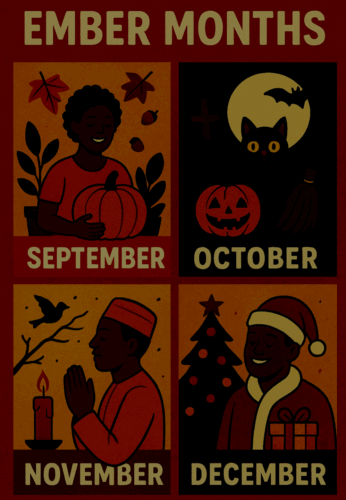
Every year, as the calendar flips to September, a familiar atmosphere descends across Nigeria and many parts of Africa: the so-called Ember months. September, October, November, and December are bundled together under this catch-all label that seems to evoke anxiety, caution, and in some cases, outright dread. From pulpit warnings to street conversations, the Ember months are almost always associated with accidents, tragedies, heightened spiritual warfare, and even a spike in crime.
On the surface, it may sound like a mere superstition, a cultural quirk woven into the tapestry of our communal psyche. Yet, the fact remains that these months, year in and year out, often play host to a litany of incidents that almost seem to confirm the fears of those who sound the alarm. And so, the conversation resurfaces annually: Is it superstition, or is there something about the Ember months that really makes them more perilous than others?
Given the foregoing views, one cannot but admit that the truth lies somewhere in the middle, even as the weight of the superstition is worrisome. The reason for the foregoing view cannot be pooh-poohed by mere wave of the hands as superstition is a powerful tool, especially in societies like Nigeria where religion and tradition intersect seamlessly. For decades, pastors, imams, and traditional seers have declared that the Ember months are fraught with danger. From sudden deaths to mysterious illnesses, from vehicular crashes to bizarre criminal activity, the period is often described as a season when “the devil is on the loose” or when “blood-sucking demons are on the prowl.”
The imagery is grim, and the warnings are hardly ever couched in mild terms. Churches organize marathon prayer sessions, fasting, and vigils. Mosques intensify Friday sermons, urging believers to hold fast to God as the year draws to a close. Parents warn their children to avoid unnecessary travels, and travelers themselves are encouraged to “plead the blood of Jesus” before embarking on any trip.
Some may dismiss these as exaggerated, but you only need to skim through Nigerian newspapers in the Ember months to see why the superstitions persist. Road crashes spike dramatically as people crisscross the country for weddings, burials, conventions, and of course, the December rush to the village. The Federal Road Safety Corps (FRSC) often releases advisories during this period, confirming that accident rates are consistently higher in these four months.
Without a doubt, it is almost as if superstition has found statistics to back it up. The reason for the foregoing view cannot be farfetched, particularly when analyzed from the backdrop of the human factor. If we strip the Ember months of their mystique, what remains is a cocktail of human behavior and environmental realities that naturally breed chaos. Let us face it: Nigerians are notorious for last-minute rushes. Whether it is shopping for Christmas, travelling home to the village, or meeting business targets before year-end, people suddenly shift gears in September.
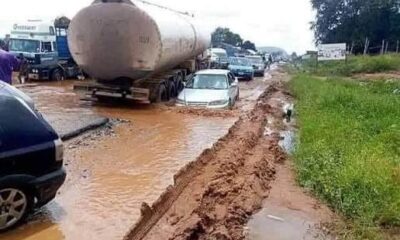
Drivers, eager to make more trips and earn more money, take unnecessary risks. Transport companies overschedule buses, pushing their drivers beyond safe working hours. Roads, many of them poorly maintained, become death traps when overloaded vehicles and reckless driving collide. In urban centers, end-of-year crime spikes as unemployed youths, “yahoo boys,” and street gangs see festive preparations as an opportunity to fleece unsuspecting citizens.
Add to this the dry season’s harmattan haze that reduces visibility on highways, and you begin to understand why accidents and tragedies are disproportionately reported during this period. In other words, the Ember months are not cursed, they are simply overburdened by the realities of human choices.
But while we acknowledge the rational explanations, one cannot completely downplay the psychological and spiritual dimensions. Religion remains central to the Nigerian way of life. To tell a devout Christian or Muslim not to pray during Ember months is like telling a fish not to swim. Prayer offers comfort; it provides a sense of control in a season that seems otherwise unpredictable.
More importantly, prayer instills caution. A man who believes the Ember months are dangerous is likely to drive more carefully, keep late-night outings minimal, and guard his steps with more deliberation. In that sense, superstition, reinforced by prayer, can have a preventive, even protective, effect.
However, prayer must never become an excuse for recklessness. There is no point fasting for 21 days if, after the prayers, you still decide to overtake on a bend or refuse to service your car. As the saying goes, heaven helps those who help themselves.
In fact, as a sobering reminder, it suffices in this context to opine that the Ember months also hold a symbolic meaning. They remind us of the fragility of life. As the year winds down, we often reflect on what we have achieved, what we have lost, and what we must improve. Unfortunately, the rush to “make it” before December often turns into desperation that leads to tragedy.
Employers push workers beyond limits to close annual targets. Traders become greedy, cutting corners to maximize profits before year-end. Young people, pressured by the social media-driven December “detty” vibes, sometimes take dangerous shortcuts to finance a lifestyle they cannot afford. The result is that the closing months of the year become a time of heightened tension, anxiety, and needless risks.
That is why the call for sobriety is crucial. Rather than giving in to superstition or brushing it aside as baseless, we must take the Ember months as a collective reminder to slow down, to be more deliberate in our actions, and to put safety first.
Without a doubt, remaining safe throughout the Ember months is a collective responsibility for all of us. The government also has a role to play. The FRSC must not restrict its campaigns to radio jingles and billboard slogans. There must be stricter enforcement of traffic laws during this period. Transport unions should not be allowed to sacrifice safety on the altar of profit. State governments must prioritize fixing at least the most dangerous portions of highways that historically record accidents during the Ember months.
Security agencies, too, must be more proactive. The spike in robberies, kidnappings, and cult-related violence that often characterize these months must be met with increased patrols and intelligence gathering. Citizens can also play their part by reporting suspicious activities and avoiding risky movements at odd hours.
At the end of the day, the Ember months are not inherently evil. They simply carry the weight of human behavior, societal pressure, and environmental factors that make them prone to tragedies. Superstition may amplify the fear, but the incidents that feed the superstition are very real.
So, should we be fearful? No. Should we be prayerful? Absolutely. But beyond prayer, we must also be practical. Drive carefully. Spend wisely. Avoid unnecessary risks. If the Ember months have a lesson, it is that life is too precious to be gambled away in the mad rush to end the year in grand style.
As another cycle of September to December unfolds, let us embrace the season not with dread but with wisdom. Let us pray, yes, but let us also be cautious. Because superstition or not, one truth remains constant: tragedy does not respect calendars, but prudence can keep us safe.






















You must be logged in to post a comment Login