
Africa
Making Tinubu’s Tax Reform Work -By IfeanyiChukwu Afuba
The southeast appears to parade the worst theatre of this compulsive over – taxation. Governance deficit, underlined by administration without human face, is presently to be contended with in much of the southeast. The authorities in the zone need to be told that disregard of public opinion, insensitivity to the outcry against multiple levies imposed on the people is not a demonstration of strength. It’s weakness when leaders circumvent critical issues demanding their attention. The long list of demand bills, with several duplications, is bad enough.

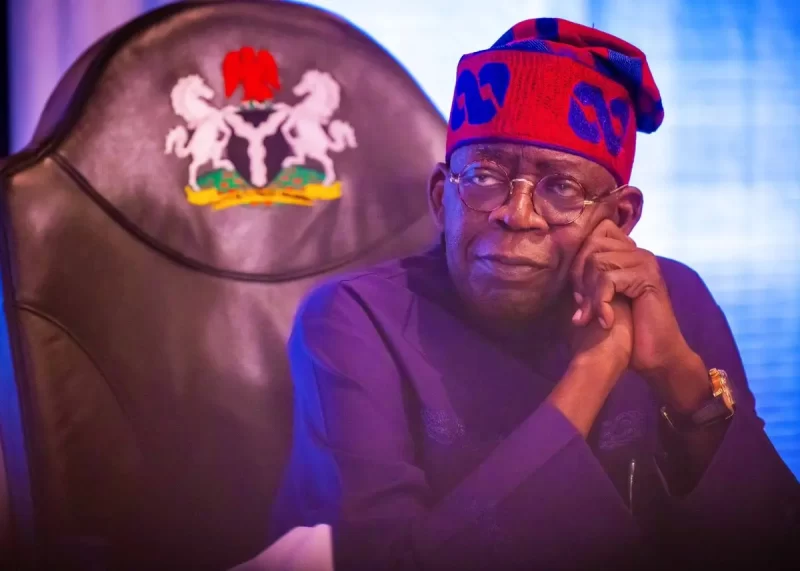
On Wednesday, June 25, 2025, Mr President, Bola Ahmed Tinubu signed four bills towards improving the country’s tax system, into law. The new legislations were Nigeria Tax Act, Nigeria Tax Administration Act, Joint Revenue Board Act and Tax Appeal Tribunal. The laws have a combined potential effect of simplifying tax management, enhancing a friendly business climate and providing safety nets to the low income bracket. Additionally, concern has been expressed about conflict with the power of States in some of the provisions. Legal opinions identify parts of Nigeria Tax Administration Act and Joint Revenue Board Act as breaches of federalism. The perceived interference with States’ autonomy relates to erecting a uniform tax structure for the country. The other leg of the overreach is the federal government’s involvement in non – tax revenues, including but not limited to value added tax. As significant as these possible defects are, they do not rob the frameworks their organic merit. The socio – economic benefits the intervention holds out should not be lost. The task should be how to maximise their promises within the ambit of constitutional principles.
Mr President deserves compliment for keeping faith with a campaign promise. The vision for a more efficient, fair and concise tax regime was expressed on page 16 of Renewed Hope manifesto. In a milieu where promises to the electorate are often not kept, the realisation of this blueprint is noteworthy. This is more so, given the predominant place of economic planning to the wealth of the country and welfare of the people. The President’s earnestness was stamped by initiation of the process in just the second month of coming into office. A presidential committee headed by Taiwo Oyedele was constituted in July 2023 to navigate the pathways of the reform. An accountant and activist of progressive bent, it’s easy to see why the President was so pushful on this policy. Here, we have meeting point of terrain competence and bond of commitment to the people. All things being equal, the new fiscal regime is set to become operational in January 2026.
For our present purposes, the foreseeable impact of the reform on the socio – economic condition of Nigerians is of huge interest. This is because the laws have benefits both for the poor and rich, especially the former. According to a BBC analysis, for ‘people earning up to 1m naira a year, a rent relief of 200,000 naira will be applied, effectively reducing their taxable income to 800,000 naira. This means they will no longer pay income tax.’
Value Added Tax has been removed from essential goods and services such as food, healthcare, education, rent, power, and baby products. This translates to a drop in their prices, making the basic needs slightly more affordable to many families. Significantly, too, small businesses with annual turnover below 50m naira will no longer pay company income tax. They will be eligible to file easier returns, without needing audited accounts. The laws also provide tax exemption to cooperatives, charities, educational and religious institutions if their funds are not proceed of business ventures. For bigger businesses,
corporate tax is reduced from 30% to 27.5% in 2025 and 25% in subsequent years. Alongside the students’ loan scheme, various empowerment programmes, the new tax formula represents effort by the Tinubu administration to address social welfare.
However, the success of this commendable initiative is dependent on a number of factors. The first demand is that of sustained sensitisation especially on the part of all fiscal authorities in the country. An intensive acclimatisation programme is necessary to change the conventional but wrong approaches to tax administration in the country. Transitioning from an old order to a new one could be tasking and it’s not uncommon to find the old guard resisting the new rules. The stereotype of taxation which probably arose from colonial subjugation is that every adult is obliged to pay tax. Unfortunately, this skewed orientation has continued to influence a sweeping interpretation of tax qualification. But there has been judicial correction of this misperception that every living, able – bodied male is bound to pay tax. In 1979, the Federal Electoral Commission barred Dr Nnamdi Azikiwe and Mallam Aminu Kano from running as candidates in the Second Republic transition election for not paying tax. Both went to court, seeking declaration that they had no earned income and were therefore ineligible to pay tax; which prayers were granted. They were thus able to contest the 1979 election. Yet, this elementary principle continues to be violated by revenue administrators. A basic requirement for meaningful implementation of the new laws would therefore be a mental concept reset.
This prescription is informed by the excessive commercialisation of revenue generation by governments. For the most part, governments at all levels presently contract out collection of government revenue to consulting agencies. The use of consultants is basically defined by percentage share of collectable revenue between government and appointed agency. And here lies the challenge. The concept of collectable revenue continues to be abused by consultants. Obsessed with maximising their own returns, commercial revenue agents typically squeeze the life out of businesses and citizens. They have notoriety for making sky high assessments to suit their greed. Even where consultants are not in vogue, the danger of exploitation takes a modified expression. Governments that deploy regular staff to revenue drive tend to set high targets for them. The pressure of performance approval, which can be great, opens the door to shortchanging the citizenry. Consequently, there is urgent need for change in enforcement approach and practices. Deserved emphasis should be placed on the national imperative of the unfolding fiscal climate. It also seems necessary to have an inclusive committee, comprising tiers of government and relevant government agencies, draw up a template for administering the new mandate.
On another level, the reforms require the good faith of state governments to work. Local governments, being subordinate to States, will easily key in, when the latter embrace the spirit of the adjustment. It cannot be overstressed that the dispensation envisaged by the reforms is one that brings relief especially to the poor and low income earners at a period of dire economic circumstances. The package could be seen as subsidies with the focal point of reducing the cost of living for those in the margins. Properly executed, the programme has potential to stimulate businesses and therefore, economic growth. To this end, States have a responsibility not to pass on the cost of the tax reliefs in other ways to the citizens. Any replacement of the loss occasioned by the imminent fiscal regime with another mass revenue window, dismantles the essence of the reform. This advisory comes against the backdrop of States’ current fixation with total revenue drive. Indeed, it’s an overdrive. Increasingly undiscriminating hunt for revenue and more revenue is making life miserable for Nigerians in many states of the federation. State governments that ought to provide succour to their populations are now the ones hounding them with barrage of tolls. Implementing this historic plan of tax exemption and cuts does not beg of any compensation measure. It rather demands jettisoning some of the financial burdens imposed by state authorities on citizens.
The southeast appears to parade the worst theatre of this compulsive over – taxation. Governance deficit, underlined by administration without human face, is presently to be contended with in much of the southeast. The authorities in the zone need to be told that disregard of public opinion, insensitivity to the outcry against multiple levies imposed on the people is not a demonstration of strength. It’s weakness when leaders circumvent critical issues demanding their attention. The long list of demand bills, with several duplications, is bad enough. Apart from the traditional tax, residents also have to cough out development levies, sanitation fees, waste disposal buckets, business premises, then, business registration fees. Among the hardest hit are tricycle and mini bus drivers weighed down with emblem, vehicle colour, operating permit, stickers, haulage charge, sundry tickets’ fees. As vexatious as the levies are, they’re still enforced with crude force, including beatings and impounding of goods. This environment of perpetual state demands must give way for the presidential tax reform to work. By all means too, let the constitutional rights of States be accorded to them.























You must be logged in to post a comment Login