Forgotten Dairies
…For Tinubu Not To Win?! -By Prince Charles Dickson Ph.D
The Nigerian experiment continues to evolve. Sometimes slowly, and painfully, and beautifully. Often all three at once. We have survived military rule. We have survived economic shocks. We have survived political crises. We have survived predictions of collapse.

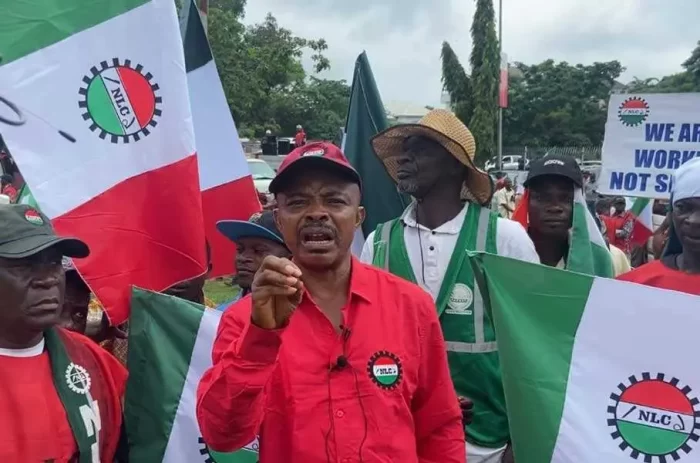
Nigerians have never been shy about their frustrations.
We complain in taxis. We complain in markets. We complain in churches and mosques. We complain in beer parlours and on social media. Sometimes, complaining is our national pastime. It is the language through which a people process disappointment, betrayal, and hope deferred.
Today, there is much to complain about.
The cost of living remains painfully high. Millions struggle daily with the rising prices of food, transportation, electricity, and basic necessities. Insecurity continues to cast long shadows across communities. Kidnapping, banditry, communal violence, terrorism, and criminality remain stubborn realities. Youth unemployment remains a pressing concern. Many Nigerians wake up each morning carrying burdens heavier than their salaries and hopes larger than their opportunities.
These realities cannot be dismissed. They are not opposition propaganda. They are lived experiences.
Yet, as the political temperature slowly rises toward another election cycle, an important question must be asked: If Bola Ahmed Tinubu is not to win again, what exactly is the alternative being offered?
Because in politics, discontent alone rarely defeats incumbency. History teaches us this lesson repeatedly.
Many opposition figures appear convinced that public anger is sufficient political capital. They assume that because citizens are frustrated, the government is automatically vulnerable. They believe that social media outrage translates directly into electoral success.
It does not.
Twitter trends are not polling units. Facebook comments are not ballot boxes. Hashtags are not political structures. And outrage, no matter how loud, is not a campaign strategy. One of the most fascinating ironies in Nigerian politics is that many of those who seek to unseat Tinubu today seem unwilling to learn from the very political methods that helped create the Tinubu phenomenon.
Whether one likes him or not, Bola Ahmed Tinubu did not arrive where he is through wishful thinking. He built networks. He negotiated alliances. He invested in structures. He understood timing. He cultivated loyalty where possible and managed interests where necessary. Most importantly, he understood a timeless truth of politics:
Politics is rarely a contest between saints and sinners. It is usually a contest between competing coalitions of interests. This reality may be uncomfortable, but it remains true.
Morality has its place in governance. Character matters. Integrity matters. But politics itself has never been a Sunday school competition or Quranic recitation…
It is not a game of “may the best man win.” It is a game of persuasion. It is a game of organization. It is a game of numbers. It is a game of narratives. It is a game of promises, negotiations, compromises, and sometimes uncomfortable partnerships. The opposition often speaks as though exposing government failures automatically qualifies them to govern.
It does not.
Diagnosing an illness and performing surgery are two different skills. Most Nigerians already know the problems. The fuel price is not a secret. The exchange rate is not hidden. The security challenges are visible. The hardship is real.
Repeating these realities daily may generate applause from those already convinced, but it does little to persuade undecided voters. The real question is not whether Nigerians are suffering.
The real question is: What precisely will you do differently?
How will you stabilize the economy? How will you manage subsidy realities? How will you attract investment? How will you tackle insecurity? How will you reform institutions? How will you manage Nigeria’s diversity? How will you govern a country of over 200 million people with competing identities, interests, religions, and expectations? These are the questions that separate protest movements from governing coalitions. And showing with concrete proof that Mr. Tinubu isn’t doing it.
Too often, opposition politics in Nigeria appears trapped in a cycle of emotional reaction rather than strategic imagination. Sometimes it feels less like a political project and more like a support group for disappointed citizens.
Anger is understandable. Bitterness is understandable. But neither is a development plan. Neither is an economic blueprint. Neither creates jobs. Neither secures communities, and neither wins elections.
What makes this even more interesting is that despite the undeniable challenges, Nigeria’s story under Tinubu is not entirely one of decline.
There have been reforms. Some painful, controversial, necessary, and debatable. Yet beneath the noise of daily politics are developments that rarely receive equal attention.
There are ongoing infrastructure projects. There are efforts toward fiscal restructuring. There are improvements in government revenue generation. There are reforms in sectors previously considered untouchable. There are policy decisions whose benefits may take years rather than months to become visible.
This does not mean everything is working. It certainly does not mean citizens should stop demanding accountability.
Far from it.
Democracy requires scrutiny. Governments must be challenged. Leaders must be questioned. Citizens must remain vigilant. But fairness also demands that political analysis acknowledges complexity. A nation cannot be understood through headlines alone. Nor can governance be evaluated solely through partisan lenses.
Nigeria remains a country in transition. A difficult transition. An imperfect transition. But a transition nonetheless.
History reminds us that many reforms that later became celebrated were deeply unpopular when introduced. That does not automatically make every current reform correct. It simply reminds us that governance often involves choices between difficult options rather than choices between good and bad.
The deeper challenge for the opposition therefore is not merely defeating Tinubu. The deeper challenge is convincing Nigerians that they possess a superior roadmap. That requires more than criticism. It requires imagination, it requires organization. It requires coherence, and requires discipline.
And above all, it requires unity.
One of the enduring weaknesses of opposition politics in Nigeria is the inability to distinguish between coalition and crowd. A crowd gathers around emotion. A coalition gathers around purpose. A crowd reacts. A coalition plans. A crowd protests. A coalition governs. Many opposition movements possess crowds. Few possess coalitions, elections are won by coalitions.
The irony is that figures like Peter Obi and Atiku Abubakar remain incredibly important to Nigeria’s democratic evolution. Their presence matters, their voices matter, their criticisms matter, and their supporters matter.
Democracy becomes stronger when power faces credible opposition. The existence of alternative visions prevents political complacency. It expands public debate and deepens accountability. It strengthens institutions.
In many ways, they are playing indispensable roles in Nigeria’s democratic journey. But the responsibility of opposition is larger than criticism.
It includes preparation, and includes persuasion, and includes presenting a believable future. Because elections are ultimately not referendums on the past alone. They are choices about the future. And people do not merely vote against something. They must also vote for something.
Nigeria itself remains the larger story.
Beyond parties, candidates, and beyond personalities. Every election cycle teaches new lessons. Every transition strengthens democratic muscles, and every political contest refines institutions.
The Nigerian experiment continues to evolve. Sometimes slowly, and painfully, and beautifully. Often all three at once. We have survived military rule. We have survived economic shocks. We have survived political crises. We have survived predictions of collapse.
Yet somehow, imperfectly and stubbornly, Nigeria keeps moving. The Nigerian story remains unfinished. That story belongs neither to Tinubu nor to the opposition. It belongs to Nigerians. And perhaps that is the most important point.
For Tinubu not to win, his opponents must do more than complain. They must convince. They must organize. They must negotiate, and must inspire. They must build structures, and must offer practical alternatives. They must present not merely a catalogue of grievances but a blueprint of possibilities. Because politics, like nature, rarely rewards emptiness. A vacuum is never enough.
To replace something, one must first become something.
And until that happens, the loudest question in Nigerian politics may not be whether Tinubu can win again. It may be whether those seeking to replace him have truly prepared themselves to do so—May Nigeria win!