Politics
Our Leaders Have Degrees, But Do They Have Education? -By Isaac Asabor
The time has come to stop confusing academic qualifications with education. Until Nigerians begin judging their leaders less by the degrees they parade and more by the wisdom, competence, integrity and sound judgement they consistently demonstrate, the country may continue electing individuals who look highly educated on paper yet govern in ways that leave citizens wondering whether they are truly educated at all.

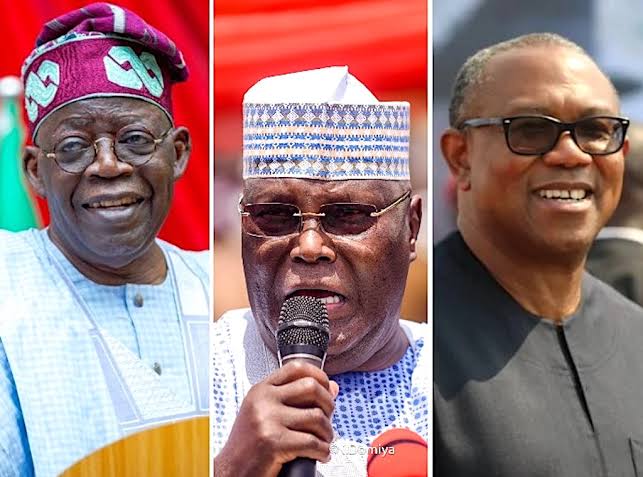
There is a question Nigerians should begin asking more boldly whenever they assess those occupying public office: “Our leaders have degrees, but do they truly have education?”
At first glance, the question may seem absurd. After all, many Nigerian politicians proudly display an array of university degrees, diplomas, professional certifications and honorary titles. During election campaigns, aspirants inundate voters with elaborate résumés meant to demonstrate their intellectual preparedness for leadership. Yet, after decades of poor governance, economic decline, policy inconsistency, institutional decay and rising hardship, many Nigerians are compelled to ask whether these credentials reflect genuine education or merely academic attainment.
The question becomes even more relevant because possessing a degree is not necessarily the same as being educated. A university certificate may prove that someone successfully completed a course of study, but it does not automatically certify wisdom, sound judgement, integrity, empathy or the capacity to solve complex societal problems. These are the qualities that distinguish an educated person from one who is merely academically qualified.
Indeed, literacy and education are often mistaken for the same thing when they are, in fact, fundamentally different. Literacy is the ability to read, write, comprehend information and communicate effectively. Education goes much further. It develops critical thinking, sound judgement, intellectual curiosity, ethical reasoning, creativity and the ability to analyze problems before arriving at solutions. Literacy equips a person to acquire information; education equips that person to use information wisely for the benefit of society.
Viewed through this lens, Nigeria’s leadership experience raises uncomfortable but legitimate questions. The country is governed by individuals who, on paper, appear highly accomplished academically. Yet the outcomes of governance frequently betray an alarming absence of the analytical depth, foresight and wisdom that genuine education ought to produce. This is not an attack on formal education, nor is it an attempt to belittle academic qualifications. Rather, it is an acknowledgment that degrees, impressive as they may appear, are not substitutes for educated leadership.
An educated leader understands the difference between political convenience and national interest. Such a leader carefully weighs the economic and social consequences of policy decisions before implementing them. They appreciate evidence, consult experts, welcome constructive criticism and possess the humility to review decisions when facts prove them wrong. Education teaches that leadership is not about displaying superiority but about constantly learning and making better decisions for the common good.
Sadly, this is not always reflected in the governance Nigerians experience. Policies are too often introduced without adequate planning, only to be reversed after public backlash. Public funds continue to disappear into projects with little measurable impact. Critical sectors such as education, healthcare, agriculture, electricity, housing, transportation and infrastructure remain plagued by underperformance despite repeated promises and enormous public expenditure. Decisions that should be driven by empirical evidence frequently appear influenced by politics, ethnic considerations, personal interests or short-term electoral calculations.
These recurring failures naturally provoke a disturbing question: if those entrusted with governing the nation possess such impressive educational credentials, why does governance so often reflect poor judgement, inadequate planning and weak problem-solving? It is difficult to fault Nigerians who increasingly doubt whether many public office holders are truly educated, notwithstanding the long list of degrees attached to their names.
History itself offers ample reason for such skepticism. Across the world, academic qualifications have never been reliable guarantees of wisdom or effective leadership. A certificate confirms attendance and successful completion of an academic programme. It does not certify integrity, emotional intelligence, ethical values, intellectual honesty or the courage to make difficult but necessary decisions. Those qualities are cultivated through lifelong learning, disciplined reflection, exposure to diverse perspectives and an unwavering commitment to personal growth.
That explains why many of history’s greatest leaders and reformers are remembered not because of the certificates they possessed but because of the quality of their thinking and the impact of their decisions. An educated person is not simply someone who knows many facts. An educated person knows how to think critically. Such a person questions assumptions before reaching conclusions, evaluates evidence instead of rumours, welcomes opposing viewpoints rather than suppressing them, admits mistakes when they occur and possesses the maturity to correct them. Above all, an educated leader understands that public office is a sacred responsibility rather than an avenue for personal glorification.
If these qualities consistently defined Nigeria’s political class, governance would almost certainly produce different outcomes. Instead, the country continues to battle persistent inflation, rising unemployment, widespread insecurity, deteriorating public services, widening inequality and growing public distrust of institutions. While every nation faces challenges, what increasingly frustrates Nigerians is the apparent inability of many leaders to respond with the intellectual depth, creativity and strategic thinking expected of genuinely educated public officials.
The irony is impossible to ignore. Nigeria arguably boasts one of Africa’s most certificate-conscious political classes. Campaign posters proudly advertise academic titles. Political biographies prominently display graduation photographs and convocation gowns. Election forms meticulously list educational qualifications. Yet the quality of governance often suggests a troubling disconnect between academic achievement and intellectual leadership.
Perhaps the problem extends beyond politics into society itself. For decades, Nigeria’s educational system has rewarded memorization more than critical thinking, examination success more than innovation, and certificate acquisition more than character formation. We celebrate graduation ceremonies but pay far less attention to whether graduates have developed the capacity to analyse complex issues, challenge faulty assumptions, solve problems or think independently.
Politics merely mirrors this broader societal reality. A society that values certificates above competence will inevitably produce leaders who excel at collecting qualifications while struggling to govern effectively. It is entirely possible for a nation to produce increasing numbers of graduates while simultaneously suffering from a shortage of genuinely educated leadership.
The emergence of artificial intelligence makes this distinction even more significant. Today, machines can retrieve information, analyze documents and answer factual questions almost instantly. If leadership were simply about possessing information, technology would outperform many human beings. What machines cannot easily replicate, however, are wisdom, ethical judgement, empathy, imagination, moral courage and the capacity to balance competing public interests. These qualities define genuine education, and they remain indispensable in leadership.
Nigeria’s future, therefore, depends not merely on electing politicians with longer lists of qualifications or producing more university graduates. It depends on nurturing leaders whose education is reflected in the quality of their reasoning, the integrity of their decisions, their willingness to learn and the measurable improvements they bring to the lives of ordinary citizens.
Ultimately, Nigerians care less about what certificates decorate a politician’s office than about what that politician delivers outside the office. Degrees may impress voters during campaigns, but only competent, thoughtful and responsible governance earns enduring public respect.
The time has come to stop confusing academic qualifications with education. Until Nigerians begin judging their leaders less by the degrees they parade and more by the wisdom, competence, integrity and sound judgement they consistently demonstrate, the country may continue electing individuals who look highly educated on paper yet govern in ways that leave citizens wondering whether they are truly educated at all.