Politics
The 2027 Election Question Every Nigerian Should Ask: ‘What Will You Do For Nigeria?’ –By Muhammad Bashir Abdulhafiz
And if the candidate cannot answer, or answers in a way that leaves you unconvinced, then do not give them your vote. Give it to someone who can. Give it to someone who will. Because Nigeria deserves better. And we the Nigerian people are the only ones who can demand it. The future of our nation is in our hands. Let us not waste this opportunity. Let us ask the right question. Let us demand the right answers. Let us vote for Nigeria.

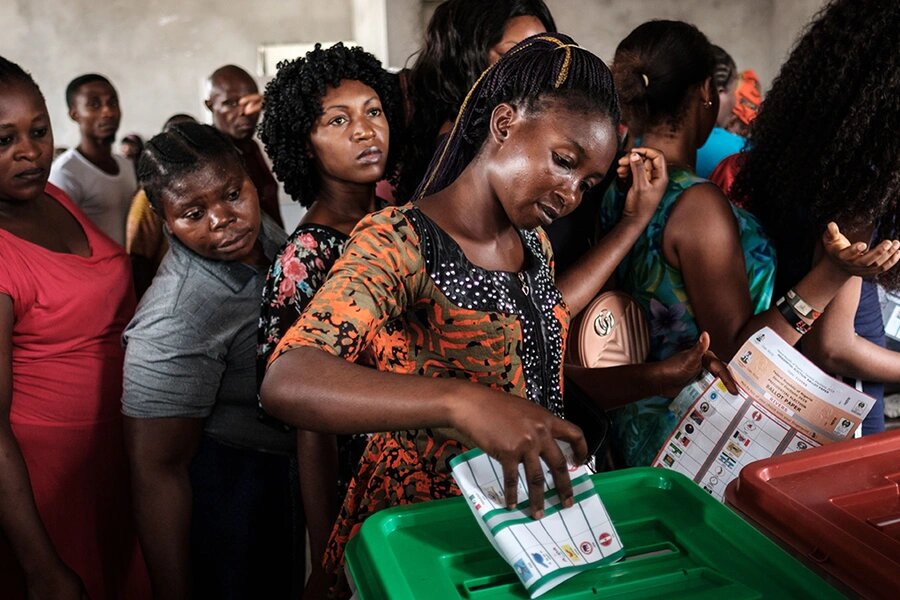
In a few months, Nigerians will once again head to the polls to elect a president. The Independent National Electoral Commission (INEC) has already published the particulars of 19 presidential candidates and their running mates. President Bola Tinubu of the All Progressives Congress (APC) is seeking re-election with Vice President Kashim Shettima. Former Vice President Atiku Abubakar is contesting on the platform of the African Democratic Congress (ADC) with Rotimi Amaechi as his running mate. Former Anambra State Governor Peter Obi is the flagbearer of the Nigeria Democratic Congress (NDC), with Rabiu Musa Kwankwaso as his running mate. Others are also in the race.
But as the campaigns officially begin on August 19, I find myself asking a question that should be on every Nigerian’s lips. Not ‘Where are you from?’ Not ‘Which party do you belong to?’ Not ‘What will you give me?’ Not even ‘What did you do before?’. The question is simpler and yet far more profound: ‘What will you do for Nigeria?’
Let us be honest with ourselves. Nigeria is not where it should be. The numbers tell a painful story. After peaking above 33 percent in late 2024 following the removal of fuel subsidies and exchange rate reforms, inflation is expected to moderate to between 22 and 25 percent in 2026. Food inflation remains particularly severe. Many families are spending a huge share of their income simply to feed themselves. Public debt has surpassed ₦120 trillion, with debt servicing consuming a substantial portion of government revenue.
A recent voter sentiment survey by SBM Intelligence found that about 80 percent of Nigerians believe the country is heading in the wrong direction. Insecurity has overtaken economic hardship as the foremost concern of voters, with 45 percent identifying it as their primary issue. Between June 2025 and May 2026, about 270 people were reportedly abducted in one state alone. The North-East continues to suffer attacks from Boko Haram and ISWAP, while banditry plagues the North-West. In May 2026, pupils were abducted in an attack that highlighted how mass abductions have expanded beyond traditional insurgency zones.
Yet despite all this, many of us will walk into the voting booth and cast our ballots based on ethnicity, religion, or the promise of a small handout. We will vote for the candidate from our region, or the one who shares our faith, or the one who gave us money on election day. We will vote with our stomachs instead of our heads. We will vote for the familiar face instead of the capable one. This must stop. For too long, we have been asking the wrong questions. We ask: ‘Where are you from?’ as if geography determines competence. We ask: ‘What is your religion?’ as if piety translates to good governance. We ask: ‘What did you do for me before?’ as if past favours are a substitute for future vision.
These questions have led us nowhere. They have given us leaders who know how to play ethnic and religious cards but do not know how to fix the economy. They have given us politicians who are experts at distributing money on election day but clueless about distributing opportunities every other day. The problem is not just our leaders. The problem is us the voters who keep choosing them based on the wrong criteria.
This is why every Nigerian must ask every presidential candidate one question and one question only: ‘What will you do for Nigeria?’ Not ‘What will you do for the North?’ Not ‘What will you do for the South?’ Not ‘What will you do for Christians?’ Not ‘What will you do for Muslims?’ Not ‘What will you do for my tribe?’. ‘What will you do for Nigeria?’ This question forces candidates to think beyond parochial interests. It demands a national vision. It requires concrete plans, not empty slogans. It challenges them to explain in clear, and measurable terms how they intend to address the crises that plague our nation.
When a candidate tells you they will fix the economy, ask: How? What specific policies will you implement? How will you reduce inflation? How will you create jobs? How will you attract investment? How will you diversify away from oil, which still accounts for roughly 70 percent of government revenue and approximately 85 percent of export earnings yet contributes less than 8 percent of GDP? When a candidate tells you they will end insecurity, ask: How? What will you do differently from what has been done before? How will you defeat Boko Haram and ISWAP? How will you stop bandits in the North-West? How will you protect schools so children can learn without fear?
When a candidate tells you they will fix electricity, ask: How? What is your specific plan for the power sector? How will you generate more power? How will you distribute it reliably? How will you make it affordable? When a candidate tells you they will fight corruption, ask: How? Who will you prosecute? What systems will you put in place to prevent theft? How will you protect whistleblowers? How will you ensure that public funds actually reach the people they are meant to serve? When a candidate tells you they will improve education and healthcare, ask: How? How much will you budget? What reforms will you implement? How will you measure success? How will you ensure that every Nigerian child can go to school and every Nigerian patient can access quality healthcare?
This single question ‘What will you do for Nigeria?’ reveals everything about a candidate. It reveals whether they have a plan or just a slogan. It reveals whether they understand the complexity of our challenges or are simply recycling empty promises. It reveals whether they see themselves as leaders of all Nigerians or as champions of a particular region, religion, or ethnic group.
A candidate who cannot answer this question clearly and convincingly does not deserve your vote. A candidate who answers with vague generalities ‘I will fight corruption’, ‘I will grow the economy’, ‘I will ensure security’, without specifics is not ready to lead. A candidate who deflects to attack opponents instead of presenting solutions is not worthy of your trust. But asking the question is not enough. We must really also listen to the answers. We must scrutinise them. We must compare them. We must hold candidates accountable for what they say.
This means doing our homework. It means reading manifestos. It means watching debates. It means talking to neighbours and colleagues about what different candidates are promising. It means not relying on social media rumours or campaign propaganda. It means being informed citizens, not passive spectators. It also means refusing to be bought. Vote buying is a major threat to credible elections. When a politician gives you money on election day, they are not doing you a favour, they are buying your future. They are betting that a small amount of cash today is cheaper than providing you with electricity, healthcare, education, and security for four years. Do not let them win that bet.
As a young Nigerian, I know the frustration. I know the hopelessness that creeps in when you see the same faces, hear the same promises, and watch the same failures repeat themselves election after election. I know the temptation to stay home on election day, to say ‘my vote doesn’t matter’ to give up on the whole process. But giving up is exactly what the old politicians want. They want us to stay home. They want us to be apathetic. They want us to believe that nothing will change, because as long as we believe that, they can keep doing what they have always done.
The truth is that our votes do matter, but only if we use them wisely. Only if we vote based on competence instead of sentiment. Only if we ask the right questions and demand the right answers. Cardinal John Onaiyekan recently warned that voters would not turn out in the 2027 elections if Nigerians conclude that victory is already guaranteed for the ruling party. He urged the government to restore public confidence in the electoral process, warning that growing voter apathy could undermine the credibility of the elections.
But here is the truth: voter apathy is not just about whether we believe the election will be free and fair. It is also about whether we believe our votes can make a difference. And our votes can make a difference, but only if we use them to elect leaders who will actually serve Nigeria, not just themselves. The 2027 election is not just another election. It is a referendum on the kind of Nigeria we want to build. It is a choice between continuing the same old patterns or breaking free from them. It is a choice between leaders who see Nigeria as a project to be developed and leaders who see it as a resource to be exploited.
We have the power to make that choice. But we can only exercise that power if we ask the right question. So as you go to the polling booth in 2027 and I pray that you won’t ask ‘Where are you from?’ Do not also ask ‘What is your religion?’ And do not ask ‘What will you give me?’ Instead ask: ‘What will you do for Nigeria?’.
And if the candidate cannot answer, or answers in a way that leaves you unconvinced, then do not give them your vote. Give it to someone who can. Give it to someone who will. Because Nigeria deserves better. And we the Nigerian people are the only ones who can demand it. The future of our nation is in our hands. Let us not waste this opportunity. Let us ask the right question. Let us demand the right answers. Let us vote for Nigeria.
Muhammad Bashir Abdulhafiz wrote from Jos, and can be reached via abdulhafizmuhammad81@gmail.com instantly.