
Africa
“Forced to Sleep on the Soil of Tyranny”: Nigerian Students Cry Out Against a LASU Dean’s Two-Decade Reign of Academic Intimidation -By John Egbeazien Oshodi
The Vice Chancellor should immediately order a non-defensive, non-performative, and independent investigation, not one designed to shield or protect the professor. And in the spirit of neutrality and institutional credibility, Prof. Abanikanda should be temporarily suspended or relieved of his role as dean during the course of this investigation. That is not punishment—it is due process in motion.

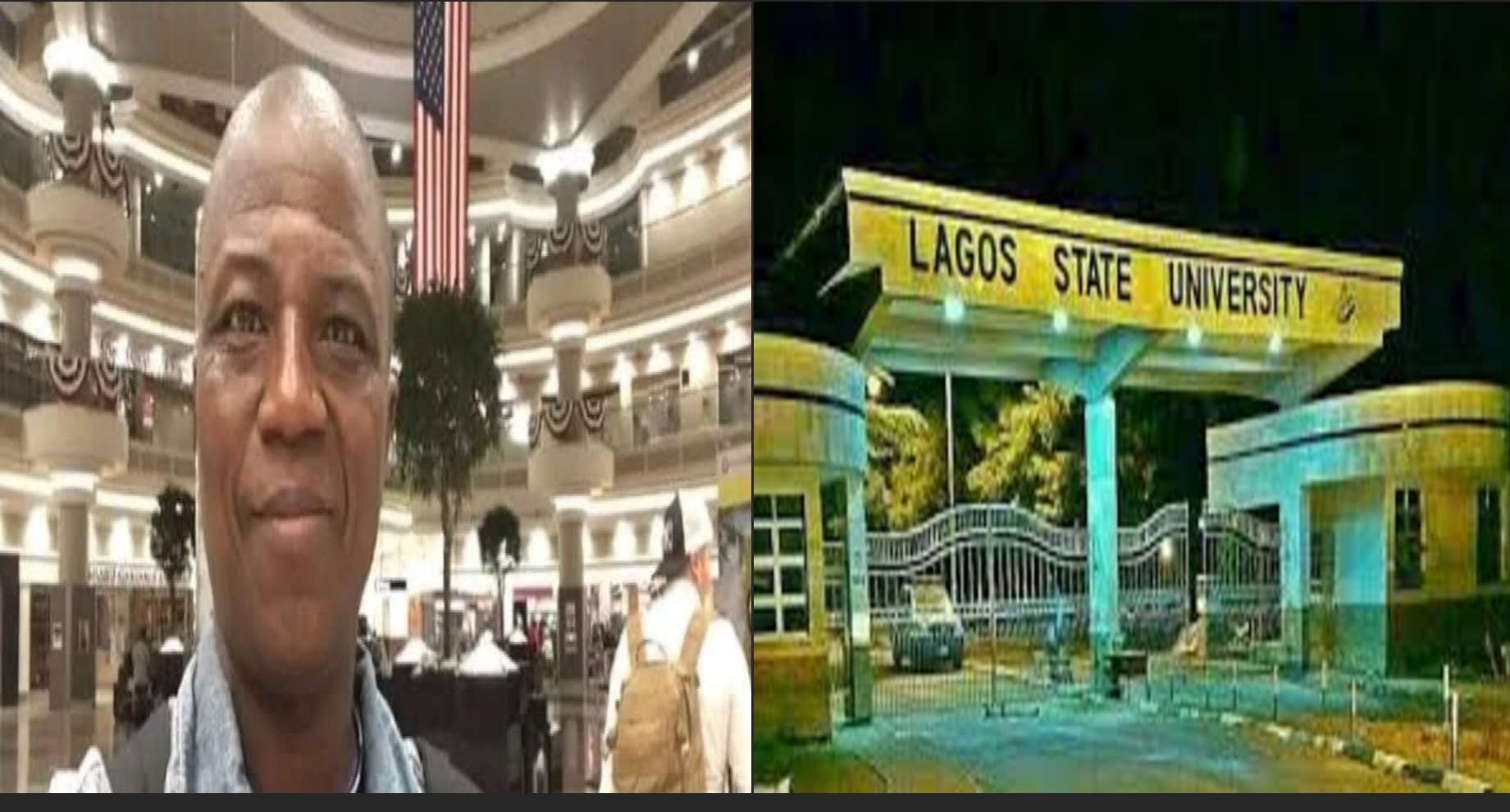
“A university should be a place of learning, not a labor colony. A dean should mentor minds, not militarize academic spaces.”
The Nigerian Pattern: When Institutions Serve Rulers, Not Rules
What is unfolding at Lagos State University’s School of Agriculture is not an isolated academic crisis—it is yet another reflection of a national disease. From government palaces to university departments, Nigeria continues to suffer from a deep-rooted system of “rule of man” rather than rule of law. The same toxic pattern repeats: unchecked authority, muted accountability, and suffering citizens—or in this case, students—left with no shield but public outcry.
According to reports released by the National Association of Nigerian Students (NANS), Zone D, what has taken place under the leadership of Prof. O.T.F. Abanikanda is not merely administrative excess—it is a psychological and institutional tragedy decades in the making. When leadership becomes synonymous with fear, and authority translates into punishment, we are no longer speaking of education—we are confronting institutional abuse.
A Fractured Learning Environment: The Psychological Toll of Academic Tyranny
For over 20 years, Prof. Abanikanda—currently serving as Dean of the School of Agriculture—has reportedly ruled not as an academic guide but as a disciplinarian whose grip extends beyond pedagogy into personal and professional control. Described as unprofessional, inhumane, and tyrannical by both students and staff, his leadership has allegedly cultivated a culture where fear chokes scholarship and intimidation replaces intellectual exchange.
This is not simply about personality. It is about power.
Students have spoken of psychological suffocation. Staff have whispered of retaliation. Promotions are withheld. Dissent is punished. And silence, it seems, is the only safety.
In this type of environment, the university ceases to function as a center of learning—it begins to operate like a feudal estate.
“Sleep in the Farm, or Fail”: Psychological Imprisonment as Academic Requirement
In one of the most jarring revelations, final-year students were allegedly forced to live in makeshift shelters on the LASU farm, barred from their hostels and subjected to intensive manual labor for over a month—all under threat of academic penalty.
Let us be clear: this is not fieldwork. This is coercion dressed up as curriculum.
The conditions described—sleeping in substandard shelters, isolation, deprivation, and looming threats of failure—amount not to experiential learning but to psychological harm. What is being cultivated here is not agricultural produce, but emotional trauma.
This form of compulsory endurance crosses the line from discipline into degradation. It may lead to chronic stress, trauma bonding, academic disengagement, and long-term distrust in institutions. When students begin to associate learning with humiliation, and advancement with obedience to oppression, education no longer liberates—it indoctrinates.
Tyranny in a Lab Coat: When Power Puts on a Professorial Face
Insiders within the university describe Prof. Abanikanda as a figure who punishes dissent, demotes challengers, and rules with rigidity. This reflects not simply a harsh leadership style, but a deeply institutionalized narcissism, where authority is used not to lead, but to dominate.
In a properly functioning system, leadership is accountable. But in Nigeria, where institutions often answer to individuals rather than principles, it becomes possible for one man to sit atop an entire academic community and shape it into his own oppressive image.
This is a crisis of governance. But more painfully, it is a crisis of values.
Where Are the Checks? Where Is the Care?
When a culture of control is allowed to thrive for over two decades, we must ask:
Where is the university’s ethics committee?
Where are mental health support systems for students?
Where is the Lagos State Ministry of Education?
Why have no formal mechanisms been triggered to address these alarming patterns?
And more broadly: Why does it take media exposure for institutional rot to be acknowledged in Nigeria?
A Nation Where Justice Is Outsourced to the Media
In any country guided by functional systems, cases like this would quickly trigger formal review—through civil courts, university senates, or protective agencies like the DSS, the Police, or the EFCC. But painfully, public perception in Nigeria tells a different story.
Citizens no longer believe that these institutions serve the people. Many now see them as tools of the powerful, activated only when elites are threatened—not when the powerless are abused.
So what happens when formal justice systems lose the public’s trust?
The media becomes the courtroom.
The public becomes the jury.
And trauma becomes the testimony.
Final Reflection: Education Must Heal, Not Harm
To the students enduring this environment: your suffering should never have been normalized. To the faculty living in quiet fear: your silence speaks volumes about the weight of institutional control. To the university administration and the Lagos State Government: every day this matter is left unaddressed adds to the erosion of public confidence in LASU’s commitment to academic integrity and student welfare.
Painfully, in any functioning democracy, allegations involving psychological intimidation, enforced hardship, and student mistreatment—especially when tied to patterns of institutional abuse—would typically trigger urgent intervention from formal justice mechanisms. Whether through the civil rights commission, civil courts, the Nigeria Police Force, the Department of State Services (DSS), or even the Economic and Financial Crimes Commission (EFCC), such cases would be treated as serious breaches of public trust and official responsibility.
But in Nigeria today, the deeper wound lies not just in the alleged abuse—but in what follows after. Or rather, what does not.
Public perception of these institutions—once imagined as protectors of the weak and arbiters of fairness—has darkened. Many Nigerians now view them as slow to act, deeply politicized, or quietly aligned with those in power. Whether this perception is entirely accurate or not is beside the point—because in public life, perception often shapes behavior more than reality itself.
As a result, a culture of painful resignation has taken hold. People no longer expect redress from formal corridors of justice. Instead, they brace for silence. They rehearse their pain for public ears, not institutional hearings. They turn to the media—not because it is ideal, but because it is the only space where their voices are not instantly dismissed.
And so, justice in Nigeria has too often become a performance of hope, played out in newspapers and social media—because the institutions meant to act have been swallowed by doubt, distrust, or dysfunction.
As a result, the media becomes their courtroom.
The public becomes their jury.
The outcry becomes their only appeal for justice.
This is not an indictment of any one agency, but a reflection of a troubling national reality: where trust in enforcement and regulatory bodies is fraying, and where the most vulnerable—students, junior staff, whistleblowers—turn instead to the press and public discourse for relief.
At the same time, it would be unfair to instantly convict Prof. Abanikanda in the court of public opinion. Accusations must be weighed with care, and due process must be respected. However, given the volume and consistency of testimonies—spanning decades and multiple constituencies—it is reasonable, even necessary, for the university administration to take a firm but fair interim step.
The Vice Chancellor should immediately order a non-defensive, non-performative, and independent investigation, not one designed to shield or protect the professor. And in the spirit of neutrality and institutional credibility, Prof. Abanikanda should be temporarily suspended or relieved of his role as dean during the course of this investigation. That is not punishment—it is due process in motion.
When allegations are this serious, and the emotional and academic wellbeing of students is at stake, leadership must not only act—it must be seen to act transparently, swiftly, and without bias.
Leadership is not tyranny. Education is not enslavement. And university campuses must never become arenas where power is protected, and pain is buried.
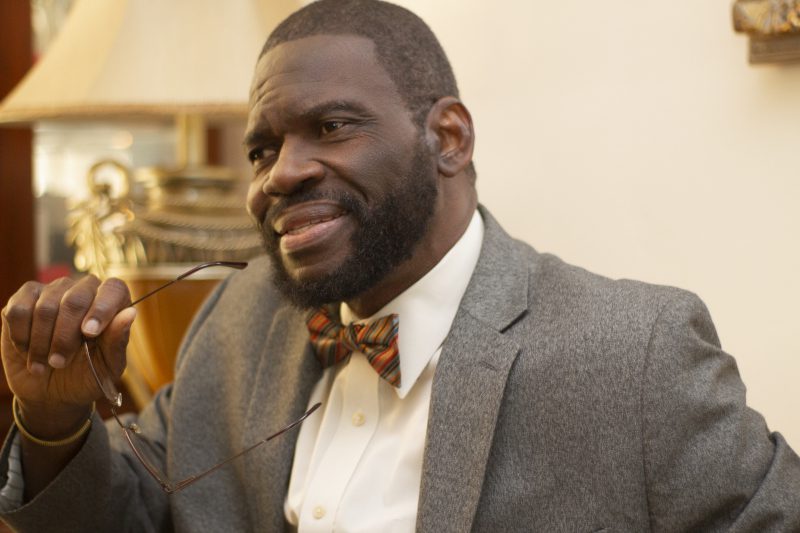
Psychologist John Egbeazien Oshodi
Professor John Egbeazien Oshodi is an American psychologist, educator, and author specializing in forensic, legal, and clinical psychology, cross-cultural psychology, police and prison sciences, and community justice. Born in Uromi, Edo State, Nigeria, he is the son of a 37-year veteran of the Nigeria Police Force—an experience that shaped his enduring commitment to justice, security, and psychological reform.
A pioneer in the field, he introduced state-of-the-art forensic psychology to Nigeria in 2011 through the National Universities Commission and Nasarawa State University, where he served as Associate Professor in the Department of Psychology. His contributions extend beyond academia through the Oshodi Foundation and the Center for Psychological and Forensic Services, advancing mental health, behavioral reform, and institutional transformation.
Professor Oshodi has held faculty positions at Florida Memorial University, Florida International University, Broward College, where he also served as Assistant Professor and Interim Associate Dean, Nova Southeastern University, and Lynn University. He is currently a contributing faculty member at Walden University and a virtual professor with Weldios University and ISCOM University.
In the United States, he serves as a government consultant in forensic-clinical psychology, offering expertise in mental health, behavioral analysis, and institutional evaluation. He is also the founder of Psychoafricalysis, a theoretical framework that integrates African sociocultural dynamics into modern psychology.
A proud Black Republican, Professor Oshodi advocates for individual empowerment, ethical leadership, and institutional integrity. His work focuses on promoting functional governance and sustainable development across Africa.


























You must be logged in to post a comment Login