
Africa
Fuel, Forex And Food: Tinubu’s Inflation Storm From Inauguration To Today -By Isaac Asabor
At this juncture, it is expedient to ask, “What Should Be Done Next?” Given the excruciating realities detailed above, and the fact that hope alone cannot fill hungry stomachs nor pacify a restless population, the Tinubu administration must now pivot from shock therapy to strategic healing. The government must urgently retool its economic recovery plan with policies that go beyond inflation projections and GDP forecasts. Nigerians are not statistics, they are human beings grappling daily with empty plates and evaporating incomes.

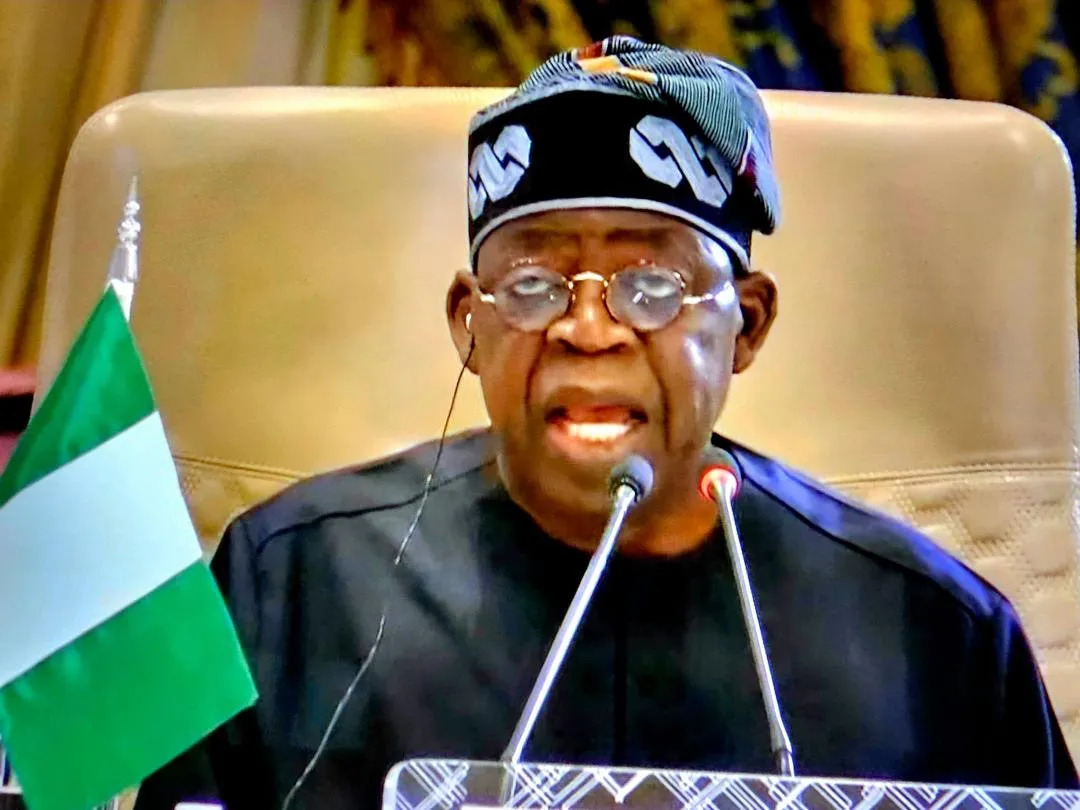
It is no more news that when Bola Ahmed Tinubu was sworn in on 29 May 2023 that he inherited an economy that was already bruised, with 24% inflation, subsidy-laden petrol, a weak naira. But instead of stabilizing, the ground shifted beneath ordinary Nigerians as prices spiraled. What followed has been a textbook case of “pain for promise,” but the pain has been prolonged, and real. Let us not sugarcoat it, the Tinubu economic saga has brutally hit Nigerians at their wallets.
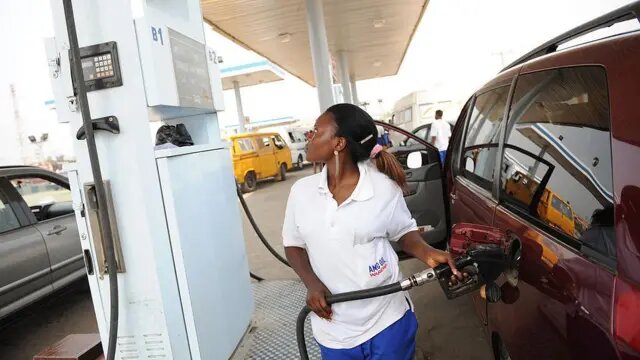
In fact, on inauguration day, Tinubu pronounced the end of fuel subsidies thus, “Subsidy is gone!”, and from that day petrol prices instantly tripled, thrusting jaw-dropping pump prices on commuters and families across Nigeria Almost simultaneously, the naira float freed it from its peg, causing instantaneous depreciation, weakening the currency by over 50% . These twin shocks, fuel and forex, would soon reverberate right through staple prices, transportation, housing, and even school fees.
Without resorting to exaggerative narrative in this context, it is germane to recall that data tells the pitiless story. In fact, against the backdrop of the datum that at swearing-in the inflation rate in May, 2023 was at 22.41%, but only four months later, which was in September 2023, inflation rate rose to 28.92%, the highest end-of-year since 2005. By March 2024 it rose to 33.2%, the highest since 1996.
In the same vein, in May 2024, it peaked at 33.95%, marking 12 consecutive monthly rises under President Tinubu’s led administration. To worsen the situation, by November 2024, CPI hit 34.6%, nearly a 30-year high, fueled again by food and energy costs.
A retrospective analysis reveals that the situation has exacted a human toll, manifesting in widespread hunger, deepening poverty, and simmering unrest. For instance, staple food prices doubled or more: rice leapt from ₦30k to ₦95k per bag
Real wages went backwards, even as minimum wages, intended as palliative, fell far short of inflation, triggering general strikes from May–July 2024. Not only that, #EndBadGovernance protests were carried out from July to August 2024, with chants of “we are not slaves in our country,” spotlighting the desperation caused by skyrocketing living costs.
The economic situation is dire enough that World Bank pegged poverty at over 115 million people, 51% of the population, as a direct offshoot of inflation overlapping with COVID impacts
Unfortunately, amid the situation is the imbalance between the official rationale and ground reality. Tinubu’s team called it “Tinubunomics,” promising long-term stability through shock therapy: unsubsidized markets, fiscal discipline, and forex clarity. As gathered from Reuters, the CBN anticipates GDP growth (4.17% in 2025) and lower inflation (34.8% projected down) but Nigeria’s 2024 plan targeted an inflation ceiling of 21.4%, missed spectacularly, bounding in the low to mid-30s all year.
At this juncture, it is expedient to ask, “What’s fueling the pain? To answer the foregoing question, it is germane to opine that not a few experts and economic observers were unanimous in their views that supply disruptions and policy missteps are fueling the pain, even as energy price erosion fed directly into the cost of food transport, home electricity, and fertilizer. Again, security threats in agricultural areas are worsening supply shortages.
Bad enough, CBN rate hikes failed to match inflation’s speed, just as the World Bank cautioned that monetary tightening alone would not suffice. Also identified to fueling the pain which millions of Nigerians have been subjected to since President Tinubu came on board in 2023 is misplaced palliatives as they are inherent with poor rollout, uncoordinated vouchers, and stung more as a token than real support.
Though government officials and the President’s loyalist have been pointing to signs of easing in the economy, but is it enough? Given the foregoing view, one may ask, is it because inflation turned downward by 23.18% in Feb 2025, and down from 31.7% a year earlier? Also ascertaining where the confidence that the economy is improving is coming from, it is germane to recall that CPI rebasing (shifting base year to 2024) helped bring down reported numbers, and urban inflation dropped 8.5 points; rural areas down 10.1 points; food inflation fell from 37.9% to 23.5%, according to nairametrics.com. But the context matters, these are still double-digit hikes. For most families, prices are still painfully high.
In as much as one will agree in this context that the reforms being carried out under Tinubu’s administration are necessary, it is salient to note that the collective execution is by each passing day, since May 29, 2023, crushing Nigerians. In fact, since the inaugural day, two years ago, the economy took a beating without adequate timing, cushioning, or communication. Yes, growth is projected, and forex reserves are recovering. But the middle class is buckling, poor households are deeper in hardship, and social unrest remains a threat.
In fact, without structural fixes, security, agriculture, housing, job creation, this is a Band-Aid on a hemorrhage.
At this juncture, it is expedient to ask, “What Should Be Done Next?” Given the excruciating realities detailed above, and the fact that hope alone cannot fill hungry stomachs nor pacify a restless population, the Tinubu administration must now pivot from shock therapy to strategic healing. The government must urgently retool its economic recovery plan with policies that go beyond inflation projections and GDP forecasts. Nigerians are not statistics, they are human beings grappling daily with empty plates and evaporating incomes. Therefore, moving forward, the government should take the following pragmatic actions:
First and foremost, the government should subsidize production, not consumption. Instead of token food handouts, there is an urgent need to support farmers directly with fertilizer access, irrigation, and rural security to increase local food supply and reduce dependency on imports.
Secondly, there is the need for the government to implement a structured, transparent palliative framework, and ditch the erratic cash transfers and set up a digitized, verifiable support system for the most vulnerable populations.
Thirdly, the government should endeavor to stabilize the forex market through tighter fiscal discipline and investment incentives. In fact, the government should curb speculative attacks on the naira by encouraging diaspora remittances, easing access to forex for genuine businesses, and blocking leakages in government spending.
Most importantly, the government should create jobs through aggressive infrastructure and housing projects as it is obvious that unemployment feeds unrest. In fact, government should initiate public works programs to stimulate employment and restore dignity to labor.
Also, there is the need for the government to rebuild confidence through consistent policy communication. In fact, Nigerians are tired of policy summersaults. Clear, steady messaging on reforms, timelines, and tangible benefits will help calm nerves and stabilize the market psyche.
In a similar vein, the government should revive local manufacturing. Through tax breaks, energy access reforms, and protection of local industries, the government must build self-reliance and reduce over-dependence on imports that hurt the naira and jack up inflation.
Also, in a similar vein, the government should invest in public transport and alternative energy. This, no doubt, will ease fuel price shocks, promote mass transit options and renewable energy solutions at the urban and rural levels.
Without these bold yet necessary interventions, Nigeria risks further socio-economic fragmentation. The pain has been acknowledged, what is needed now is relief, results, and a reality that reflects genuine progress in the lives of the people.















You must be logged in to post a comment Login