
Africa
How GTBank Is Powering Entrepreneurship And Reinventing Nigeria’s Business Climate -By Isaac Asabor
In a country yearning for economic rejuvenation and youth empowerment, GTBank’s model of “entrepreneurship-first banking” could very well be the spark that lights a fire across Nigeria’s business landscape. It is more than slogans. It is more than PR. It is impact you can see, touch, and measure.

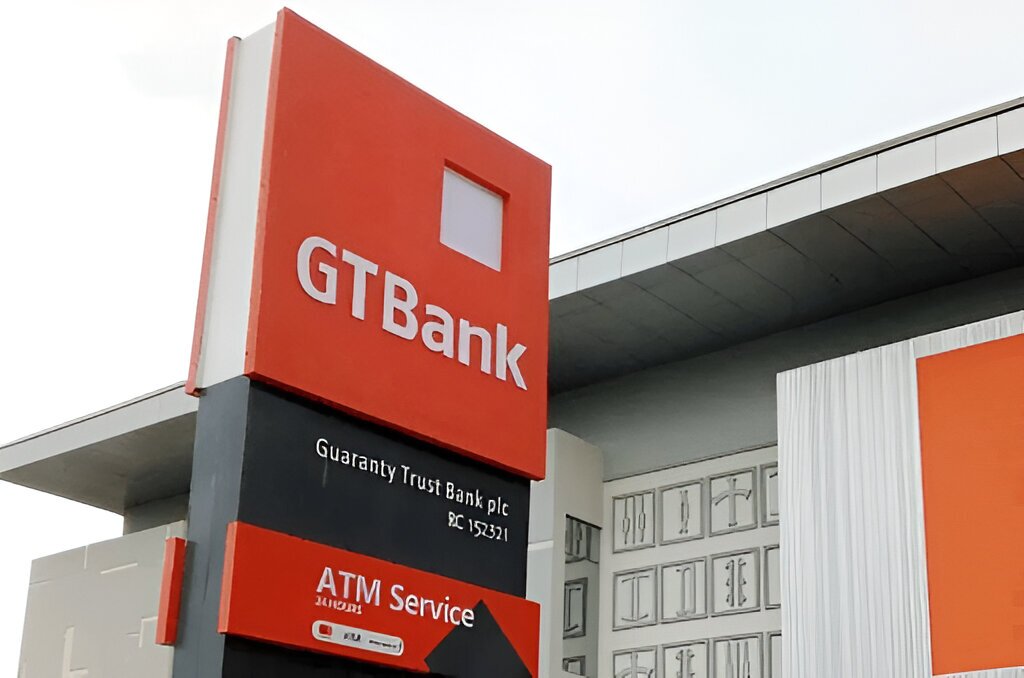
In a country where the economic landscape has been shaped more by uncertainty than by opportunity, the role of institutions that dare to reimagine banking beyond profit margins is critical. One such institution is Guaranty Trust Bank Limited (GTBank), a proudly African, truly international financial institution that is doing more than just offering banking services. It is powering enterprise, empowering small businesses, and redefining the Nigerian business environment.
Nigeria’s banking industry has long been seen as a closed circuit, focused more on big-ticket transactions and less on inclusivity. But GTBank is changing that narrative. Headquartered in Lagos, and with a sprawling footprint across Africa and the United Kingdom, GTBank is not just in the business of banking, it is in the business of “nation-building”.
As gathered from the bank’s website, the Group, which serves as the parent company of GTBank, demonstrated strong financial resilience, reporting a profit before tax of ₦300.4 billion. This was driven by solid growth in core earnings, with interest income rising year-on-year by 41.1% and fee income increasing by 41.2%. These robust earnings effectively cushioned the impact of the non-recurrence of the ₦331.6 billion fair value gains recognized in Q1 2024.
The Group’s net loan book grew by 15.6%, rising from ₦2.79 trillion in December 2024 to ₦3.22 trillion in March 2025. Similarly, deposit liabilities increased by 7.7% from ₦10.40 trillion to ₦11.20 trillion within the same period. Demonstrating its strong financial foundation, the Group achieved growth across all asset classes and continues to maintain a resilient, well-structured, highly de-risked, and diversified balance sheet across all jurisdictions of operation.
As of March 2025, total assets stood at ₦15.9 trillion, while shareholders’ funds reached ₦3.0 trillion. The Group’s Full Impact Capital Adequacy Ratio (CAR) remained exceptionally strong at 34.6%. Asset quality also improved, as shown by IFRS 9 Stage 3 Loans, which declined to 3.3% at the Bank level and 4.5% at the Group level in Q1 2025, from 3.5% and 5.2%, respectively, in December 2024. Furthermore, Cost of Risk (COR) dropped significantly to 0.4% from 4.9% in December 2024, further underscoring the Group’s sound risk management and financial strength.
Without a doubt, GTBank has over the years being empowering small businesses,and the foregoing view is particularly glaring when seen from the perspective of its lifeline to Nigeria’s Informal Sector.
In Nigeria, the informal sector constitutes a significant portion of the economy, contributing over 60% to the GDP and employing millions. Unfortunately, this segment is often neglected by formal financial systems due to perceived risk and low scalability.
GTBank, however, recognizes that true economic growth cannot occur without empowering the small players. That is why its platforms such as “Quick Credit” and “Habari” are revolutionary in their design and execution. “Quick Credit” allows individuals and SMEs to access loans instantly, without the bureaucratic bottlenecks that characterize traditional lending. It is a game-changer for small business owners who need working capital in real time, not after weeks of paperwork.
Meanwhile, “Habari”, the Bank’s integrated digital platform, combines e-commerce, music, lifestyle, and banking into one ecosystem. For entrepreneurs, this is not just a platform, it is a new economy. It allows business owners to showcase their products, reach new markets, and manage transactions without even needing a physical store.
While other banks host golf tournaments and CEO roundtables, GTBank is investing in platforms that touch everyday lives. Its flagship events, the GTBank Fashion Weekend and the GTBank Food and Drink Festival, are not vanity projects. They are strategic socio-economic tools that spotlight Nigeria’s vibrant creative and culinary industries.
In a country where young people make up over 60% of the population, creating opportunities for self-expression and enterprise is key to economic stability. These platforms bring together thousands of small-scale entrepreneurs, artisans, designers, and chefs, placing them on a global stage. For some, it is a Launchpad into international markets; for others, it is the first real exposure to formal business.
But more than just fanfare, these events offer free stalls, masterclasses, and networking opportunities, giving participants tangible value and exposure. In a climate where startups struggle with visibility and market access, GTBank is offering more than exposure; it is offering a future.
GTBank’s forward-thinking posture has seen it dominate the “Central Bank of Nigeria’s Electronic Payment Incentive Scheme (EPIS) Efficiency Awards” for three consecutive years, taking home the lion’s share of awards. This is not just recognition; it is a reflection of the Bank’s unwavering investment in digital infrastructure, positioning itself at the forefront of financial inclusion.
Digitalization is not a trend for GTBank; it is a strategy. From mobile banking apps to AI-driven customer service tools, the Bank ensures that every touchpoint offers speed, simplicity, and security. In an era where Fintech startups are threatening traditional banks, GTBank has chosen to adapt, absorb, and innovate, remaining relevant in a rapidly evolving ecosystem.
Corporate Social Responsibility (CSR) at GTBank is not performative, it is deeply institutional. The Bank’s commitment to education, community development, the arts, and the environment, is evident in its long-standing support for initiatives that have direct grassroots impact.
From rehabilitating schools and sponsoring art exhibitions to supporting environmental sustainability campaigns, GTBank is investing in the social infrastructure necessary for entrepreneurship to thrive. A well-educated, healthy, and inspired population is the bedrock of a thriving business environment, and GTBank understands that better than most.
With subsidiaries in Côte D’Ivoire, Gambia, Ghana, Liberia, Kenya, Rwanda, Tanzania, Uganda, Sierra Leone, and the United Kingdom, GTBank is not only transforming Nigeria, it is influencing Africa’s economic renaissance. By promoting cross-border trade, facilitating digital payments across countries, and nurturing pan-African startups, the Bank is playing a pivotal role in knitting together Africa’s fragmented markets.
Its pan-African footprint also means that entrepreneurs who start small in Nigeria can scale up quickly leveraging GTBank’s regional presence to expand operations without the headaches of finding new banking partners in every country.
Let us not sugar-coat it: Nigeria’s business environment is still fraught with policy inconsistencies, poor infrastructure, and access-to-capital issues. But within this fog of challenges, GTBank is carving out clarity. By providing tools for financial literacy, offering collateral-free loans, promoting e-commerce adoption, and supporting business formalization, GTBank is making the business climate more conducive for entrepreneurs and startups.
Moreover, the Bank is advocating for regulatory reforms that foster innovation and lower entry barriers for small businesses. It is one thing to serve SMEs; it is another to champion their cause in boardrooms and policy discussions. GTBank does both.
Without a doubt, GTBank’s trajectory is a masterclass in how banks can serve as agents of societal transformation. Its blend of financial excellence, tech innovation, social impact, and pan-African vision makes it more than a bank, it is a partner in progress.
In a time when public trust in financial institutions is waning, GTBank is proof that a bank can be both profitable and people-focused. It understands that when businesses thrive, communities rise; and when communities rise, nations prosper.
As Nigeria continues its slow but steady journey toward economic stability, institutions like GTBank offer a blueprint for inclusive capitalism, where success is measured not just by profit, but by the lives enriched and the businesses empowered.
In a country yearning for economic rejuvenation and youth empowerment, GTBank’s model of “entrepreneurship-first banking” could very well be the spark that lights a fire across Nigeria’s business landscape. It is more than slogans. It is more than PR. It is impact you can see, touch, and measure.
Indeed, if Nigeria is to transition from a consumer nation to a production-based economy, banks must do more than just lend, they must lead. And GTBank is doing exactly that. With vision, with courage, and with a heart firmly rooted in the community.


























You must be logged in to post a comment Login