
Africa
Health: Telemedicine Suitable for Local African Conditions -By Kestér Kenn Klomegâh
Health systems in almost all countries of Africa basically are state-owned. Therefore, the establishment of compatible national telemedicine systems is possible only in close cooperation with the regional Ministries of health, so that the project can be adapted to the conditions of a particular country and at the same time maintain the universality of national telemedicine systems, so that they can interact with each other. We know the serious efforts that African Governments are making to promote health, and we hope that our cooperation in implementing telemedicine systems will yield significant, qualitatively better results.

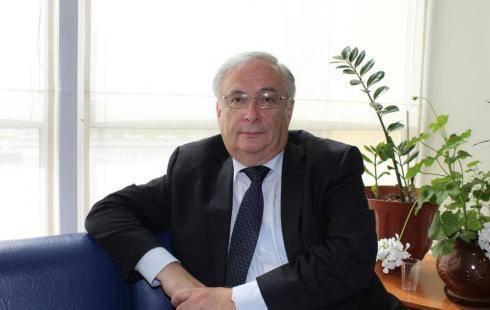
Many African countries are still consistently looking forward to improve healthcare delivery to millions of people living in rural communities with little success. In this interview, Professor Mikhail Y. Natenzon, chairman of board of the “National Telemedicine Agency” Research-and-Production Union and also deputy head of the Regional Working Group for Telemedicine of the Regional Commonwealth for Communication of the CIS countries, tells Kestér Kenn Klomegâh, an academic researcher and policy consultant on African affairs in Russia and Eurasian region, that the establishment of compatible national telemedicine systems, which has many advantages, can suitably be adapted to the local conditions of any particular African country. Here are interview excerpts:
Q:How important is modern telemedicine technology for African countries? And the reasons why you are passionately exploring Africa?
A:Economic development of African countries reached the level where the government can begin a strategic reform of health systems to create a modern, meeting the world standards of health care. The implementation of these programmes will solve health problems and give African countries the opportunity to take the next leap forward in economic and social development.
African governments and international specialized organizations have now developed and are implementing various programmes to improve the quality of life of African populations. The most advanced project is the elimination of the epidemic of socially dangerous diseases such as HIV/AIDS, tuberculosis and malaria and allocate significant funds for it. Indeed, one of the problems of the slow development of African economies is the fact that people suffering from malaria are unable to work effectively and vigorously. Another important international project is the maternal and child mortality reduction programme.
Significant, multi-billion dollar funds have been allocated by governments and international organizations to these projects, and the results are clearly not in line with the efforts made. The efficiency of investments is not large enough.
The reasons for this are, inter alia, the inadequate health infrastructure in Africa, its concentration in major cities and the almost total absence in rural, remote and hard-to-reach areas, where about 60 per cent of the population-600 million people-live. It is obvious that the traditional methods of providing medical care can not work in the current situation.
Therefore, we have developed new methods to ensure accessibility and a single high standard of quality medical care for the population, especially in rural areas and remote areas. These system solutions, technologies and equipment are based on the widespread use of Russian information and telemedicine technologies. These proposals are now practically non-alternative, as confirmed by the documents of the UN, the world Health Organization, the International Telecommunication Union, the African Development Bank and other international organizations.
Q:As it’s already known, many African rural communities are very limited or disadvantaged with sources of energy (electricity), but how could telemedicine be useful for these remote areas of the continent?
A:The problem of all rural areas in Africa is the underdeveloped social and health infrastructure. Its creation with the traditional approach is a long and very expensive project. Moreover, such infrastructure will always experience a shortage of qualified medical and technical staff. But most importantly, its exploitation will require large funds that are not available to either rural communities or the state. The only solution for the cost effective implementation of social development goals in Africa so far is the establishment of an integrated telemedicine system.
It consists of two parts: network of telemedicine consulting-diagnostic centers, established in stationary medical institutions of different levels, and communication associated with them system of the mobile telemedicine laboratory diagnostic facilities (the ITC) in various fields. The ITC is designed to address a wide range of health challenges and provide social services to people in rural, remote and remote areas. Built on international standards, it integrates with similar systems in other African countries and Russia, interacting with telemedicine systems in other countries.
A key element of the mobile telemedicine complex and mobile hospitals can provide medical care to the population in remote and inaccessible areas in a completely autonomous manner. They have their own power supply system, communication system, up to the satellite, life support systems, crew systems cleaning air and water and many other optional installed systems required for successful operation. Most importantly, the personnel of the ITC may not be a doctor, but an average medical worker. Use MTK allows radically solving the problem of comprehensive medical services to the rural communities. Their residents will not have to get to the city hospitals. The hospital will come to them.
At the same time, qualified doctors working in provincial hospitals, to which the ITC is assigned, can provide advice through telemedicine equipment to personnel of several ITC operating in different parts of the province. This solves the problem of shortage of qualified doctors and reduces the cost of operation of MTC.
Q:Can you discuss innovative tools available in the plant and key competitive advantages? Do you have all the equipment and / or components manufactured in Russia?
A:The main goal and the main competitive advantages of the medical complex are the solution of four socially important tasks: ensuring accessibility of medical and social services to the population; providing a unified high quality medical and social services for citizens regardless of their place of residence and social status.
It helps optimization of the cost of healthcare while improving its quality and coverage and creation of permanent jobs for highly qualified technical and medical personnel, ensuring the creation and operation of complex.
Other important competitive advantages of the systems offered by us are: High capacity of MTC – up to 20,000 people per year, and therefore, almost 100% coverage of health care for the entire population.
Low cost of rendering medical services to the population due to use of the average medical personnel and absence of need to build stationary medical institutions and to spend means for their operation.
Possibility of step-by-step realization of the project, the complex telemedicine system. At the same time, the system itself begins to function fully from the start of its first segment. Connecting the following segments extends the functionality of the system and without requiring structural adjustment.
There is high investment attractiveness. The expected return on investment in the project is 5-6 years. The functioning of the system is an important contribution to the stable development of the state, providing an increase in the human capital development index. There is also professional development of medical personnel and the use of international standards and the possibility of organizing cross-border telemedicine consultations.
All equipment which is a part of complex telemedicine systems: stationary telemedicine consulting and diagnostic centers for stationary medical institutions of all levels (from the Central hospitals in the capital, to the para-medicine point in the small village), mobile telemedicine laboratory and diagnostic complexes of various medical appointment with all equipment, communication equipment, satellite communication systems, guarantee maintenance of system, preparation of medical and technical personnel for system functioning is the Russian know-how, certified and manufactured in Russia.
At the request of the customer, the system offered by us can be connected with the existing telemedicine systems in the country. The system can begin to operate immediately after the installation of equipment in the country and completion of training. The system is delivered on the principle of “turned on and work” without any complications.
Q:What will be the main direction in terms of implementation of this medical technology projects in Africa? And what are your expectations from African governments?
A:The main direction of our project for Africa is the gradual creation of compatible national telemedicine systems that can interact with each other and in the long term to create a pan-African telemedicine system. The telemedicine system becomes economically and socially effective when it is a queueing system. This is exactly how the proposed system is designed.
Health systems in almost all countries of Africa basically are state-owned. Therefore, the establishment of compatible national telemedicine systems is possible only in close cooperation with the regional Ministries of health, so that the project can be adapted to the conditions of a particular country and at the same time maintain the universality of national telemedicine systems, so that they can interact with each other. We know the serious efforts that African Governments are making to promote health, and we hope that our cooperation in implementing telemedicine systems will yield significant, qualitatively better results.
—




















You must be logged in to post a comment Login