
Business
IMF/WB Aid: Poisoned Chalice or Financial Relief, by Richard Odusanya

It is often said among the Igbos and the Yorubas that the wild cat must first be chased away before we blame the hen for wandering too far into the bush. But in the case of Nigeria and her dealings with the World Bank and International Monetary Fund (IMF), we may have to actually first blame the hen for wandering away from the homestead before turning our attention to the wild cat – that is, if we can actually do anything to the wild cat.
The Bretton Woods Institutions are monsters that developing countries must avoid at all costs if their sovereignty and the well-being of their citizens mean anything to them. But as we have seen time and again, leaders of developing countries lack the capacity to look within and find lasting solutions to the economic woes of their respective nations. The quick fix path is usually taken – IMF and World Bank loans with stiff economic policies that bring about even more economic problems and inequality.
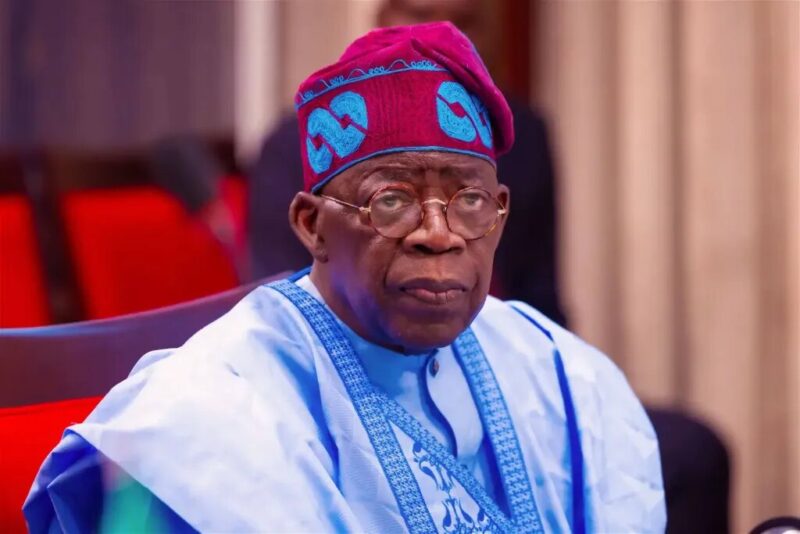
During the 79th Session of the United Nations General Assembly, at the UN headquarters in New York, United States, President Bola Tinubu, through the Vice President Kashim Shettima who represented him, called on world leaders to prioritize debt forgiveness for Nigeria and other developing countries from creditors and multilateral financial institutions. This call comes when Nigeria’s borrowing is at an all-time high. It defies logic how a president keeps borrowing and then goes on the global stage to ask for debt relief. According to the Debt Management Office in its Q1 2024 report, Nigeria’s domestic and external debts stood at N121.67tn ($91.46bn). The less said about the amount that goes into debt servicing, the better.
Recently, the World Bank, via its Vice President and Chief Economist, Dr. Indermit Gill, incurred the wrath of Nigerians. Dr. Gill had applauded President Bola Tinubu’s economic policies, suggesting that Nigeria has to maintain its current reforms for the next 10 to 15 years to ensure a complete economic transformation. The World Bank and International Monetary Fund (IMF) are known to meddle in the affairs of developing countries through their infamous structural adjustment programs. As history has shown us, the economic policies of the World Bank and IMF always end up achieving the exact opposite of what they set out to achieve. According to dataphyte.com, by 2025, for every N10 made by Nigeria, N7.6 will go to loan servicing. The remaining N2.4 will be what is left for capital and recurrent expenditure. In other words, Nigeria will be spending more than 70% of its revenue on debt servicing.
The origin and essence of the World Bank and IMF have continued to raise many questions and debate. It is instructive to recall that as the Western world gradually began to lose its grip over its colonies around the world after World War II, it was clear that direct colonialism was gradually but surely coming to an end. Hence, there was a need for a new structure or system to ensure the continued dominance and control of the Third World and parts of Eastern Europe.
Offering the illusion of economic aid and the myth of a more stable and prosperous global economy, the IMF and World Bank were created in July 1944 at an international conference in Bretton Woods, New Hampshire, United States. In reality, the aim of the IMF and World Bank is to exercise a powerful influence on developing nations, invariably at the expense of their sovereignty. And as the leaders of developing nations are known to be puppets, the IMF and World Bank through their Structural Adjustment Programmes and Austerity Measures continue to ruin the lives of millions of people in different parts of the world under the guise of reducing poverty, increasing shared prosperity, and promoting sustainable development.
The economic policies and recommendations of the World Bank and IMF are akin to the ‘medicine’ we see charlatans sell in buses and parks with the infernal claim that it cures all ailments known to man. The one-size-fits-all remedy of the IMF is absurd, to say the least, as every country has its own peculiar economic challenges and must seek solutions that are feasible in their predicament.
The World Bank would have us believe that it is committed to reducing poverty, increasing shared prosperity, and promoting sustainable development. However, upon close examination, one realizes that the economic policies the World Bank forces on countries seeking loans from them result in the exact opposite.
At the behest of the World Bank and IMF, President Bola Tinubu embarked on his so-called economic reforms that have unleashed excruciating hunger, poverty, and hardship on Nigerians. While these World Bank backed policies take their toll on poor and helpless Nigerians, the leaders continue to live in luxury, purchasing new aircraft, and funny looking cars (to put it in the words of Oby Ezekwesili). Would these economic policies lose their potency and fail to get the desired result if the leaders practiced what they preached? What measures does the World Bank have in place to ensure that the leaders of the countries they give loans to shun extravagance and thievery?
How exactly does the World Bank demonstrate its commitment to increase shared prosperity? By making funds available to corrupt leaders who aim to loot and plunder. One begins to wonder whether the World Bank takes pleasure in seeing the citizens of countries whose leaders they have reduced to puppets starve to death. The loans granted by the World Bank go largely into funding the lifestyle of the members of the ruling class while the populace pays the price.
As indicated earlier, the leaders of developing nations are largely to blame for the endless cycle of debt their countries are mired in. Progress cannot be made when leaders readily embrace the capitalist world rather than look inward to study the economic situation of their countries and find solutions. Sadly, electing competent leaders who proffer solutions to economic issues has proven a total impossibility, no thanks to mickey mouse electoral umpires and corrupt judiciary.
Winston Churchill famously opined, ‘For a nation to try to tax itself into prosperity is like a man standing in a bucket and trying to lift himself up by the handle.’ The Bola Tinubu-led government must understand that stiff taxation, arbitrary hikes in essential commodities and other ill-conceived economic policies are but temporary fix. The floatation of the naira, removal of fuel subsidy and hike in electricity tariffs all at the same time is a cocktail for economic disaster. No economy can survive the disastrous effect of the simultaneous execution of such policies.
In conclusion, Nigeria must find a way to break this vicious circle of borrowing by successive administrations. Fixing the Nigerian economy is not the rocket science we are led to believe it is. The first step towards freeing ourselves from continued borrowing would be the cutting of the cost of governance. This is the real cankerworm that has crippled the economy.
Finally, a conscious effort must be made to create an enabling environment for local businesses to thrive, as the private sector is the real driver of the economy.
Richard Odusanya


















You must be logged in to post a comment Login