
Africa
Journalists Are Society’s Friends, Not Foes -by Isaac Asabor

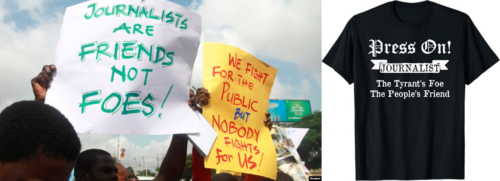
In my years of experience as a journalist, I have encountered situations that have caused me to reflect on the role and perception of journalists in society. One such situation occurred when I was on the verge of renting an apartment from a landlord through an agent. All seemed well until the landlord learned from the agreement form that I was a journalist. Without warning, he abruptly declined to proceed with the transaction. The agent explained that the landlord had become uncomfortable after realizing my profession. Similar experiences have played out in other settings, where conversations halt the moment I enter a room, or people suddenly grow suspicious of my presence, not because of anything I said or did, but simply because I am a journalist. These incidents reveal a broader concern about how journalists are perceived, often viewed with suspicion, mistrust, or even fear. But are these perceptions justified?
Journalists, in their essence, are the eyes and ears of society, tasked with uncovering the truth and reporting facts. Yet, the discomfort many people, especially those in positions of power or influence, feel in the presence of a journalist stems from a misplaced fear. It is as though they see journalists as enemies, waiting to expose every mistake or wrongdoing. But the reality is quite the opposite. Journalists are not enemies; they are society’s friends. Their work helps to ensure transparency, accountability, and the proper functioning of democratic societies. Rather than being afraid of journalists, particularly the elite, individuals should be more focused on doing the right things in their daily conduct, understanding that journalists are trained to observe and report, especially when wrongdoing is evident.
Journalists play a critical role in modern society, one that often goes underappreciated. Their responsibility is to keep the public informed, hold those in power accountable, and uncover the truths that might otherwise remain hidden. This task is not easy, as it frequently puts journalists in uncomfortable or even dangerous situations. But without the vital role that journalism plays, society would be in the dark about important issues, from corruption in government to corporate malfeasance to social injustices.
Journalists shine a light where it is most needed, making sure that the truth, no matter how uncomfortable it may be, is brought to the public’s attention. This transparency is not meant to cause fear or to intimidate. Instead, it is designed to create a more informed and engaged society. If individuals, especially those in influential positions, conduct themselves in ways that are ethical and responsible, they have no reason to fear a journalist’s presence.
The fear of journalists, particularly among the elite and those in power, can often be traced to a fundamental misunderstanding of the profession. Journalism is not about sensationalism or the exploitation of people’s personal lives. Responsible journalism is about reporting facts accurately and fairly. When a journalist investigates a story, they are guided by ethics that require them to be truthful, balanced, and to ensure that their reporting serves the public interest.
However, when people are aware that they are not acting in the public’s interest, they may become fearful of the journalist who could expose their wrongdoing. This fear is not about the journalist as a person, but rather about the uncomfortable reality that unethical behavior can come to light. Instead of perceiving journalists as enemies, individuals should see them as catalysts for positive change. The presence of a journalist should not lead to paranoia or fear but should serve as a reminder that accountability is crucial in every aspect of life.
In reality, journalists are protectors of society’s best interests. They serve the public by ensuring that institutions, corporations, and individuals operate in a transparent and accountable manner. By exposing corruption, inequality, and injustice, journalists push for reforms and changes that benefit everyone.
Take, for instance, investigative journalism that has brought attention to corruption within political institutions or exposed human rights abuses. These stories lead to public outcry and demand for change, which ultimately improves society as a whole. When wrongdoing is uncovered, it is not the journalist’s fault; it is the fault of those who perpetrated the wrongdoing. Journalists are merely messengers, fulfilling their duty to the public by revealing the truth. For this reason, they should be seen as friends who help safeguard society’s moral compass.
The elite, and everyone for that matter, should understand that the presence of journalists is a call to uphold integrity and transparency in their actions. Journalists will report what they observe, and if there is nothing unethical happening, there is nothing to fear. Instead of worrying about how a journalist might portray them, individuals should focus on ensuring that their actions can stand up to scrutiny. If everyone did what was right, there would be no need to fear the presence of journalists.
People in leadership positions, whether in politics, business, or other fields, need to remember that public accountability comes with the territory. A journalist’s role is to report on events as they happen, and if those events are positive, that is what will be reported. The fear of journalists stems from a recognition that one’s actions cannot stand up to ethical scrutiny. But the solution to this problem is simple: act with integrity. When actions are ethical, there is nothing to fear from a journalist’s inquiry.
It is important to note that journalists are trained professionals. They are taught to approach their work with fairness, balance, and accuracy. Journalists are not out to “get” anyone, but they will not close their eyes to wrongdoing. This is a key aspect of the profession. When a journalist sees something that is not right, they are obligated to report it. This is not a personal vendetta or an attack; it is simply a part of the job.
Society benefits from this level of vigilance. Journalists help to keep everyone honest. They ensure that individuals and institutions are held accountable for their actions, and in doing so, they protect the public from harm. If people are doing the right thing, they have nothing to worry about from a journalist’s scrutiny.
Journalists are friends of society, not enemies. Their work ensures that truth, fairness, and accountability are upheld, and this is to the benefit of everyone. Rather than fearing the journalist, particularly among the elite, individuals should ensure that their daily conduct aligns with ethical standards. A journalist’s job is not to cause fear but to report on what is happening, good or bad. Ultimately, society is stronger when everyone understands that journalists are there to serve the public and that accountability leads to positive change. So, instead of seeing the journalist as a threat, we should all see them as protectors of truth and justice, because that is precisely what they are.


















You must be logged in to post a comment Login