Africa
Monday Okpebholo: The Politics of Self and Symbol -By Patrick Iwelunmor
In such a psychological framework, sycophancy becomes less about politics and more about survival. It becomes an unconscious effort to seek refuge under a more powerful persona—to bask in reflected authority. But this very pattern can prove self-destructive if not properly managed. Every act of over-identification with another political figure diminishes the governor’s individuality, reinforcing the same inferiority complex his critics accuse him of possessing.


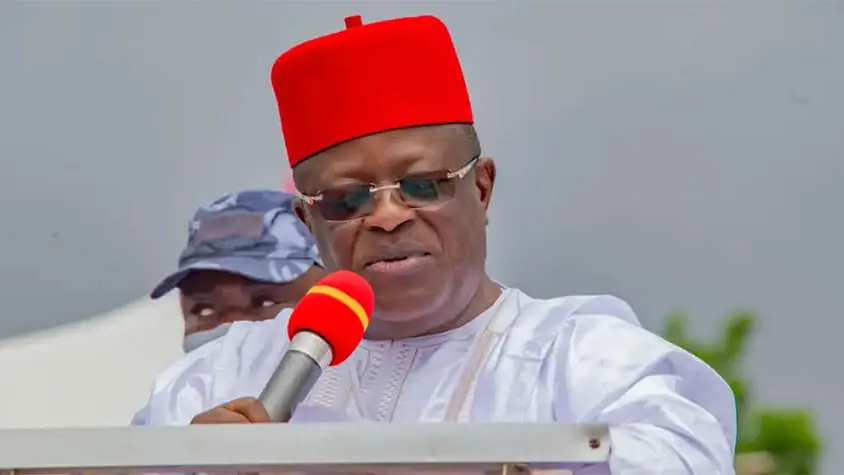
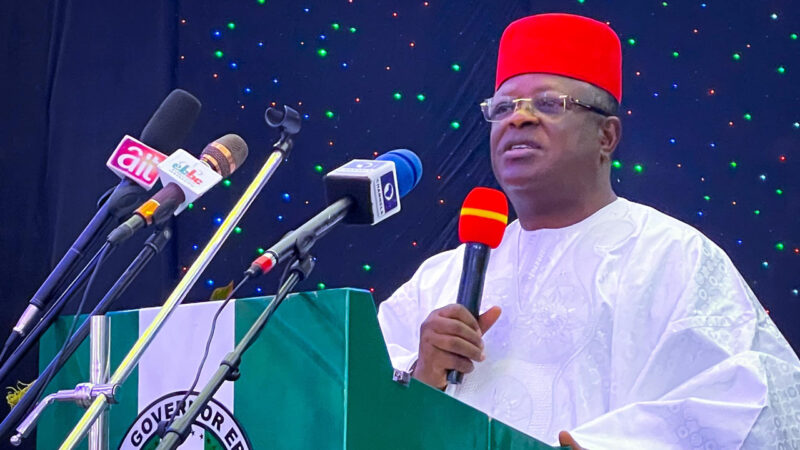
The Nigerian media space remains animated, dissecting a recent development that has rippled through the nation’s political landscape. The Edo State Governor, Monday Okpebholo, found himself at the centre of public debate after a directive allegedly emanated from his office: that all commissioners and aides should don the famous Asiwaju cap—a trademark symbol of President Bola Ahmed Tinubu’s political movement. What might have been intended as a symbolic gesture of loyalty has instead ignited fierce discussions. For some, it represents genuine alignment with the President and the ruling All Progressives Congress (APC); for others, it smacks of political sycophancy taken to theatrical extremes.
This piece, however, seeks not to join the chorus of condemnation or blind defence. It adopts a remedial, introspective lens—one that peers into the deeper psychology of power, insecurity, and performance in leadership. Critics of Governor Okpebholo have never concealed their disapproval. They mock his perceived linguistic shortcomings, his sometimes faltering diction, and what they describe as a lack of confidence in public speech. While eloquence and charisma are useful assets in the theatre of governance, they are hardly the ultimate determinants of leadership success. The true measure of any governor lies not in his syntax but in the socio-economic transformation he engenders. What should preoccupy Governor Okpebholo, therefore, is not how well he speaks English but how tangibly he develops Edo State—how he leaves behind physical, moral, and institutional footprints that compel even cynics to acknowledge his worth.
The “illiteracy toga” that opponents have fastened upon him should not depress his political spirit but instead ignite a fierce determination to outperform expectations. The governor must understand that language mastery is not synonymous with intelligence. History is replete with leaders whose linguistic imperfections never eclipsed their administrative acumen. Patience Jonathan, for instance, was frequently derided for her fractured English, yet she radiated a rare political confidence that few of her male contemporaries could rival. Governor Okpebholo can draw inspiration from such figures. If he cannot endear himself to the people through the poetry of words, he can do so through the poetry of development—through the eloquence of roads, schools, healthcare facilities, and job creation.
Yet, beneath the surface of these political theatrics lies a more profound psychological question. Why would a sitting governor so publicly align himself with the iconography of another leader? Could this gesture reflect not just political loyalty but an unconscious need for validation? When flattery merges with personal insecurity, it often manifests as a coping mechanism—a form of psychological compensation for perceived inadequacies. Psychoanalysis offers useful clues here. Sigmund Freud’s theories of projection and displacement suggest that individuals sometimes redirect inner conflicts onto symbolic gestures. Governor Okpebholo’s visible display of loyalty to President Tinubu may not simply be political courtesy; it could be a subtle attempt to transfer public focus from his own vulnerabilities—his uneasy relationship with public perception, his linguistic flaws, and the constant ridicule that trails them.
In such a psychological framework, sycophancy becomes less about politics and more about survival. It becomes an unconscious effort to seek refuge under a more powerful persona—to bask in reflected authority. But this very pattern can prove self-destructive if not properly managed. Every act of over-identification with another political figure diminishes the governor’s individuality, reinforcing the same inferiority complex his critics accuse him of possessing.
This is where the role of his reputation managers becomes pivotal. They must step beyond the perfunctory art of media defence and engage in a more strategic reconstruction of the governor’s image. They should highlight verifiable achievements—completed projects, governance innovations, public welfare interventions—rather than recycle images of him in Asiwaju caps that only amplify perceptions of servility. Social media should not become a marketplace of mockery. It should instead serve as a platform to humanize and project a governor committed to pragmatic governance. De-escalating the digital noise surrounding his persona is crucial. Silence, in this case, can sometimes speak louder than spin.
The best way for Governor Okpebholo to prove that his loyalty to the President is not a manipulative gambit for favour is by performing so exceptionally that no one dares question his competence. When governance becomes performance, it eclipses personality. When a leader delivers on his promises, language becomes an afterthought. The governor’s media team must therefore resist the temptation to circulate poorly edited clips or unguarded remarks that only feed the mockery. Instead, they should frame a narrative of results—of schools revived, industries reawakened, and communities transformed.
If Governor Okpebholo succeeds in scripting a new story of good governance in Edo State, the ghosts of ridicule will fade into irrelevance. The electorate, often more forgiving than critics imagine, will remember the benefits of progress far more than the lapses of grammar. The psychological healing he seeks from external validation will emerge naturally from within—from the quiet satisfaction of a leader who has conquered doubt not through flattery but through impact.
Ultimately, governance is not an oratorical contest but a moral and developmental mission. If Okpebholo builds a legacy of integrity, productivity, and inclusiveness, he will no longer need to wear symbolic caps to prove allegiance. His works will become his badge of honour. When that moment arrives, he may confidently borrow a line from Shina Peters as his re-election anthem: “Grammar no be progress.” And indeed, progress—measurable, visible, and human-centred—will speak for him louder than any language ever could.