
Africa
Terror and Tears: The Hidden Stories of Kidnapping Survivors -By Abdulazeez Toheeb Olawale
Nigeria can change this story — if leaders stop treating security as a slogan and start making it a responsibility. Until then, every release will remain a bittersweet victory: a life returned, a family impoverished, and a country still searching for safety.

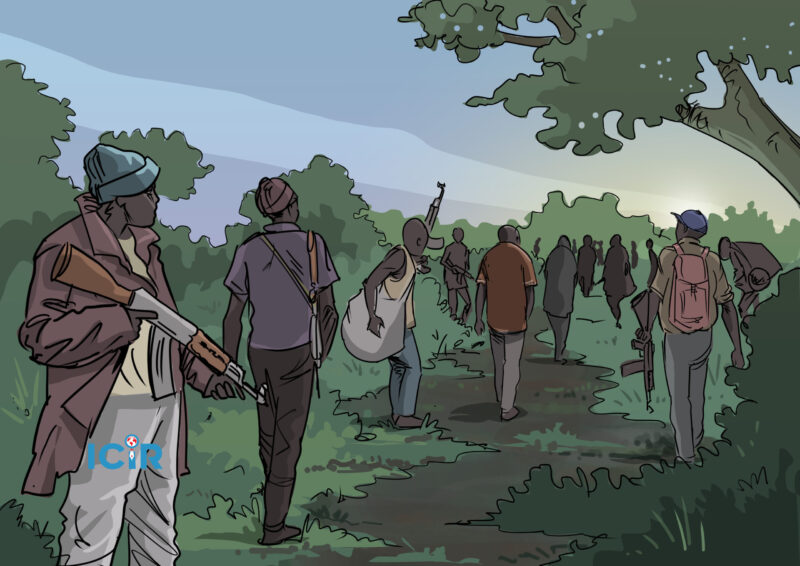
They come back alive, but they never return the same. Across Nigeria, kidnapping has become more than crime — it’s now a living nightmare that steals peace, drains pockets, and leaves invisible scars that rarely heal. Behind every ransom figure is a family shattered by fear, a mother still shaking at night, and a country bleeding quietly beneath promises of security.
In September, Radiographer Basheerah Ojedeyi was abducted on her way home from her induction ceremony. Her family’s joy turned to torment overnight as kidnappers demanded ₦200 million for her release. Days turned into weeks of sleepless waiting until, after desperate appeals and a long silence, the ransom was reportedly reduced to ₦10 million. She was freed — but the trauma lingers. Imagine the agony her family endured, running from door to door, begging, praying, and gathering money that was never meant to be theirs to pay.
The tragedy goes beyond Basheerah. In every state, from Kaduna to Ondo from Benue to Kwara, families sell land, shut shops, or withdraw children from school just to buy their loved ones back. A successful release often leaves them poorer than before. A mechanic in Niger once told me, “I sold my only motorcycle to save my son. Now, I borrow to feed the rest of the family.”
What’s even worse — ransom payments are now being collected through bank transfers. Victims’ families are told to “transfer now,” often to accounts that vanish as soon as the transaction clears. Investigations reveal that kidnappers use layered networks — fintech apps, POS terminals, and third-party accounts — to move ransom funds beyond tracing. Meanwhile, Nigeria’s federal and state budgets allocate billions of naira every year for security, yet ordinary citizens still have to rescue themselves.
This is the bitter paradox of our nation: billions budgeted for safety, but families still paying for survival.
Those who return often carry wounds you can’t see. Many survivors live with nightmares, anxiety, and depression. “I can’t go out without checking the road three times,” said a teacher I once met. “People say I should move on. How do I, when the road still echoes their voices?”
Psychological care for survivors is nearly non-existent. Mental-health centres are few and far between. For most victims, trauma is a private prison — silent, unacknowledged, and untreated.
The ripple doesn’t stop there. Children of victims often drop out of school; parents live in constant fear. Markets lose traders, farms go untended, and communities shrink inward. The economy of fear now competes with the real economy.
Even justice offers little comfort. Few kidnappers are caught, and fewer still are convicted. Many families simply pay quietly and move on — or try to. Each ransom fuels the next abduction, feeding a cycle that only grows stronger.
Yet, amid terror, Nigerians continue to rise. Some survivors start advocacy groups; others rebuild from nothing. In Osun, a women’s cooperative trains kidnap victims in tailoring and bookkeeping. “We can’t bring back the nights they lost,” one member told me, “but we can give them a hand to stand again.”
Still, Nigeria must ask the hard questions:
Why are ransom transactions traceable to innocent families but invisible to security systems?
Why are trillions in security votes unable to protect a young woman on her way home from school?
Why must ordinary Nigerians pay for safety twice — in taxes and in tears?
When a nation counts its people in ransoms, the problem is no longer insecurity; it is injustice. Basheerah’s story may have ended in freedom, but it also exposes a system that leaves its citizens to fend for themselves.
Nigeria can change this story — if leaders stop treating security as a slogan and start making it a responsibility. Until then, every release will remain a bittersweet victory: a life returned, a family impoverished, and a country still searching for safety.
Abdulazeez Toheeb Olawale writes about Nigeria’s human stories and national issues. He believes storytelling can awaken empathy where policy has failed.






















You must be logged in to post a comment Login