
Africa
Nigeria’s Broken Education System: A Threat To The Future -By Ngamarju Elizabeth Apagu
Nigeria cannot aspire to greatness while its education system remains in disarray. A nation that fails to educate its children fails to secure its future. The call to action is clear: education must no longer be treated as a neglected sector but as a lifeline for national survival and prosperity. If Nigeria does not act now, it risks condemning generations of young people to a cycle of poverty, frustration, and lost potential.

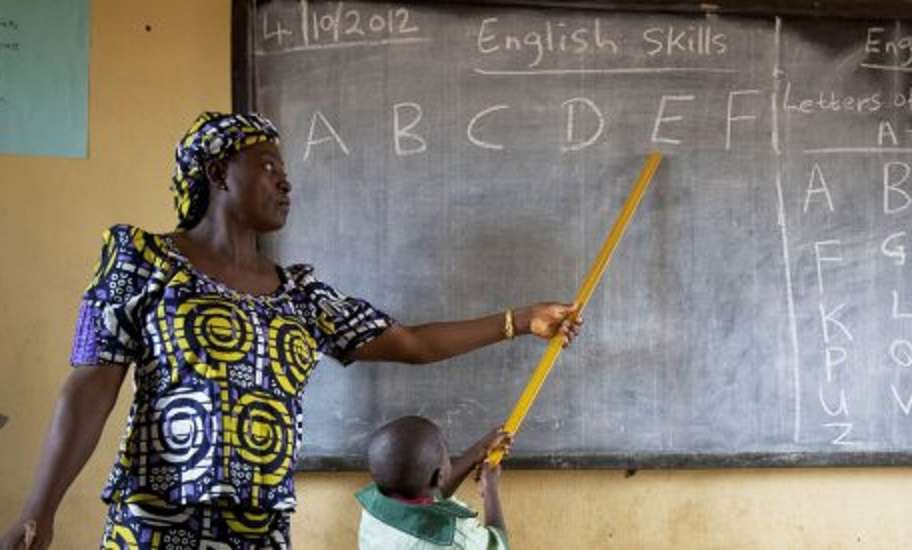
Education is often described as the bedrock of national development, yet in Nigeria, that foundation is crumbling at an alarming rate. For decades, successive governments have promised reforms and improvements, but the situation in schools and universities continues to deteriorate. From underfunded classrooms and frequent strikes to poor infrastructure and declining quality of teaching, the education sector has become one of Nigeria’s greatest crises—one that directly threatens the future of its youth and, by extension, the nation itself.
The rot begins at the basic education level, where millions of children are out of school. Nigeria currently has one of the highest numbers of out-of-school children in the world, with estimates running into the millions. Factors such as poverty, insecurity, child labor, and early marriage continue to deny children access to education, especially in the northern part of the country. The Universal Basic Education programme, though well-intentioned, has failed to close the gap due to poor implementation, corruption, and lack of political will. Children who should be in classrooms are instead hawking goods on the streets or working to support their families.
For those who manage to attend school, the conditions are often appalling. Overcrowded classrooms, broken furniture, and lack of learning materials are common sights in public schools. Teachers, often poorly paid and inadequately trained, struggle to cope with large numbers of students. Libraries and laboratories—essential for meaningful learning—are either absent or non-functional in many schools. In such an environment, education becomes more of a ritual than a transformative process. The result is a generation of students graduating without the necessary skills or knowledge to thrive in a competitive world.
The story Is not different at the tertiary level. Nigeria’s universities, once respected across Africa, have been crippled by years of neglect. Frequent strikes by academic staff unions disrupt academic calendars, forcing students to spend twice the number of years they should in pursuit of degrees. Poor infrastructure, outdated curricula, and lack of research funding have eroded the quality of higher education. Employers often complain that graduates are not industry-ready, highlighting the disconnect between the classroom and the labor market. Meanwhile, private universities, though better equipped, remain unaffordable for the majority of Nigerians.
Another major issue is the rising inequality in access to education. While wealthy families can afford private schools that offer better learning conditions, the poor are left with failing public schools. This inequality perpetuates the cycle of poverty, as children from disadvantaged backgrounds are denied the opportunities that education should provide. It also fuels social tension, as those who feel excluded from quality education become more vulnerable to crime, radicalization, and political manipulation.
The consequences of Nigeria’s broken education system are already evident. A workforce lacking critical skills cannot drive innovation, industrial growth, or technological advancement. Young people, disillusioned by years of wasted effort in schools, are turning to migration, seeking better opportunities abroad. Those who remain often struggle with unemployment, underemployment, or involvement in social vices. For a country whose population is overwhelmingly youthful, this represents not just a challenge but a ticking time bomb.
Reversing this decline will require urgent and bold steps. First, education must be properly funded, with resources invested in infrastructure, teacher training, and modern learning tools. Second, accountability must be enforced to ensure that funds allocated to the sector are not lost to corruption. Third, curricula at all levels must be reformed to reflect current realities, focusing on technology, innovation, and practical skills. Finally, incentives must be created to keep teachers motivated, while schools in rural and conflict-prone areas must be prioritized for special interventions.
Nigeria cannot aspire to greatness while its education system remains in disarray. A nation that fails to educate its children fails to secure its future. The call to action is clear: education must no longer be treated as a neglected sector but as a lifeline for national survival and prosperity. If Nigeria does not act now, it risks condemning generations of young people to a cycle of poverty, frustration, and lost potential.
Ngamarju Elizabeth Apagu is a 300 Level Student From Mass Communication Department University Of Maiduguri.






















You must be logged in to post a comment Login