Africa
Now, Africa Should Balance Afrocentrism with Global South Alliance -By Hashim Yussuf Amao
West’s.
Withal, joining hands with the Global South’s multipolar vision means more than getting cheaper loans. It means Africa having a say in reshaping global trade rules, controlling our own resources, and refusing to let the dollar remain the sole chokehold on African economies. BRICS, with its plans for alternative payment systems, offers Africa a lifeline from the tyranny of Western financial dominance. Aligning here is not a betrayal of Afrocentrism. In fact, it is its fulfilment, because true self-reliance demands choosing partners who respect your agency.

While having a chat with a colleague recently, I told him that the non-aligned movement in this age is not just outdated; it is tactically naive and diplomatically dangerous. I mean, standing in the middle in this rapidly shifting chessboard of global politics is no longer a position of wisdom but weakness. And if Africa does not want to be sidelined in the emerging economic order, it must choose to either align with the progressive and multipolar Global South, or cling to the West and her crippling economic policies. Well, what triggered my conviction was the recent 25% tariff sanctions which President Donald Trump slammed against India.
The sanction was not just about numbers on paper, it came with humiliating conditions. That a sovereign nation like India could be told whom it can and cannot trade with is a bitter reminder of how Western economic power still operates as a whip and not a handshake. India’s only crime was purchasing crude oil from Russia, refining it, and selling it to the European Union – an arrangement that benefitted all parties except Washington’s geopolitical interest. I guess the numbers are the main headache for America, because, according to UN Comtrade data, India’s imports of Russian crude surged from 1% of total imports in 2021 to over 23% in 2023, which makes it one of Russia’s largest buyers despite NATO sanctions. Washington saw this as economic oxygen to the Kremlin. And do you even know what the hypocrisy is? America itself has continued importing Russian uranium, critical for its nuclear reactors, even while sermonising about isolation. The same rules it imposes on others are never applied to itself.
America believed India was blunting the edge of its sanctions, allowing Russia to maintain oil revenues, stabilise its rouble, and continue funding its war economy. The fact that this oil was making its way, via India, to European consumers made the arrangement even more infuriating to Washington. But the lesson for Africa is not about oil, it is about sovereignty, and how easily it can be cornered when you decide to sit between warring elephants.
Africa really needs to learn from India, whose non-aligned movement, historically, was born out of a principled resistance to Cold War binaries. The then Indian Prime Minister, Jawarhala Nehru, who was also India’s first prime minister, alongside leaders like Nasser of Egypt, Tito of Yugoslavia, and Nkrumah of Ghana, envisioned a bloc of nations that would chart their own course, beholden to none and free from foreign interferences. But that was a different world then. Today’s global economy is too interconnected, sanctions are too weaponised, and trade dependencies are too entrenched for that kind of neutrality. If India, who was the founding architect of non-alignment can be forced to pay for its diplomatic balancing act now, what hope does a weak Africa have if it clings to that same outdated playbook?
Although Africa’s foreign policy has long been defined primarily by Afrocentrism, which focuses on continental unity, Pan-African solidarity, and cautious engagement with the big powers. In principle, we can say this is admirable. But in practice, it has often meant refusing to take sides, even when the balance of global economic power is shifting before our eyes. The West’s economic model for Africa has been clear: debt traps via IMF and World Bank loans, conditionalities that force privatisation, zand policies that leave industries hollowed out. It is no coincidence that Africa’s share of global manufacturing has stagnated below 2% for decades.
Instead, Africa should decisively align with the new emerging world economic order and the multipolar Global South nations like China, Russia, Brazil, India and others within BRICS. These are the countries offering Africa low-interest financing without the poison pills of political interference. China’s Belt and Road Initiative has financed over 1,000 infrastructure projects across the continent, from railways in Kenya to hydropower dams in Ethiopia. Russia, through its energy diplomacy, has offered nuclear power agreements to countries like Egypt and South Africa without demanding ideological alignment. These relationships are not perfect, but at least, they are far less paternalistic than the West’s.
Withal, joining hands with the Global South’s multipolar vision means more than getting cheaper loans. It means Africa having a say in reshaping global trade rules, controlling our own resources, and refusing to let the dollar remain the sole chokehold on African economies. BRICS, with its plans for alternative payment systems, offers Africa a lifeline from the tyranny of Western financial dominance. Aligning here is not a betrayal of Afrocentrism. In fact, it is its fulfilment, because true self-reliance demands choosing partners who respect your agency.
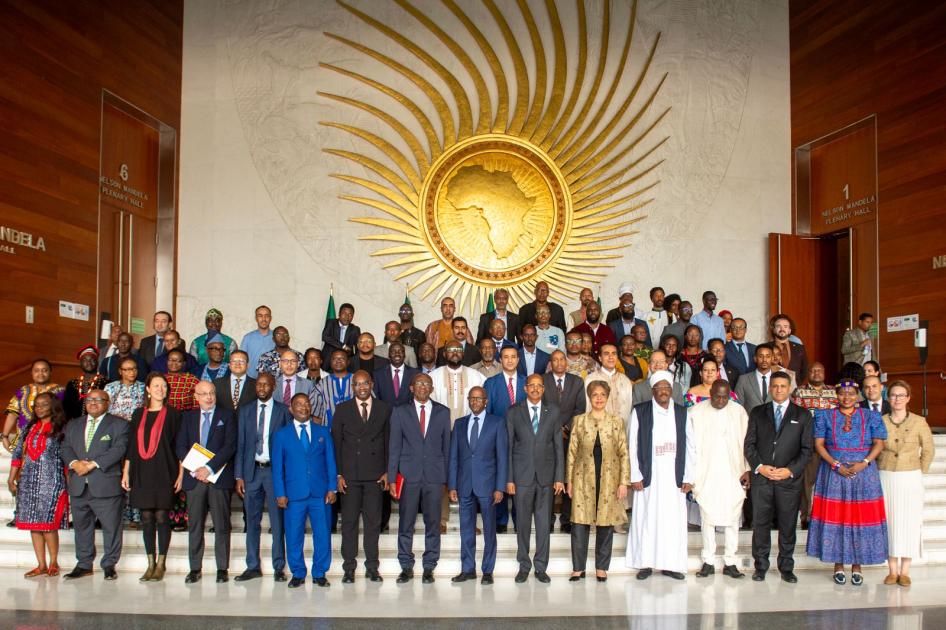
It is time for African governments, foreign affairs ministries, elites, and continental bodies like the African Union to move beyond the comfort zone of outdated neutrality. We must forge a timely consensus on strategic alignment with the Global South, not in whispers but in bold and public declarations. We cannot afford to repeat India’s costly lesson, that in today’s world, sitting on the fence is not a sign of independence, but an invitation to be pushed off it. The hour is late but the door is still open for us to push smartly. The cost of inaction is staggering. If we continue to answer at the beck and call of Western hegemony, we will remain raw material suppliers, perpetually indebted, our currencies would remain at the mercy of Federal Reserve interest rate hikes. The West will keep offering aid that is barely enough to dress our wounds, but never enough to cure the illness. There’s no better time to align with the global South than now!
Hashim Yussuf Amao is a Pan-Africanist, and writes from Oluyole Ibadan, Nigeria.
hashimlegalbard@gmail.com