
Breaking News
Nvidia CEO Jensen Huang Admits Infidelity Amid Chinese Spy Allegations: 5 Things to Know
Nvidia CEO Jensen Huang has admitted to an affair with Chinese executive Alice Huang amid reports of alleged links to Beijing. Here are five things to know about the controversy, US national security concerns and Nvidia’s investigation.

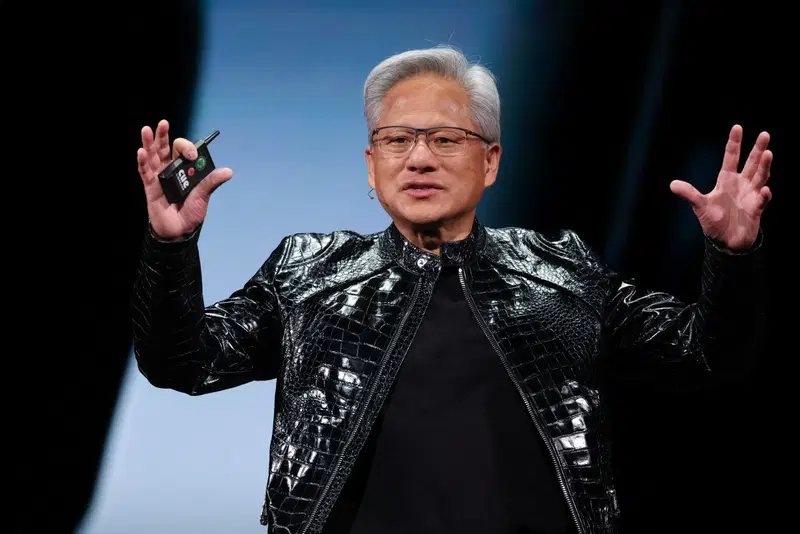
The chief executive of American technology giant Nvidia, Jensen Huang, has acknowledged having an affair with a Chinese executive amid reports linking the woman to an alleged Chinese intelligence operation.
The development has raised questions about potential national security implications, considering Nvidia’s leading role in the global artificial intelligence industry and Huang’s access to senior US political leaders, including President Donald Trump.
Huang, 63, admitted the affair in a message to Nvidia employees on Sunday, expressing regret over the impact of his actions on his family.
The controversy follows reports by The New York Times that US intelligence officials suspected the woman, Alice Huang, of working for Beijing. She has no family relationship with the Nvidia CEO.
Here are five major details surrounding the unfolding controversy.
1. Jensen Huang publicly apologises over affair
Jensen Huang confirmed that he had been unfaithful to his wife, Lori, whom he married in 1985.
In a message circulated among Nvidia employees on Sunday, the billionaire executive expressed remorse over his actions.
“I was unfaithful to my wife,” he wrote. “My actions hurt her and our children. There is no excuse for what I did. I am deeply sorry.”
The admission followed media reports detailing his alleged relationship with Alice Huang, a Chinese executive whose activities had reportedly attracted the attention of US intelligence agencies.
Nvidia had earlier maintained that the pair’s interactions were “not unusual or unexpected” because of their business connections.
2. Chinese executive Alice Huang faces intelligence allegations
Alice Huang, also known as Huang Le, previously held a senior position at Megaspeed, a Singapore-based data centre operator.
Megaspeed emerged in 2023 following its separation from a Chinese company. Its business involves providing computing capacity powered by Nvidia semiconductors.
The Wall Street Journal reported that Alice Huang and Jensen Huang were seen together in photographs taken in Taipei in 2024 and 2025.
The New York Times disclosed that a memo distributed among senior American officials in the spring referenced intelligence suggesting that Alice Huang was working as an asset for China’s Ministry of State Security.
According to the report, her alleged assignment involved gathering information about the Nvidia chief and possibly influencing the company’s efforts to secure approval for exporting its most advanced chips to China.
The Wall Street Journal further reported that authorities in Singapore and Taiwan suspected Chinese intelligence agencies had recruited her because of her closeness to Huang.
It remains unclear where Alice Huang is currently located.
Separately, American authorities suspect Megaspeed of involvement in the illegal movement of restricted chips into China. The Department of Justice has assumed responsibility for a federal investigation into the company.
Megaspeed has denied wrongdoing by describing itself as a “compliant and legitimate company.”
Beijing has also rejected the espionage allegations. Chinese Foreign Ministry spokesman Guo Jiakun said Monday that “the narrative of a so-called Chinese spy is entirely baseless vilification and smearing.”
3. Nvidia’s influence in US-China technology relations
The controversy is particularly sensitive because Nvidia occupies a central position in the global artificial intelligence market.
The company controls an estimated 90 per cent of the market for chips used in training and running AI models.
Since 2022, the United States has restricted the export of its most advanced AI chips to China as part of efforts to limit Beijing’s access to sensitive technology.
Jensen Huang has also emerged as an influential informal adviser to President Donald Trump on artificial intelligence.
The Wall Street Journal reported that intelligence officials suspected the affair while Huang was lobbying the White House to approve more chip exports to China.
Towards the end of last year, the Nvidia CEO pushed for the company’s most powerful chips to be made available to Chinese customers. However, Secretary of State Marco Rubio and other officials opposed the proposal.
Trump subsequently authorised exports of a less advanced chip, with the American government receiving 25 per cent of the revenue.
The New York Times reported that Trump had received a briefing about the intelligence approximately a year earlier but took no action.
During an appearance on Fox News on Sunday, Trump was asked whether Huang should continue as Nvidia CEO.
“I think so, oh yeah, sure,” the president responded, describing him as “an honorable guy.”
Trump also maintained that he had no regrets about not acting on the intelligence.
4. Nvidia launches independent investigation
Nvidia’s board of directors has announced an independent investigation into the matter.
In a statement released on Sunday, the board said it had no current evidence that company secrets or national security information had been compromised.
“While the board has no reason to believe that either national security or Nvidia secrets were compromised, the board’s inquiry will examine all available information,” it stated.
The New York Times reported that independent directors, supported by external legal advisers, would lead the investigation.
Huang will continue serving as chief executive while the review is ongoing.
5. US lawmakers prepare to question Huang
The controversy could extend to the US Congress, with Republican leaders of several House committees, including the Select Committee on China, requesting a closed-door briefing with Huang.
The proposed meeting is scheduled for November 18 in Washington and will focus on Nvidia’s security procedures.
Analyst Dan Ives of Yorkville Ives believes the matter could result in multiple congressional investigations.
He suggested that Huang would probably remain in charge of Nvidia in the short term, although the findings of the company’s internal investigation could influence his future.
George Chen of The Asia Group urged caution, warning against making conclusions about Huang’s potential national security implications before the allegations are properly examined.
He told AFP that it would be “premature to conclude that Jensen poses a threat to US national security before the facts are fully established.”
Africans Angle News










You must be logged in to post a comment Login