Africa
Rufai vs Minister: How do we Politely Ask a Public Servant to be Quiet -By Ajiboye Amos Olakunle
Rufai did not disgrace his profession; he elevated it. He reminded us that the interview is not a tea party; it is a courtroom of public opinion where the journalist is the prosecutor, the public is the jury, and the power-holder is the witness. The plea for silence was a gavel struck for order. The uproar that followed is the sound of a system that has forgotten what true accountability looks like. It is a noise we must learn to see through, for on the other side of that necessary silence lies the truth we so desperately deserve.

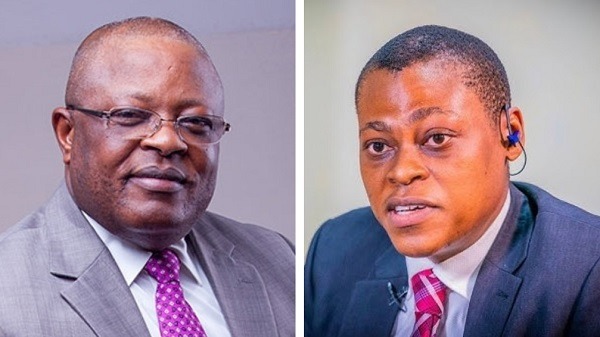
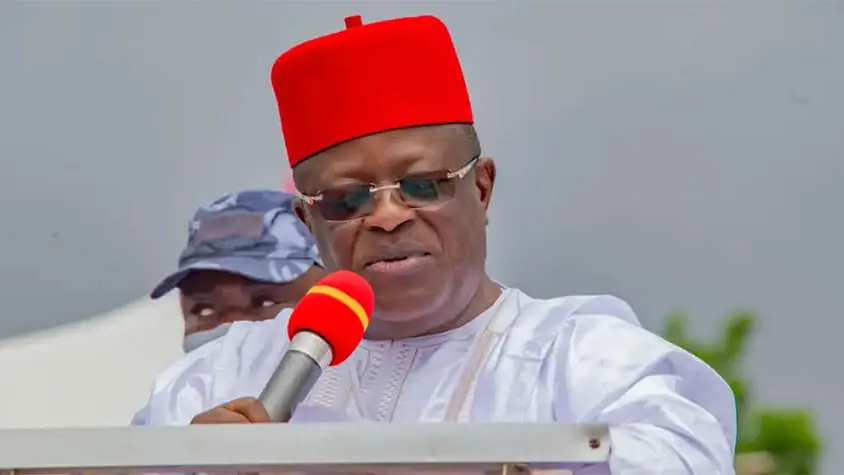
In the grand theatre of Nigerian public discourse, where spectacle often supersedes substance, a recent performance has sparked a most fascinating uproar. The setting: an interview. The protagonists: the Honourable Minister of Works, David Umahi, wielding the power of his office, and the journalist Rufai, armed with nothing but a microphone and a mandate. The climactic moment, a moment now etched into the nation’s consciousness was not a shocking revelation of corruption, nor a staggering statistic of misappropriation. It was a simple, professional, and profoundly necessary plea: “Minister, please, be quiet. Let me ask my question.”
The ensuing media tempest, a maelstrom of faux outrage and manufactured sympathy, reveals a sickness in the soul of our civic engagement. The chattering classes, the professional sympathizers, and the defenders of unearned decorum have risen as one to chastise Rufai for his impertinence. But in their cries of indignation, they have missed the point so spectacularly that one must question not Rufai’s professionalism, but their own grasp of reality. Rufai was not rude; he was doing his job with a precision and assertiveness that would be celebrated in any serious democracy.
To those clutching their pearls at Rufai’s directness, one must extend an invitation to view a world beyond our shores. Tune into the hallowed halls of the BBC’s Hardtalk, where Stephen Sackur dismantles evasive politicians with surgical calm. Observe the relentless pursuit of a straight answer on CNN’s global broadcasts, where anchors like Christiane Amanpour command the room not with sycophancy, but with intellectual force. Witness the forensic examinations on Al Jazeera’s Empire, where guests are held to the fire of their own contradictions. In these citadels of journalism, the interviewer is the master of ceremonies for accountability. They control the tempo, they insist on answers, and they do not allow filibustering, the art of talking endlessly to avoid scrutiny to prevail.
What Rufai demonstrated was a masterclass in this very genre. He was not there to provide a platform for ministerial monologues or pre-rehearsed soundbites. He was there to interrogate, to probe, to hold power to account. When a minister, particularly one overseeing projects worth billions of dollars, refuses to answer a question directly and instead veers into tangential soliloquies, it is the journalist’s duty to steer the conversation back to the point of inquiry. To do anything less is to be complicit in the obfuscation. Rufai’s “please, be quiet” was not an insult; it was a recalibration. It was the sound of a journalist refusing to be a passive stenographer and choosing instead to be an active inquisitor.
And what, one must ask, is the profound sensitivity that requires such coddling of a minister? The context is the multi-billion-dollar Lagos-Calabar Coastal Highway, a project of pharaonic ambition shrouded in a fog of financial opacity. This is not a mere road; it is a black hole for public funds, a monument whose per-kilometer cost remains a state secret jealously guarded from the very citizens whose futures are mortgaged for it. The nation is expected to simply trust, to have faith, to watch the earth move and the concrete pour without the inconvenient burden of a detailed cost breakdown.
This is where the farce becomes a tragedy. While a journalist is doing the job the Fourth Estate was designed to do serving as a check on power, the very people who should be demanding answers are busy composing sonnets of sympathy for the minister. Are they so dumb? Are they so enthralled by the glamour of power that they confuse accountability for disrespect? The billion-naira question is this: who will hold the minister responsible for the billions of dollars spent on our roads if not the press? The National Assembly, often caught in a symbiotic dance of patronage with the executive? The civil society, struggling to be heard above the din? The sympathizers, it seems, are more offended by a journalist’s assertiveness than by the spectral figures of misappropriated funds that haunt our infrastructural dreams.
Their outrage is a glamorous illusion, a performance of loyalty that betrays a profound dereliction of civic duty. They weep for the minister’s momentarily bruised ego while the nation’s treasury is potentially being bled dry. They demand decorum in the face of what could be the greatest heist of the public purse, forgetting that the politest conversations often happen in the parlours of those who are robbing you blind. True respect for the office of the Minister of Works is not demonstrated through silence; it is demonstrated through the rigorous demand that the occupant of that office be transparent, accountable, and answerable to the people.
Rufai did not disgrace his profession; he elevated it. He reminded us that the interview is not a tea party; it is a courtroom of public opinion where the journalist is the prosecutor, the public is the jury, and the power-holder is the witness. The plea for silence was a gavel struck for order. The uproar that followed is the sound of a system that has forgotten what true accountability looks like. It is a noise we must learn to see through, for on the other side of that necessary silence lies the truth we so desperately deserve.