
Global Issues
Russia Experiencing Demographic Crisis -By Kestér Kenn Klomegâh
Under the critical circumstance of declining population, Russia could still use the potential of foreigners and immigrants, combined with its huge diverse resources and capital to build sustainable industrial production capacity in Far East, Siberia and Arctic regions, and strengthen economic footprints with branded products similar to China around the world. It is time Russia follows China to raise significantly its economic influence rather than stands for a marginalized super-power status. Russia has to emerge as a recognizable brand.

How important is Thomas Maltus’ population theory in the world today? In the next 5,000 years, the global population would not explode as T. L. Maltus predicted, during his time, as an academic and demography expert. China, with its 1.5 billion people, is emerging as an economic super-power. Its unchallengeable super-power status is tactfully attributed the large population, manpower behind economic feats around the world, a hidden chapter which Russians have not yet read. China has even abandoned its one-child policy, in order to drive population faster and ready to engage this man-power combined with financial resources and technology to increase production. The former Soviet space grossly lacks manpower, for instance Kazakhstan’s 20.7 million as at the first quarter of 2025, and the huge Far East and Siberian regions of the Russian Federation.
Kazakhstan, officially the Republic of Kazakhstan, is a landlocked country primarily in central Asia, with a small portion in Eastern Europe. Kyrgyzstan is a central Asian country with a rich and diverse cultural heritage. The current population of Kyrgyzstan is 7.2 million and both Kazakhstan and Kyrgyzstan share borders with China. With geopolitical situation shattering the world’s economy, the introduction of United States so-called trade tariffs, China is steadily prioritizing its production facilities in Russia’s Far East, the vast region where it is already operating under incentives in the Special Economic Zones. China and Russia coincidentally share similar aspirations of creating a ‘multipolar’ economic architecture. In strategic terms, China supports the fixation of the northern transport corridor that allows its multitude of products to flow into European markets.
Russia experiences demographic problems. According to reports, labour shortage grippled the country. And it is also struggling with rising global economic tensions, the effects of the United States tariffs and invariably internal instability. In principle, it has introduced a few measures over these two decades, but this has only little impact on population growth in the country. Its population-saving measures, such the maternal capital for women willing to have large family, could not remedy the demographic crisis. Worse, has decreed to expel undocumented foreigners, 90% of the total illegal immigrants from the former Soviet republics. As of January 1, 2025, the population of Russia was estimated at 144.8 million, an Atlantic Council report says.
Contributing Factors
Since Soviet’s collapse, Russia has been in demographic decline long before the war in Ukraine. Russians inevitably adore one-child policy primarily due to harsh economic conditions, incapable to support family as the economic undergoes difficult but consistent transformations, transiting from Soviet’s centralized system to free-market economy (privatization) combined with steady emigration of young professionals to Europe and the United States. An estimated 2.5 million Russians now live outside the Russian Federation. On the other side, Russia is strict on Europeans and Americans who live in Russia, estimated at 15,000. Despite Russia’s advocacy for multi-polar world, Kremlin is seemingly bitter on foreigners. The post-Soviet political developments and economic resuscitation, and observing ‘life-surviving culture’ have driven the youth else where, despite the huge untapped endowed resources in the Russian Federation.
According to demographers, in Russian regions, births continue to fall as the youth escaped military conscriptions. Demographers say almost 40 percent of Russian women of child-bearing age expressed economic insecurity and financial concerns in nation-wide survey held in 2023. There are other underlying explicit factors for declining population. Last year, for instance, deaths outpaced births by more than half a million. Practical evidence shows that the Russian society and family culture no longer encourage large family. And in practical terms, none of these government’s interventions addresses the declining population.
Demographic Measures
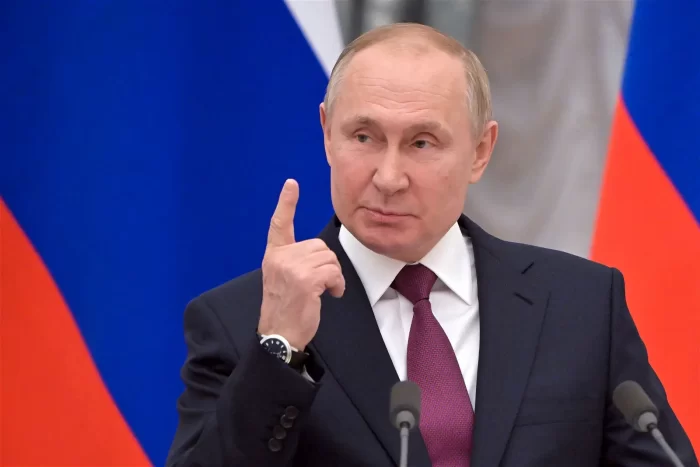
Russia, in the past, has taken a few steps toward reversing population’s further decline. Reviewing critically the previous measures indicate a combination of negative and positive factors. Russian President Vladimir Putin has unreservedly discussed demography situation with his executives, specifically also with the Council for Strategic Development and National Projects and other appropriate state agencies and departments, tasking them to implement measures aim at increasing population. At one point, during a meeting of the Presidium of the State Council, held in 2024, Putin explained, quoting figures to show the trends of youth population growth, that there will be 8.3 million young people by 2030. Putin stressed that the forecasts for the growth of the number of young people in the country are “a landmark result of efforts in the field of demography.”
As far back in June 2021 at the United Russia party’s congress, Putin called for focusing on efforts to reverse negative trend in demography. “The situation in the demographic sphere is complex. At some point, due to a number of objective reasons, we are now facing a consistent demographic pitfall,” he noted in his speech, and then suggested that, in order to reverse the negative trends, the authorities need to focus on serious goals, making efforts “to develop the economy and regions, the social sphere, healthcare, education and strengthen traditional values.”
Russian Prime Minister Mikhail Mishustin has also issued such executive instructions relating to a long-term program of national development goals including reducing poverty and turning the demographic situation around. He repeatedly drew attention to the fact that the situation with the birth rate in the country remains difficult, and in order to reverse it, additional measures in the field of demography are needed.
These several years, both Putin and Mishustin have mentioned providing monthly payments for children between the ages of three and seven years old, and further payment of what is referred to as ‘the maternity capital program’ which was extended until the end of 2026 and the payment amount will grow to 616,617 rubles ($10,028). Despite all these measures down the years, Russia’s population has still not grown to the expected level. In the first place, Russia has a relatively high death rate, influenced by health issues and lifestyle factors. in the second place, the birth rate has been declining over the years, contributing to a natural decrease in population. And in the third place, emigration, especially the young professionals and specialists, due to lust for better economic and living conditions outside the Russian Federation.
Moscow, the capital city of Russia, is currently under reconstruction. The city periphery (outskirts), alternatively the new micro-region where residential apartment blocks are undergoing construction need serious migrant labour. Moscow city mayor, Sergey Sobyanin, has reiterated that the municipal administration needed 250,000 (a quarter of a million) to work on the construction sites (fields), and in addition many are needed for tidying-up the city. There is shortage of labour, Sobyanin complained. St. Petersburg, the second largest city, and other major cities are also constantly complaining, and are stuck with new construction projects.
Alternative Options
With the largest country area worldwide, Russia’s population is seriously staggering, with demography experts and researchers arguably pegging the figure at 142 million. Thomas Maltus theory relating to demography, the co-relation between the economic dogma and size of territory, the expected explosion is still far away, in the case of Russia. Simply, inapplicable here. Suffice to compare and explain that the Philippines and Japan, despite their limited living space, both respectively have estimated population of 120 million and 128 million people. India has not yet experienced population explosion. The surface-level analysis above indicates that Russia should be, to some extent, show fairness in actions regarding current population including, at least, integrating ‘foreigners’ from the former Soviet republics. Legalizing 1.5 million (majority from former Soviet republics) and transferring them to Arctic and Far East regions to boost employment and systematically engage this labour in production sphere, area of activity is extremely hard for the Russian government. After all, Russia frequently reiterates replacing the present global arrangement with a ‘multipolar’ world. Russia is not a segregated society. Every year, United States augment its population with 50,000 through U.S. Lottery system. In May 2025, it announced the latest results, tapping 50,000 from around the world. The current population of the United States is fixed at 380 as of March 2025, more than twice that of Russia.
Logical Conclusion
The Arctic region, Siberia and the vast Far East are empty, but at the same time are widely known as strategic regions. These several years, Russia has proposed numerous projects and initiatives, primarily aim at raising these regions’ environment for habitation, emphasizing its importance for international cooperation. Russia’s policy to re-populated these places failed terribly, even Russians were promised doubled income and land, but without positive results. The Far East, Siberia and the Arctic regions remain extremely with low population. On the other hand, Russia has tightened its policy on labour migration and expelling consistently foreign workers. Many questions still persistent and have remained unanswered until today. Russia’s demographic crisis stems from low birth rates, high death rates, migration patterns, and the ongoing war in Ukraine. It is severely sensitive to access figures of fallen soldiers from the three-year Russia-Ukraine conflict.
Under the critical circumstance of declining population, Russia could still use the potential of foreigners and immigrants, combined with its huge diverse resources and capital to build sustainable industrial production capacity in Far East, Siberia and Arctic regions, and strengthen economic footprints with branded products similar to China around the world. It is time Russia follows China to raise significantly its economic influence rather than stands for a marginalized super-power status. Russia has to emerge as a recognizable brand.
Therefore, besides everything, the most essential factor here again is population and the economy. Many experts acknowledge in separate reports that the war in Ukraine, trade restrictions, and demographic challenges will continue to shape Russia’s economy and society. Insisting on Russia for Russians, implies segregation, an attempt to create a segregated society in a multipolar world. President Vladimir Putin has to acknowledge the truthful and irreversible fact that a multicultural population is the main factor in Russia’s development. So what has to be done in the context of ‘multipolar world’ and find deeper reasons for sustaining population integration. That a well coordinated and controlled ‘immigration’ could be one surest way to allow population growth and comprehensive development.
*Kestér Kenn Klomegâh has a diverse work experience in the field of policy research and business consultancy. His focused interest includes geopolitical changes, foreign relations and economic development related questions in Africa with key global powers.






















You must be logged in to post a comment Login