
Africa
World Press Freedom Day: More Than A Ceremony, Let Nigerian Journalists Breathe! -By Isaac Asabor
In recent years, several journalists have been arrested under dubious pretexts. Cases involving “cyberstalking” and “defamation” have been used as legal cover to clamp down on investigative journalism. The Cybercrime Act of 2015, though intended to address internet fraud and security, has become a weapon against dissent. Instead of being used to tackle digital crimes, it is being used to digitally handcuff truth-tellers.

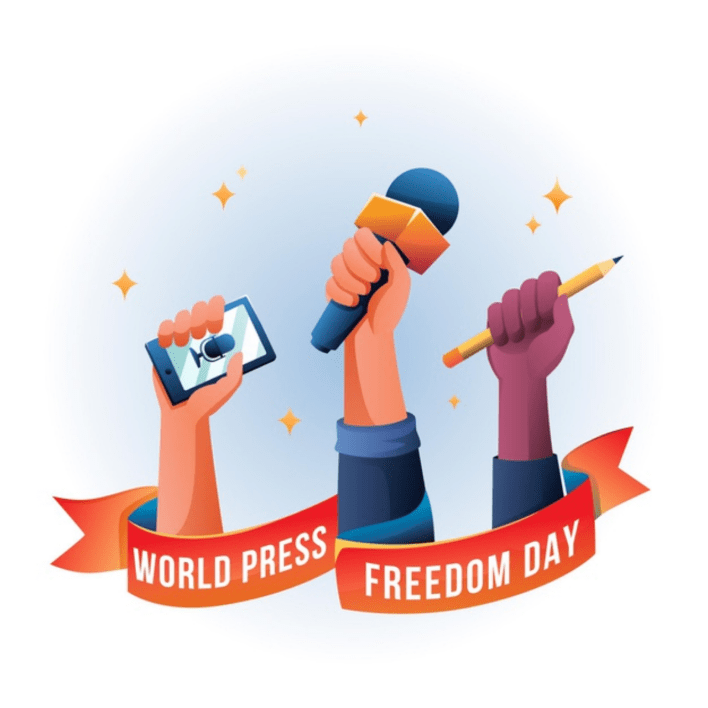
As the world gears up for another observance of World Press Freedom Day, it is imperative to move beyond speeches, hashtags, and ceremonial sloganeering. In Nigeria, a country where journalists walk a thin line between duty and danger, World Press Freedom Day must not merely be celebrated, it must be felt. It must translate into real action. If not, it becomes nothing but an annual hypocrisy dressed in borrowed robes of global camaraderie.
Without any iota of exaggeration, press freedom in Nigeria is under siege. This is not a poetic exaggeration, but a hard truth. In a country where journalists are routinely harassed, arrested, intimidated, and sometimes killed for doing their jobs, the question must be asked: “What exactly are we about to celebrate, come Saturday, May 3, 2025?
From the days of Decree 4 in the military era, to the more subtly brutal silencing tactics of modern civilian administrations, Nigerian journalists have continued to operate in hostile terrain. Despite constitutional provisions that guarantee freedom of expression and the press under Section 39 of the 1999 Constitution (as amended), the Nigerian state has found ways to undermine and circumvent this right, using security agencies, draconian laws, and, in some cases, thugs sponsored by powerful individuals to silence critical voices.
In recent years, several journalists have been arrested under dubious pretexts. Cases involving “cyberstalking” and “defamation” have been used as legal cover to clamp down on investigative journalism. The Cybercrime Act of 2015, though intended to address internet fraud and security, has become a weapon against dissent. Instead of being used to tackle digital crimes, it is being used to digitally handcuff truth-tellers.
If we are to be honest, Nigerian journalists are not free. They are surviving. And survival is not freedom.
As World Press Freedom Day is celebrated globally on May 3rd, Nigerian authorities and media stakeholders will likely organize panel discussions, seminars, and issue press statements echoing the usual calls for a free press. There will be speeches from government officials urging journalists to be “responsible,” even as their regimes stifle responsibility with repression. If the past is anything to go by, these commemorations often end with no measurable outcome.
What Nigeria needs is not another ceremony, but a renewed commitment to ensuring that journalists are free in practice, not just on paper. The reason for the foregoing view cannot be farfetched as it is one thing to permit freedom; it is another thing to protect it. Therefore, the Nigerian government must understand that press freedom is not a privilege; it is a right. And more than a right, it is the oxygen of democracy.
Against the backdrop of the foregoing view, Nigeria must begin by revisiting the Cybercrime Act and similar laws that have been weaponized against the press. Any legal framework that threatens journalistic work under vague pretexts like “offensive publication” or “cyberstalking” must be abolished or amended to clearly distinguish between hate speech and fair reportage.
Again, Journalists covering protests or controversial topics are often brutalized by security forces. A democratic state should not have armed officers attacking journalists. The Inspector General of Police must issue standing directives ensuring the safety of journalists in the field.
In fact, one of the greatest threats to investigative journalism is the fear among sources that their identities will be exposed. Nigeria needs comprehensive whistleblower protection laws that also guarantee the confidentiality of journalistic sources.
To fully protect journalists in Nigeria, and ensure their collective freedom, a media ombudsman body, free from government interference, should be established to handle complaints against journalists and media houses. This way, instead of dragging journalists to court or unleashing DSS on them, there would be a professional body that upholds ethical standards.
Without resort to whipping up sentiment in this context, permit this writer to disclose that most Nigerian journalists work under poor conditions, with irregular pay, no insurance, and little to no institutional backing. Therefore, media owners and unions must prioritize the welfare of journalists. A journalist who is poor, unprotected, and underpaid is already gagged.
Another thing that need not to be ignored in this context is that criticizing the government or powerful individuals is not unpatriotic. The notion that journalists who expose corruption or malfeasance are “enemies of the state” must be rejected. Journalism is not sabotage; it is service.
In fact, public officials, especially those from military or authoritarian backgrounds, must undergo orientation on the role of a free press in democracy. This is as some leaders still treat the media like an opposition party that must be destroyed.
On the other hand, it is expedient to opine that while fighting for press freedom that journalists must also maintain ethical standards. Freedom comes with responsibility. The spread of fake news, sensationalism, and unverified reports does a disservice to the cause of press freedom. Inaccurate reporting provides tyrannical leaders with ammunition to discredit the entire profession.
Without a doubt, the integrity of the press is its strongest defense. Therefore, upholding the tenets of accuracy, balance, and accountability is not just a duty to the public but a shield against those who want to destroy the fourth estate.
Notching up this piece from international perspective, it is germane to opine that the international community, particularly organizations like UNESCO, Amnesty International, and Reporters Without Borders, must go beyond compiling annual press freedom indices. Diplomatic pressure should be applied on countries like Nigeria where journalists are harassed. Visa bans, foreign aid conditions, and media development grants should be tied to measurable improvements in press freedom.
In 2024, Nigeria ranked 123rd out of 180 countries in the Press Freedom Index. That is a badge of shame. We must ask: What will change in 2025?
In fact, celebrating World Press Freedom Day in Nigeria while journalists are in prison, while reporters live in fear, and while media houses are raided for doing their jobs, is the height of irony. It is like hosting a feast in a famine and pretending everyone is full.
Therefore, if Nigerian leaders are sincere about celebrating press freedom, they must first free the press. Let us move from ceremony to substance. Let the world not just hear that we celebrated World Press Freedom Day in Nigeria. Let the world see it in how we treat our journalists going forward. Only then can we say we are part of the free world. Let Nigerian journalists breathe. Let them write. Let them speak. Let them be free, not just on May 3rd, but every day.























You must be logged in to post a comment Login