Middle East War
Tensions Escalating: The Urgent Need to Avert World War 3, by Ajiboye Amos Olakunle
The potential outbreak of World War 3 would have devastating consequences not only for the combatants, but for the global economy and the welfare of civilian populations.

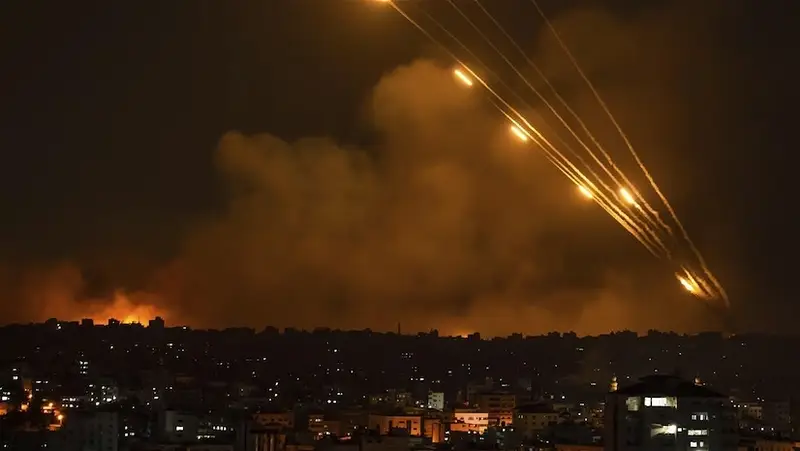
The geopolitical landscape has grown increasingly unstable in recent months, with the actions of Iran raising serious concerns about the prospect of a wider conflict engulfing the Middle East and potentially leading to a third world war. The simmering tensions between Iran and Israel, fueled by a history of animosity and distrust, have reached a boiling point, with each side accusing the other of provocative and destabilizing behavior.
Iran’s continued pursuit of advanced missile technology and its support for proxy groups like Hezbollah have heightened Israeli fears of an imminent attack. Meanwhile, Israel’s strikes against Iranian targets in Syria and its vocal threats of pre-emptive action have pushed the two adversaries closer to the brink of open warfare. The potential for miscalculation or a single spark to ignite a larger conflagration is alarmingly high.
In this volatile environment, the international community must act swiftly and decisively to de-escalate the situation and prevent a spiral into all-out war. Failure to do so could have catastrophic consequences not just for the Middle East, but for the entire global order.
Diplomatic Efforts: The Path to Conflict Resolution
The first and most crucial step in averting a potential World War 3 scenario is to reinvigorate diplomatic efforts aimed at defusing the tensions between Iran and Israel. This will require concerted action on multiple fronts:
1. Reviving the Iran nuclear deal: The Joint Comprehensive Plan of Action (JCPOA), commonly known as the Iran nuclear deal, was a landmark agreement that sought to curb Iran’s nuclear ambitions in exchange for sanctions relief. However, the unilateral withdrawal of the United States from the deal in 2018 has significantly weakened its effectiveness. Restoring the JCPOA, with the participation of all original signatories, could help rebuild trust and establish a framework for ongoing dialogue and cooperation.
2. Facilitating regional dialogue: Bringing Iran and Israel, as well as other key regional players like Saudi Arabia, Turkey, and Egypt, to the negotiating table is essential. These direct talks should focus on addressing the root causes of the conflict, exploring avenues for de-escalation, and establishing mechanisms for conflict resolution and crisis management.
3. Leveraging international institutions: The United Nations, the European Union, and other multilateral organizations can play a crucial role in facilitating diplomacy, providing mediation services, and exerting diplomatic pressure on the parties involved. These institutions can also mobilize the international community to support conflict resolution efforts and impose meaningful consequences on any party that refuses to engage constructively.
4. Addressing underlying grievances: Beyond the immediate crisis, it is crucial to address the long-standing grievances and historical animosities that have fueled the conflict between Iran and Israel. This may involve addressing issues such as regional power dynamics, religious and ideological differences, and the unresolved Palestinian-Israeli conflict.
Military Deterrence and Confidence-Building Measures
While diplomatic efforts are the primary focus, the international community must also be prepared to take decisive military action to deter any potential aggression and maintain regional stability.
1. Strengthening deterrence: The deployment of credible military forces in the region, including the presence of naval assets, air power, and ground troops, can send a clear signal to both Iran and Israel that any escalation of hostilities will be met with a swift and overwhelming response. This deterrence must be coupled with robust intelligence-sharing and early warning systems to detect and prevent any potential attacks.
2. Establishing military hotlines and communication channels: Direct military-to-military communication channels between Iran and Israel, as well as between these countries and their respective allies, can help prevent miscalculations and provide a mechanism for de-escalating tensions in the event of a crisis.
3. Implementing confidence-building measures: Measures such as mutual restraint in military exercises, transparency in weapons development and deployment, and the establishment of demilitarized zones can help build trust and reduce the risk of miscalculation.
Economic and Humanitarian Considerations
The potential outbreak of World War 3 would have devastating consequences not only for the combatants, but for the global economy and the welfare of civilian populations.
1. Mitigating economic disruption: The international community must be prepared to take swift action to minimize the economic fallout of a potential conflict, including measures to safeguard global trade, ensure the uninterrupted flow of energy resources, and provide financial assistance to countries and industries affected by the crisis.
2. Addressing humanitarian concerns: In the event of a conflict, the protection of civilian populations, the provision of humanitarian aid, and the preservation of critical infrastructure must be prioritized. This may involve the establishment of safe corridors, the deployment of peacekeeping forces, and the coordination of relief efforts with international organizations.
3. Preventing the use of weapons of mass destruction: The specter of nuclear, chemical, or biological weapons being used in a conflict between Iran and Israel is a terrifying prospect that must be prevented at all costs. Strict monitoring and enforcement of non-proliferation agreements, as well as the development of effective countermeasures, must be a top priority.
A Call to Action
The world stands at a critical crossroads, facing the very real possibility of a catastrophic conflict that could plunge the globe into another world war. However, the international community possesses the diplomatic, military, and economic tools necessary to avert such a catastrophe.
By reviving diplomatic efforts, strengthening military deterrence, addressing underlying grievances, and mitigating the economic and humanitarian impacts of a potential conflict, the world can work together to defuse the tensions between Iran and Israel and prevent the unthinkable from becoming a reality.
The stakes are too high, and the consequences too severe, to allow this crisis to spin out of control. It is time for world leaders to rise to the occasion, demonstrate bold and visionary leadership, and take decisive action to secure a peaceful and stable future for all. The world is watching, and the time to act is now.