
Africa
The Church Beyond Bureaucracy: Reclaiming the Mystical Identity of the Body of Christ -By Adeleke Oluwaseyi James
Pope Francis has likewise cautioned against “ecclesial introversion” and over-institutionalization. In Evangelii Gaudium (2013), he warns that a Church obsessed with control and structure risks becoming “a bureaucratic NGO.” His reform of the Roman Curia through Praedicate Evangelium (2022) reorients Church governance toward mission, not management. The 2023–2024 Synod on Synodality echoes this call, envisioning the Church as “a people walking together” — not a faceless bureaucracy but a living communion animated by the Spirit.

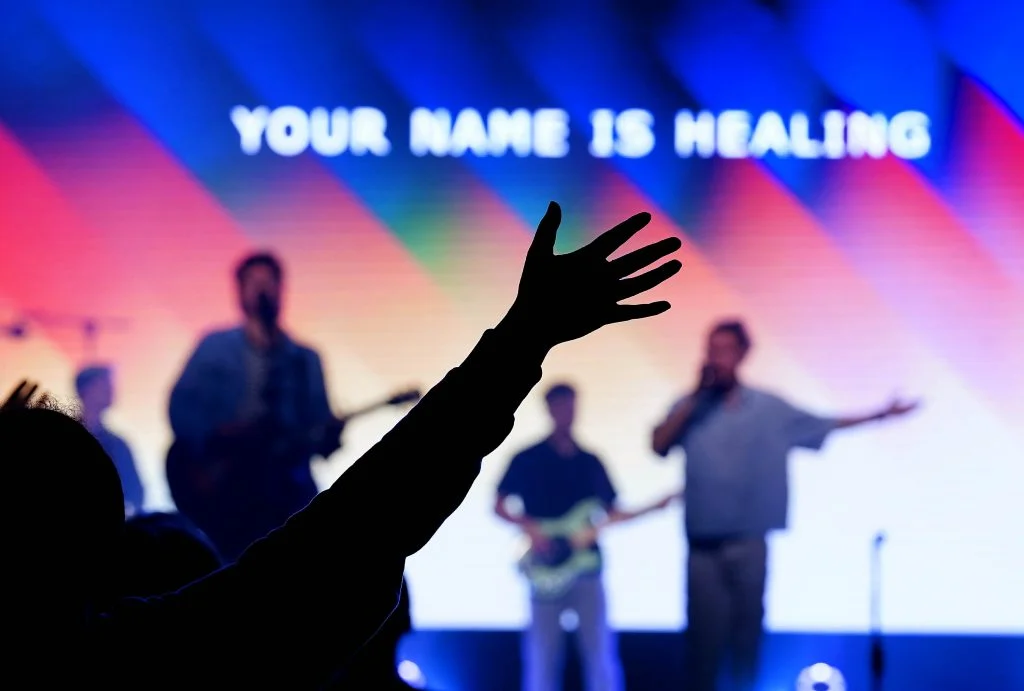
A quiet but critical confusion is emerging among members of the Christi fideles — the lay faithful of the Catholic Church — in recent decades. Increasingly, the Church is being understood not as the living Mystical Body of Christ, but as a merely human institution: a kind of global organization managed by policies, shaped by politics, and evaluated by worldly standards of success. While such a view may arise from understandable frustrations — scandals, ecclesial disputes, and structural inertia — it ultimately reduces the Church to something less than what she truly is: a divine mystery, a communion of grace, and a sacrament of salvation.
This tendency to view the Church through institutional optics reflects a theological short-sightedness that undermines her deepest identity. Each Sunday, Catholics profess belief in the Church as one, holy, catholic, and apostolic — the four marks that point to her divine origin and eschatological purpose. These are not mere labels, but ontological claims: the Church is not built by human hands alone; she is born of the pierced side of Christ and animated by the Holy Spirit.
Yet, in many circles, especially amid crises of trust and papal transitions, these transcendent dimensions are obscured. The Church becomes a bureaucracy. The College of Cardinals is seen as a political council. The papacy itself is interpreted as an ideological office, swinging between progressive and conservative forces. The 2013 and 2023 papal elections, and most recently the conclave that elected Pope Leo XIV, have laid bare this distorted lens.
Leading up to Leo XIV’s election, speculation swirled in media outlets and Catholic discourse alike: Which “bloc” would win? Which vision of the Church would prevail? The conclave, intended as a solemn, Spirit-guided discernment, was framed as a kind of ecclesial campaign. Commentators floated names of papabili as if they were candidates on a ballot, drafting “platforms” that included decentralization, reform, or doctrinal firmness. The event was often treated more as Vatican politics than divine providence. In this framework, the Church is perceived not as a mystery to be reverenced, but as a machine to be managed.
This outlook mirrors what Cardinal Avery Dulles warned against in his influential work Models of the Church. Dulles described the “institution” model as necessary, but insufficient. When it dominates at the expense of the other models — Mystical Communion, Sacrament, Herald, Servant, and Community of Disciples — the Church risks becoming a juridical organization, forgetting her mystical and sacramental nature. The proper balance sees the Church as both visible and spiritual, structured and alive.
Post-election reactions to Pope Leo XIV confirmed the persistence of this misperception. On one end, supporters hailed him as the long-awaited “progressive pope.” On the other, critics decried his ascent as a “capitulation to modernism.” Both positions — however opposite — share the same flawed premise: that the Pope is fundamentally an ideological figurehead. But the papacy is not about party victory. As the Catechism of the Catholic Church affirms (§882), the Pope is the “perpetual and visible source and foundation of unity” — not a CEO, but the successor of Peter and servant of the servants of God.
Such ideological filters also warp the four marks of the Church: Oneness becomes confused with factional uniformity rather than unity in faith and charity. Holiness is replaced by administrative efficiency rather than sanctity born of the sacraments. Catholicity is mistaken for global representation rather than universality of truth and grace. Apostolicity is reduced to procedural succession, disconnected from fidelity to apostolic teaching.
A secularized ecclesiology strips the Church of her mystery. As Pope Benedict XVI reminded us in his 2011 homily for Saints Peter and Paul: “The Church is not an organization, not a product of our will and our reflection… She is a living organism — the Church lives through the power of God, not through our own doing.”
Pope Francis has likewise cautioned against “ecclesial introversion” and over-institutionalization. In Evangelii Gaudium (2013), he warns that a Church obsessed with control and structure risks becoming “a bureaucratic NGO.” His reform of the Roman Curia through Praedicate Evangelium (2022) reorients Church governance toward mission, not management. The 2023–2024 Synod on Synodality echoes this call, envisioning the Church as “a people walking together” — not a faceless bureaucracy but a living communion animated by the Spirit.
Behind this trend lies a deeper spiritual impoverishment: the loss of mystery. When conclaves are treated as elections, when papacies are viewed as policies, and when faith communities are judged by metrics, the Church is domesticated. She is no longer the sacrament of Christ’s presence in the world, but a fragile human enterprise scrambling for relevance and stability.
But this is not who she is. As Lumen Gentium declares (no. 8), “the Church is both visible and spiritual, a hierarchical society and the Mystical Body of Christ.” The two dimensions are not contradictory but paradoxical — held together in grace. As Henri de Lubac once said, “The Church is like Christ Himself: at once divine and human.” To lose sight of this is to lose the Church’s soul.
The path forward requires a theological renewal: one that begins not with new structures, but with a new heart. We must recover a vision of the Church not as a system to control, but a mystery to be lived. As Dulles emphasized, all models of the Church must be held together, with particular emphasis on those that foster communion, mission, and holiness.
In the end, the Church is not a campaign. She does not win elections. She is not ours to manage but Christ’s to guide. Let us then resist the temptation to bureaucratize the Bride of Christ. Let us see again her radiant beauty — as one, holy, catholic, and apostolic — alive, organic, and sacramental, for the life of the world.
Adeleke Oluwaseyi James
Student and Growing Writer





















You must be logged in to post a comment Login