
Africa
The Limits of Democracy in Development—Why Captain Ibrahim Traoré Is Right -By Jeff Okoroafor
Traoré’s government has already taken bold steps, including expelling French military forces to assert sovereignty, launching large-scale infrastructure projects such as roads and mines to boost economic autonomy, and mobilizing youth and farmers in patriotic development programs. If Burkina Faso succeeds, it will join the ranks of nations that developed first, then democratized later—a model proven in Asia and now possible in Africa.

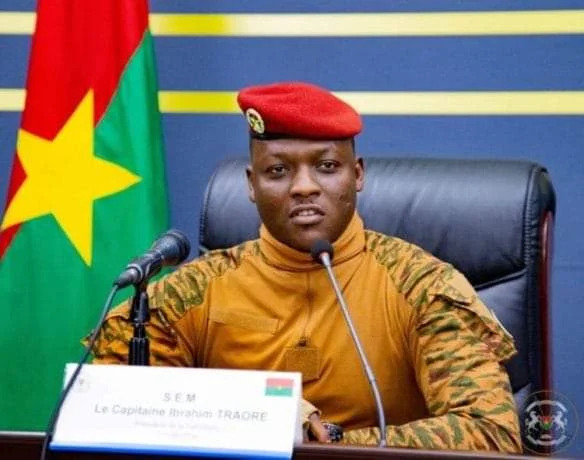
Since Captain Ibrahim Traoré assumed leadership of Burkina Faso, his government has faced both fervent support and fierce criticism, particularly from Western observers who insist that democracy is the only legitimate path to national development. However, Traoré’s assertion that no country has ever developed under democracy deserves serious consideration. History and empirical evidence suggest that rapid development often occurs under centralized, disciplined governance rather than through the slow, often chaotic processes of liberal democracy.
Western nations frequently promote democracy as the universal solution for poverty and underdevelopment. Yet, a closer examination of global development reveals that the most dramatic economic transformations have occurred under authoritarian or highly centralized regimes.
China stands as the most striking example, lifting over 800 million people out of poverty under the Communist Party’s one-party rule. Its GDP grew from $150 billion in 1978 to over $17 trillion today—without democracy. Similarly, Singapore, governed by Lee Kuan Yew as a de facto one-party state, implemented strict policies that transformed it from a poor colonial outpost into a global financial hub. South Korea and Taiwan also industrialized under military or authoritarian rule before transitioning to democracy only after achieving economic stability.
In Africa, many nations adopted multiparty democracy in the 1990s under Western pressure, yet economic growth remained stagnant in most cases. Rwanda, under Paul Kagame’s strong leadership, has become one of Africa’s fastest-growing economies, with poverty rates dropping from 60% in 2000 to 38% in 2020—far outpacing democratic peers like Kenya or Nigeria.
Even the Western world’s own history contradicts the democratic development narrative. The U.S. and Europe industrialized under limited democracy—slavery, colonialism, and restricted voting rights were the norms during their most aggressive development phases. Britain’s Industrial Revolution occurred under an oligarchic system, not universal suffrage.
Why Democracy Fails Developing Nations
Democratic leaders often focus on reelection, not structural reforms, leading to short-term policies that undermine long-term growth. Burkina Faso, facing terrorism and poverty, cannot afford such instability. In contrast, authoritarian systems, like China’s five-year plans, allow for consistent infrastructure and industrial policies.
Many African democracies also suffer from clientelism, where politicians prioritize patronage over development. A disciplined military regime, like Traoré’s, can cut through bureaucratic graft and enforce efficiency. Additionally, Burkina Faso is fighting jihadist insurgencies, a challenge democracies often struggle with due to indecisiveness—witness Nigeria’s prolonged Boko Haram war. Nations like Egypt, under Sisi, have been more effective in stabilizing their countries through centralized security control.
The Burkina Faso Experiment
Traoré’s government has already taken bold steps, including expelling French military forces to assert sovereignty, launching large-scale infrastructure projects such as roads and mines to boost economic autonomy, and mobilizing youth and farmers in patriotic development programs. If Burkina Faso succeeds, it will join the ranks of nations that developed first, then democratized later—a model proven in Asia and now possible in Africa.
The West’s insistence on democracy ignores historical reality. No nation has industrialized under full democracy—stability, discipline, and long-term vision come first. Burkina Faso, under Traoré, has a chance to break the cycle of poverty and dependency. The world should judge his government by its results, not its adherence to Western political dogma.
The future of Africa may depend on leaders bold enough to say: development first, democracy later.

Jeff Okoroafor
Jeff Okoroafor is a social accountability advocate and a political commentator focused on governance, accountability, and social justice in West Africa.















You must be logged in to post a comment Login