Africa
The Southeast in the Southwest: Investment, Influence, and the Question of Home -By Adebamiwa Olugbenga Michael

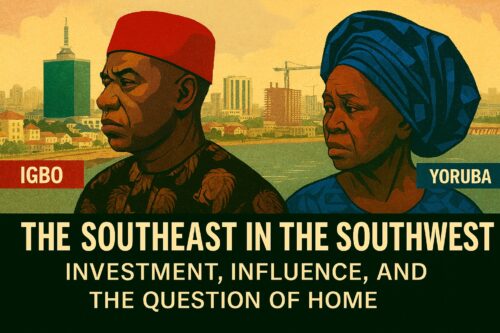
Across Nigeria, patterns of internal migration and economic dominance have long shaped local and regional dynamics. One of the most visible examples is the significant presence of Igbo entrepreneurs in the Southwest, particularly in Lagos and its environs. Over decades, Igbo traders and investors have built sprawling commercial empires, contributing significantly to the economic vitality of the region. Yet, this success has also sparked questions about loyalty, integration, and the responsibilities of migrants in host communities.
It is undeniable that the Igbo have a remarkable entrepreneurial spirit. Many left their ancestral homes in the Southeast during the post-civil war years and settled in Lagos, Ibadan, and other commercial hubs. There, they invested capital, energy, and ingenuity to build thriving businesses from markets and trading houses to real estate and manufacturing. Their contribution to the Southwest economy is both substantial and visible.
But with influence comes tension. Indigenous Yoruba communities have begun to push back politically and economically. Local leaders are advocating for policies that prioritize indigenous participation in commerce, land use, and political representation. This pushback, while often framed as protection of indigenous rights, has been met with anger and resistance from some Igbo investors who see the Southwest as the land where they made their fortunes.
The underlying question is both practical and philosophical. Why do Igbo investors expend such energy outside their homeland instead of building equally competitive states in the Southeast? The answer is complex. Lagos, with its unparalleled population density, access to international trade routes, and commercial ecosystem, presents opportunities that the relatively less urbanized Southeast cannot match. Investment in Lagos promises faster returns and a wider market.
Yet, this economic migration has social consequences. The perception among some Yoruba communities is that long-term Igbo presence in the Southwest has sometimes ignored the culture, history, and political rights of the host population. While many Igbo have integrated, the ongoing tensions suggest a gap between economic contribution and socio-political acceptance.
Historically, Nigeria has experienced similar patterns. Migrants often cluster in regions offering economic opportunity, leading to friction over land, governance, and resources. The 1950s offer a partial parallel, before independence, Nigeria saw cross-ethnic political collaboration, yet post-independence politics revealed the limits of integration and the enduring power of ethnic loyalty. Today’s economic migrations echo those earlier dynamics, but in commerce rather than politics.
Some argue that this tension is natural. Host communities have a right to expect respect, cultural sensitivity, and shared governance from long-term residents. Yet, the migrants’ argument is equally compelling, they have invested heavily, created jobs, and fueled regional growth. Both perspectives are valid, but the lack of a shared framework for coexistence has amplified disputes.
There is also the matter of imagination and ambition. Could the Southeast develop Lagos-like commercial hubs, capable of attracting internal migrants and investment? Many analysts believe yes, citing the entrepreneurial prowess of the Igbo themselves. But doing so requires infrastructure, political will, and a long-term vision, elements often hampered by governance challenges in the region.
The current friction, then, is not merely about money or politics. It is about respect, belonging, and the balance between host and guest. Yoruba communities seeking to assert their rights are exercising a legitimate prerogative, while Igbo investors expressing frustration are asserting their stake in the national economy. Both impulses are understandable, yet both require negotiation and compromise.
Critically, the debate also forces a broader reflection. Should Nigerians invest primarily where opportunity exists, or where they are culturally rooted? Is economic migration inherently at odds with regional loyalty? The answer may lie in a nuanced combination of both, a commitment to national integration that respects local rights while fostering cross-regional prosperity.
Ultimately, the question is one of perspective. From the Igbo point of view, their labor and investment have helped build Lagos into a global commercial hub. From the Yoruba perspective, the Southwest is home, and long-term residents deserve recognition and influence. Bridging this divide demands empathy, structured policy, and mutual respect.
The stakes are high. Without dialogue and careful management, economic competition can easily turn into ethnic friction, undermining the very prosperity that has been painstakingly built. But with foresight, both communities can benefit, the Southeast could learn to replicate Lagos’ commercial model at home, while the Southwest could institutionalize inclusive policies that reward contribution without eroding local identity.
Nigeria’s larger lesson is clear, prosperity must be coupled with respect. Economic success is insufficient if it deepens cultural divides. Migration, investment, and ambition are valuable, but they must harmonize with the social fabric of host communities. Only then can regional tensions transform into collaboration, and individual achievement into shared national progress.
The story of the Southeast in the Southwest is thus not just about business. It is a mirror reflecting Nigeria’s ongoing challenge, balancing opportunity, identity, and belonging in a country still negotiating the terms of unity within diversity. The question remains, will we learn to respect each other as we grow, or will competition deepen the fault lines that have always threatened our cohesion?
©️ Adebamiwa Olugbenga Michael