
Africa
This Time Next Year!, by Abiodun Komolafe

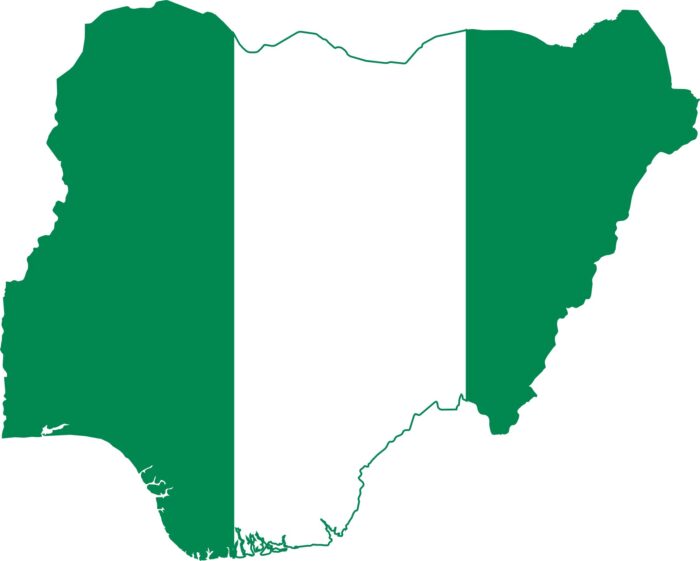
In the midst of Nigeria’s complex economic and political landscape, meaningful conversations become crucial catalysts for change. My recent discussion with Bolade Agbola, a distinguished Agricultural Economist, stockbroker, banker and Business Administration doctorate holder, offered invaluable perspectives on the country’s pressing challenges.
As we delved into the intricacies of Nigeria’s development trajectory, Agbola’s multidimensional expertise and cosmopolitan outlook shed light on the country’s potential pathways toward sustainable growth. This conversation serves as a timely reminder that Nigerians continue to seek solutions, driven by resilience and determination. In this article, I reflect on our insightful exchange, exploring critical themes and actionable strategies for Nigeria’s economic revitalization.
Let’s be frank, Nigeria faces complex challenges affecting citizens’ daily lives. Economic struggles, including inflation and unemployment, are paramount. Political stability and security are also pressing concerns, amid terrorism, banditry and kidnapping. This situation is unhelped by Boko Haram terrorism, which has exacerbated security issues since the early 2000s. To alleviate these, Nigerians are seeking economic growth, a stable currency and reduced poverty.
Despite the noises of despair, Agbola shared his optimistic vision for Nigeria’s future, citing potential milestones achievable by next year. He predicted that domestic petrol refining would increase, easing foreign exchange pressures. In his words, “This time next year, the inflationary rate would drop below 20% and racing towards single digits. Security concerns would also diminish as armed forces tackle clashes, banditry and kidnappings.” Not done yet, he emphasized the importance of state policing and local government autonomy in enhancing security. Agbola also predicted that economic fundamentals would improve, driving the naira exchange rate below N1000.00/$1. ‘E lo f’okan bale! The economy will soon witness a positive turnaround’, he concluded reassuringly!
Obviously, Agbola’s perspective on ‘This time next year’ showcases humanity’s capacity for resilience, optimism and community solidarity. By embracing the present, this mindset inspires collective action toward a brighter, more equitable future. But then, this time next year, the journey to 2027 will have begun in earnest. Regardless of government policies, one doesn’t need to be a genius, or an econometrician, or a Nostradamus before knowing that, given current economic trends, the dollar-naira exchange rate is unlikely to drop below N1,000.00, which is at a best case scenario.
His other predictions, while optimistic, may similarly face significant hurdles, including infrastructure gaps, regulatory frameworks and global market fluctuations. According to Nigeria’s National Bureau of Statistics, inflation rates have consistently exceeded 20% since 2020. Therefore, achieving single-digit inflation by 2027, as Agbola predicted, would require significant policy shifts and economic reforms. Furthermore, his emphasis on domestic petrol refining overlooks the need for comprehensive energy sector reforms. To address this, Nigeria must prioritize investment in renewable energy sources and grid modernization.
Talking seriously, Nigeria is currently grappling with a balance of payment crisis; and, when one has a balance of payment crisis, one’s response will be like that of Jawaharlal Nehru in 1958, when there was not much for India to export; or, Harold Wilson in 1967, when Britain’s was more of currency crisis. Nehru’s quote, echoed by Wilson, remains relevant: ‘We have to export or perish’, thus emphasizing the need for export-driven solutions to rectify economic imbalances.
Under the circumstances, President Bola Tinubu should have prioritized exports from the outset more so as competitive institutions are crucial to Nigeria’s success. However, the decision to float the naira without diversifying production and strengthening institutions has been calamitous. Addressing these institutional deficits should have been the first order of business. To get out of the current economic challenges, the government needs to rethink its export strategies to mitigate the currency turmoil and alleviate the cost of living crisis.
The ‘Soludo Solution’ merged Cooperative Banks into larger institutions, neglecting their potential as specialized financial intermediaries for farming cooperatives and hundreds of agricultural associations. Simply put, while temporary relief may come from global interest rate cuts, it is insufficient as speculative investments seeking high returns won’t drive sustainable growth or employment, even if the Central Bank of Nigeria (CBN) cuts interest rates in the next few days. Instead, Nigeria should prioritize production and modernize its agricultural sector to create jobs and boost exports.
The Netherlands’ success story offers valuable lessons, attributing its prosperity to two key factors: specialized financial institutions like RABOBank, which was credited with knowing everything that’s worth knowing about agricultural finance, and world-class agricultural research institutions. These two elements are intricately linked. In contrast, Nigeria presently struggles with inadequate agricultural financial institutions and research entities, and these have been hindering its progress. A comic interlude comes from reports that the Cocoa Research Institute of Nigeria (CRIN) allocated funds for urban solar-powered streetlights. In a twisted harmony like ours, where contradictions blend into a unique melody, this is a tragic comic illustration and the complete absence of interest in the development of agriculture.
In Nigeria, hope is vital amid economic uncertainty. Drawing from Prophet Elisha’s wisdom (2 Kings 4: 1-7), Nigerians can develop innovative solutions and collaborative problem-solving. Just as the people of Samaria persevered through famine and siege, Nigerians have continued to show remarkable strength in the face of economic instability, political turmoil and security threats. For Nigeria to achieve progress, strategic economic plans, addressing security concerns, strengthening institutions, promoting transparency and accountability in governance are essential.
Across centuries, development has typically begun with a strong foundation at the local or community base. In other words, true development goes beyond monetary policy and MOUs. It’s about building a strong foundation! Nehru advocated for village development through initiatives like cooperative farming, rural electrification, and access to healthcare and education, setting the stage for broader economic progress. That’s commonsensical! Brazil’s transformation from exporting raw cocoa to chocolates is particularly admirable. This shift has boosted the country’s earnings, making Brazilian chocolates easily available in global markets like New York and Paris. By adopting similar strategies, Nigeria can improve its economic prospects.
Nigeria’s economy is a complex, hydra-headed beast that requires a multifaceted strategy to tame. Thankfully, the wheel has been invented on these issues! The Tinubu-led government deserves credit for securing the Supreme Court autonomy ruling for local governments. Think of it as a delicate recipe requiring the perfect blend of export-led growth, financial sector reform, and strategic investments in agriculture and manufacturing – with a dash of institutional reforms and human capital development for added flavour.
As 2027 nears us by the eyelids, the party in power must revisit its developmentalist manifesto commitments. By translating policy intentions into tangible outcomes, Nigeria will not only bridge the gap between rhetoric and reality but also ensure citizens’ well-being and improve lives. Meanwhile, while sustained commitment to developmental goals may be destined to determine Nigeria’s future prosperity, discussing a competitive economy is pointless when the foundational issues persist.
Beyond any big transactional jargons, the next budget should include an ‘Inflation Reduction Act’ with clear timelines to achieve single-digit inflation by 2027. This is the urgency of the now, more so as it is difficult to make informed decisions on an empty stomach. Beautifying the streets is futile, if basic needs remain unmet. As Michael Afolayan emphasized, citing William Shakespeare, “Take the current when it serves, or lose our ventures.” And what’s the USA-based erudite professor trying to say? ‘A greened street is most likely to be disgreened by an ungreened stomach!’
May the Lamb of God, who takes away the sin of the world, grant us peace in Nigeria!
*KOMOLAFE writes in from Ijebu-Jesa, Osun State, Nigeria (ijebujesa@yahoo.co.uk)






















You must be logged in to post a comment Login